

.jpg)
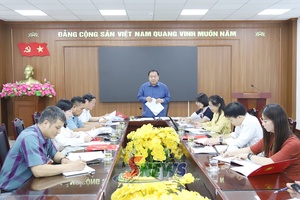
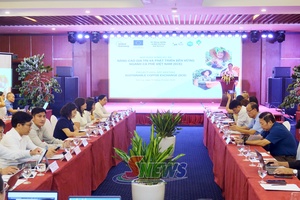
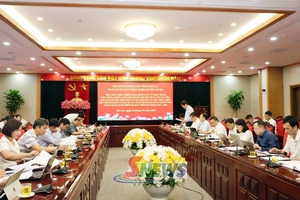
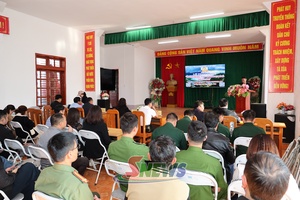
At the working session, the Standing Boards of the communes’ Party Committees reported on socio-economic development, national defence and security in 2025 and the first two months of 2026; the operation of the two-tier local government model in the localities; the implementation of the resolutions of Party Congresses at all levels for the 2025–2030 term; and the performance of tasks following the election of deputies to the 16th National Assembly and People’s Councils at all levels for the 2026–2031 term.
.jpg)
With their important role in politics, national defence and security, and as key economic areas of the province, after implementing the two-tier local government model, communal Party committees and authorities have both stabilised their organisational structures and carried out tasks related to socio-economic development, Party building, and consolidation of the political system.
.jpg)
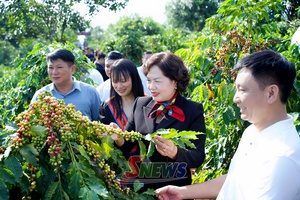
Notably, in the economic field, the communes have promoted their potential and advantages in agricultural development. Many high-tech fruit-growing areas have been established, covering 5,400 hectares; more than 2,700 hectares of fruit crops are produced following organic standards; and 1,210 hectares have been granted planting area codes for export. The crop structure is diverse, including high-value products such as longan, mango, custard apple, and dragon fruit.
In addition, the communes have strengthened production and consumption linkages for products such as coffee, sugarcane, hybrid maize, cassava, sweet corn, soybeans, and vegetables, associated with processing factories. The total area under production linkages has reached 8,622 hectares.
.jpg)
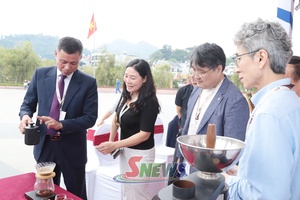
Alongside developing raw material areas, the communes have focused on attracting investment in processing industries. To date, 38 projects have been attracted, with five factories and one Cascara tea processing line already in operation.
The operation of local governments in the communes has been basically stable and smooth, effectively serving both citizens and businesses. The organisation of the election of deputies to the 16th National Assembly and People’s Councils at all levels for the 2026–2031 term in these communes was conducted successfully, safely, democratically, and in accordance with regulations, with voter turnout exceeding 99%.
.jpeg)
.jpeg)
.jpeg)
On behalf of the Standing Board of the provincial Party Committee, Secretary Nghiem acknowledged the efforts of the commune-level Party committees and authorities in operating the organisational apparatus and implementing tasks across various sectors in recent times.
He requested them to continue to lead and direct the synchronised and decisive implementation of tasks and solutions from the beginning of the year to achieve the socio-economic development targets for 2026.
He also emphasised promoting the application of information technology and digital transformation in the activities of Party and government agencies at the commune level, ensuring the effective and smooth operation of the two-tier administration system, serving citizens and businesses well.
.jpg)
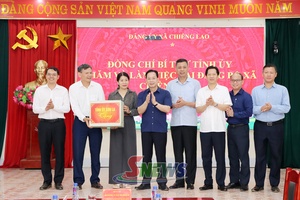
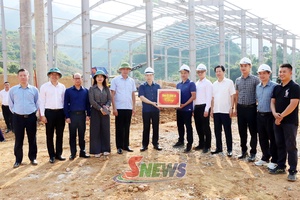
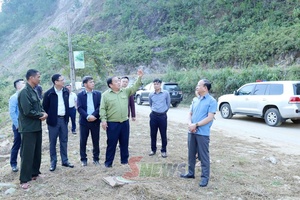
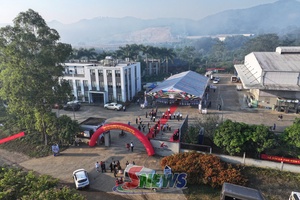
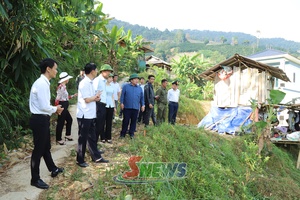
Earlier, the standing members of the provincial Party Committee visited and reviewed business operations at the coffee processing factory and the Song Lam Tay Bac Fertilizer Plant in Mai Son commune; and inspected the progress of the Mai Son commune administrative headquarters project and the Chieng Dong water plant project in Chieng Mung commune.
.jpg)
.jpg)
.jpg)



You have 500/500 characters left
Please enter 5 or more characters!!!