

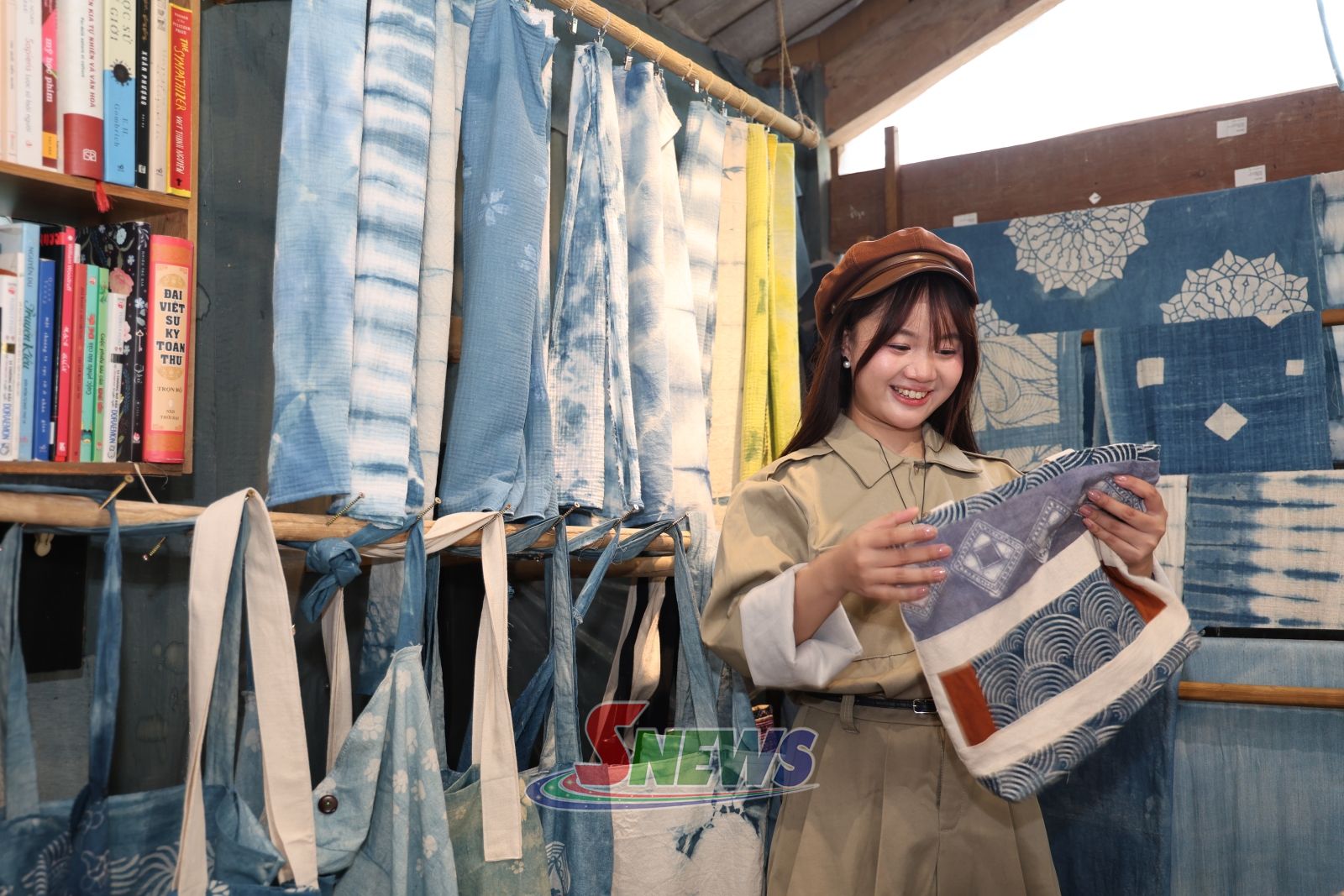
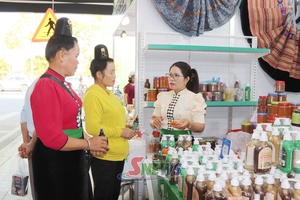
A visitor browses souvenir products at the indigo-dyeing workshop.
Located on the slope leading to the famed Dinosaur Spine ridge in Hang Dong hamlet, Ta Sua’s Stories is a modest wooden house built on the passion of founder Nguyen Trong Thinh, a native of Hai Phong city, with a deep appreciation for the culture of Vietnam’s northern highlands. The workshop showcases the Mong indigo-dyeing craft through displays of handwoven hemp fabric, indigo dye and indigo leaves, wax-resist drawing tools, and fermentation jars used in the dyeing process.
Thinh said tourism in Ta Xua has expanded rapidly, but not every local resident has benefited from that growth. Hoping to create opportunities for more Mong families to participate in tourism while promoting their cultural heritage, he partnered with Thao A Trong, a resident of Hang Dong hamlet, to establish the experiential indigo-dyeing workshop in May 2025. The initiative aims to provide visitors with authentic, culturally distinctive experiences while enabling local people to generate income from their traditional culture and craftsmanship.
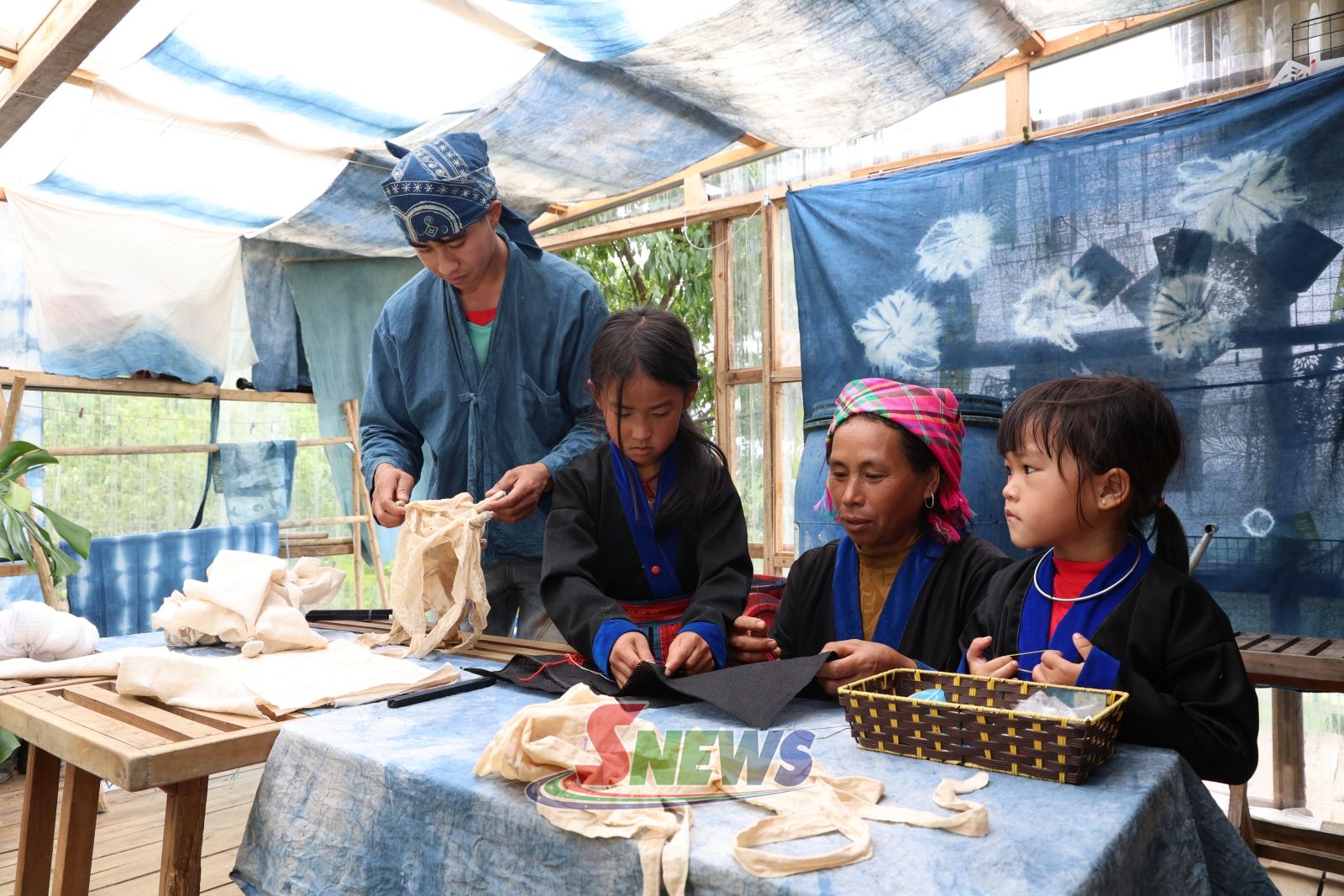
As the artisan responsible for carrying out the dyeing process and guiding visitors through the experiential journey at the workshop, Vang Thi My of Hang Dong hamlet patiently demonstrates every step of the craft. She carefully teaches participants how to use the wax pen, control the depth of colour during dyeing, and understand the cultural meanings behind traditional Mong motifs.
"I put my heart into every stage of the process," My said. "Seeing visitors enjoy the experience and take home products they created themselves makes me very happy. I hope to welcome more visitors and introduce the beauty of our culture to people from everywhere."
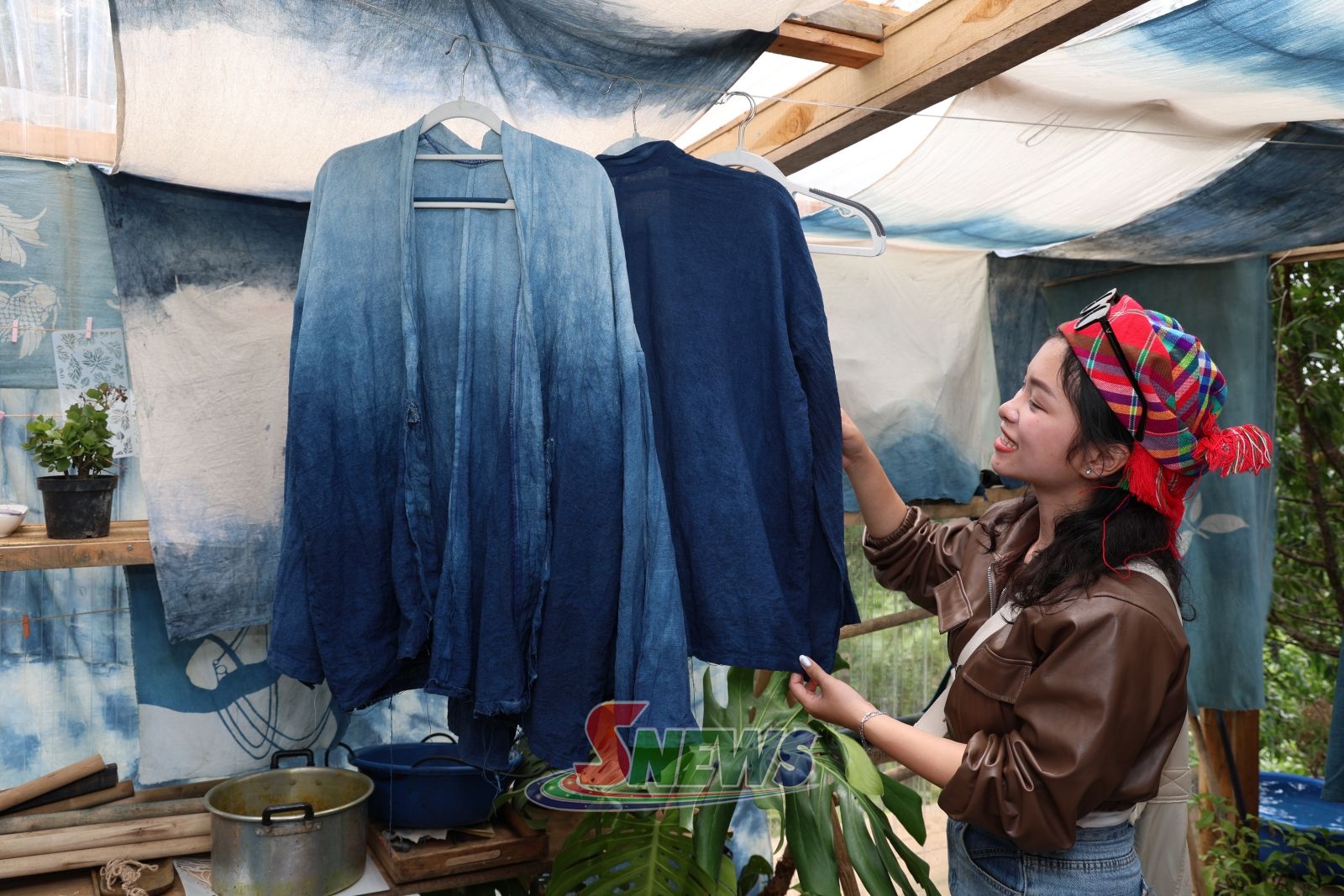
The meticulous craftsmanship and hospitality of artisans such as My have helped make Ta Sua’s Stories an increasingly popular destination for both domestic and international visitors. Each experiential trip, lasting between two and three hours, takes participants through the complete handmade process, from applying beeswax patterns and dyeing fabric in indigo vats to drying the cloth in the sun before taking home a finished piece. The workshop currently produces around 100 handcrafted items each month and welcomes dozens of visitor groups for hands-on experiences.
Nguyen Thuy Duong, a visitor from Hanoi, said the workshop was among the highlights of her trip. "The two-hour indigo-dyeing experience added so much colour to our journey," she said. "It was both relaxing and creative, and it also gave me a much deeper understanding of a long-standing cultural tradition of the Mong people."
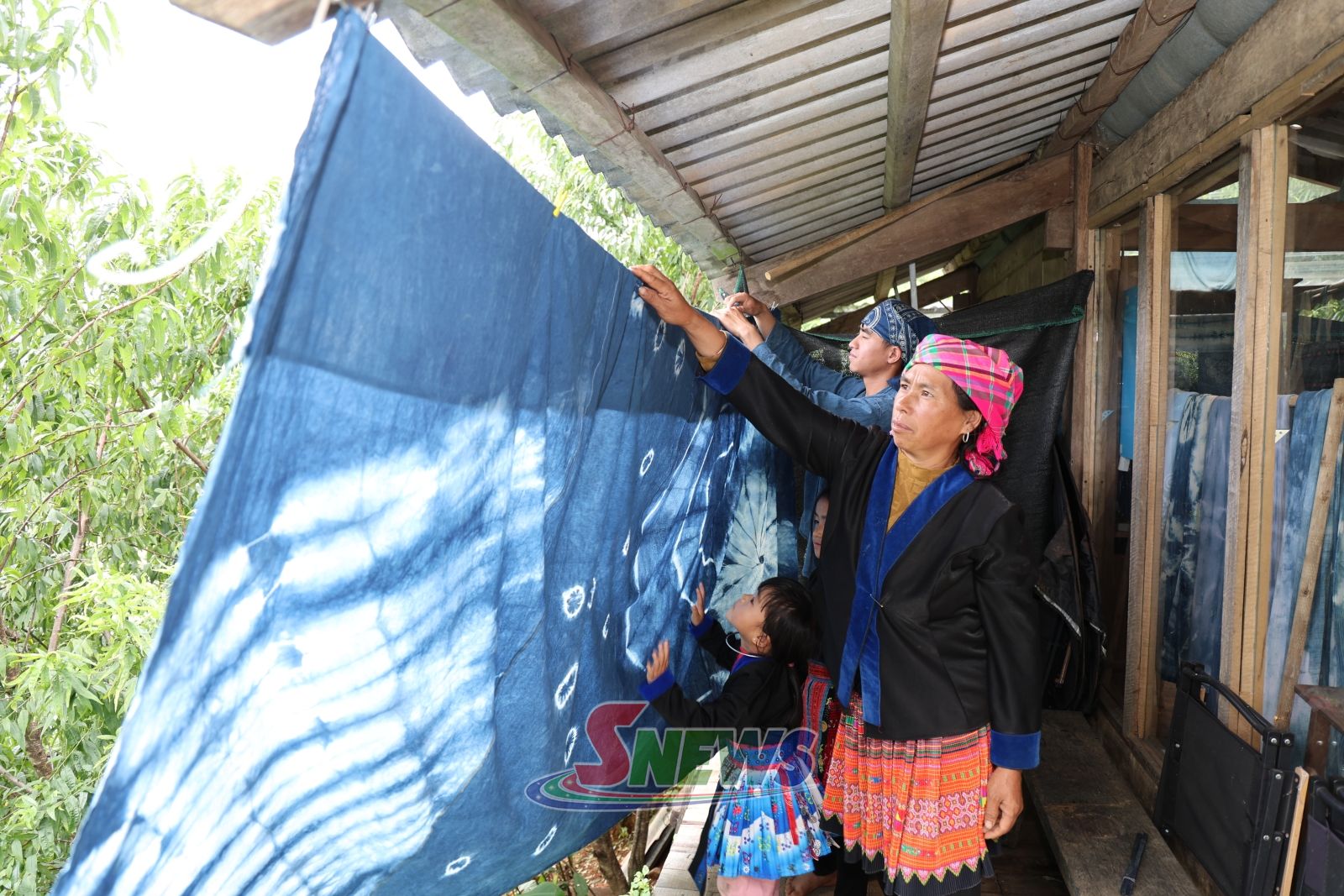
Through its innovative approach, Ta Sua’s Stories has become a bridge connecting Mong culture with visitors while creating new employment opportunities for local households. Building on its initial success, Nguyen Trong Thinh and Thao A Trong have continued visiting families throughout the hamlet to encourage them to revive the traditional craft and participate in community-based tourism. Indigo vats, weaving looms and beeswax drawing tools that had remained unused for years are once again part of daily village life.
Thao A Trong, co-founder of Ta Sua’s Stories, said the project's greatest achievement is allowing more families to remain in their hometown instead of seeking work elsewhere. "People can stay with their families while earning an income from their traditional craft," he said.
The workshop currently provides stable employment for around 10 local workers from five households. Depending on their skills, they take on tasks such as sewing, embroidery, indigo dyeing or guiding visitors through the experience. Monthly incomes start at around 5 million VND (190 USD) per person and typically increase during the peak cloud-hunting tourism season from September to March.
Ta Sua’s Stories is among the first tourism models in Ta Xua to combine cultural preservation with local economic development. Local authorities have identified it as a priority for further support and investment, with plans to replicate similar tourism products. Officials hope such models will improve local livelihoods, reduce the seasonality of tourism and reinforce Ta Xua's identity as Vietnam’s "cloud paradise," encouraging visitors to stay longer and return./.
.jpg)
You have 500/500 characters left
Please enter 5 or more characters!!!