


.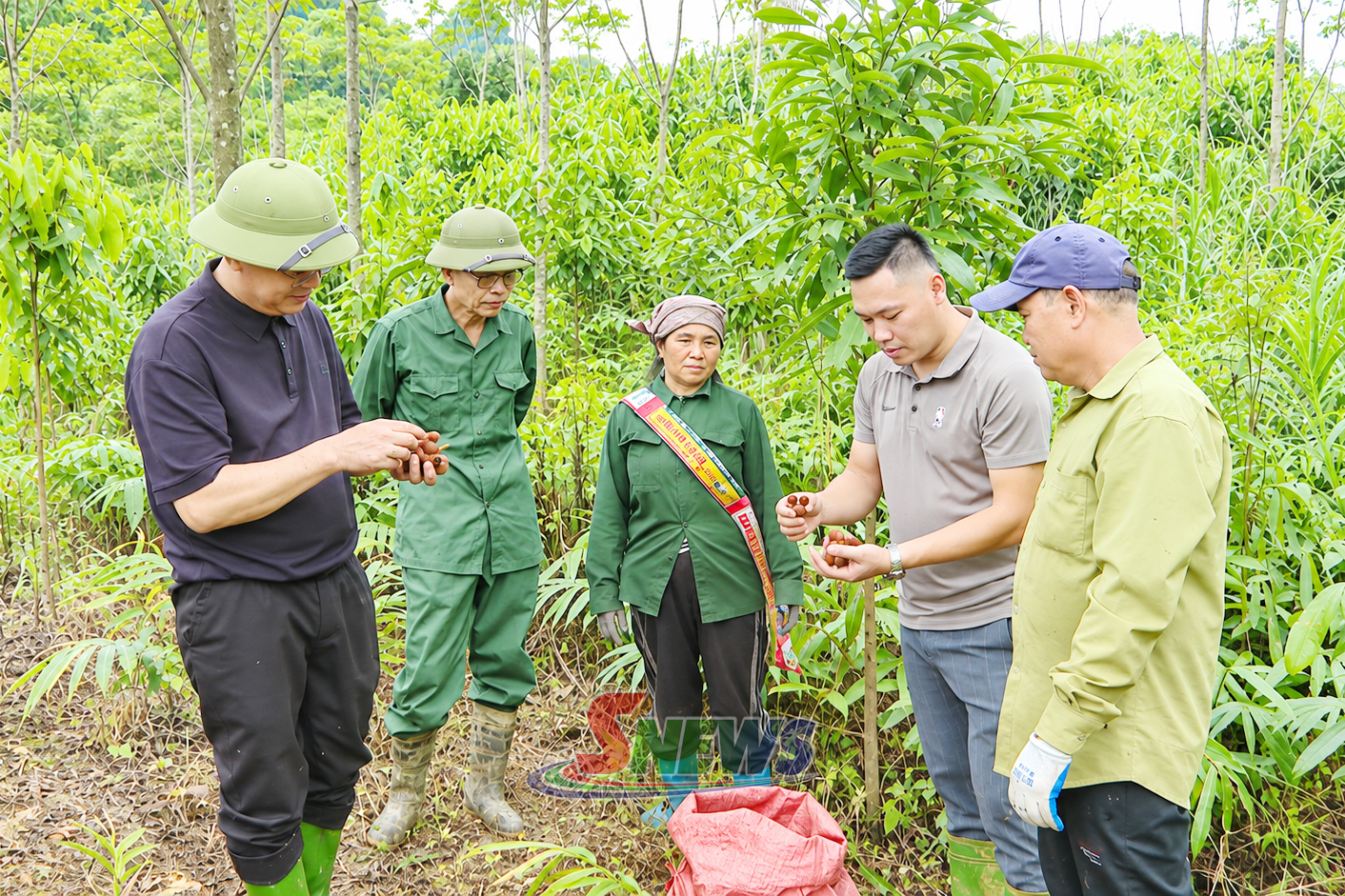
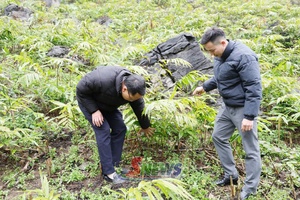
Muong Bang commune officials inspect the growth of purple amomum plants.
Beneath the lush green canopy in Muong Bang, clusters of purple amomum (Amomum longiligulare) are taking root and growing, offering local residents a new avenue for economic development. A shade-loving plant well suited to forest environments, purple amomum requires relatively little care and can yield harvests over several years. Making use of favourable natural conditions, some households have taken the initiative to cultivate the plant, turning the commune's forest resources into an additional source of income.
In Lan hamlet, Ha Van Dam, a Party member actively involved in encouraging local residents to join the pilot programme, believes that forest-based economic development must begin with forest protection. He regularly works with the hamlet management board to remind households to strictly observe forest protection regulations, while encouraging them to select suitable crops that do not damage forest areas or their ecosystems. Taking the lead, he has mobilised 10 households to participate in a pilot purple amomum cultivation model covering one hectare.
Dam said purple amomum is well suited to conditions beneath the forest canopy, required little maintenance and allowed households to make productive use of existing land. Generating additional income from forests, he said, will also strengthen residents' incentives to protect them. Initial results have shown healthy plant growth, pointing to potential for wider cultivation. Some plots in the hamlet have already begun producing fruit, which sells for 40,000–45,000 VND (1.56-1.75 USD) per kilogramme, providing households with an additional revenue stream.
Building on the Lan hamlet model, more households have begun exploring purple amomum cultivation and expanding their growing areas. In Tuong Han hamlet, the family of Luong Van Sang was among the first to take part. In 2022, he planted 4,000 square metres on a trial basis. After about three years of cultivation, the area began yielding fruit, generating nearly 50 million VND in income.
Sang said the family's experience showed that purple amomum was well adapted to local climate and soil conditions, was relatively resistant to pests and diseases, and required limited labour. Traders also collected the produce directly from their farm, making sales relatively convenient. Encouraged by the results, the family expanded its cultivation area to one hectare in 2026.
The pioneering households are gradually changing how Muong Bang makes use of its forest-based economic potential. Rather than relying primarily on harvesting forest products, residents are increasingly turning to the cultivation and management of higher-value crops suited to the forest ecosystem.
The commune has more than 17,300 hectares of forest, with forest coverage exceeding 65%, providing favourable conditions for developing shade-loving medicinal plants beneath the canopy. The approach helps diversify agricultural and forestry production, raise household incomes and support forest conservation.
To translate this potential into tangible results, the commune Party Committee and authorities are promoting changes in production practices, while mobilising mass organisations and grassroots Party members to guide and support participating households. Hamlet Party cells have incorporated forest-based economic development and forest protection into their regular activities, encouraging residents to select suitable crops and avoid clearing vegetation or undertaking activities that could affect forest area and quality.
With local authorities and residents working together, purple amomum cultivation has expanded steadily. The commune now has nearly 200 hectares under the crop, involving about 80 households, of which close to 80 hectares have entered the harvesting stage. Plants begin bearing fruit after about three years, with an average yield of around one tonne per hectare and an estimated profit of 55 million VND per hectare.
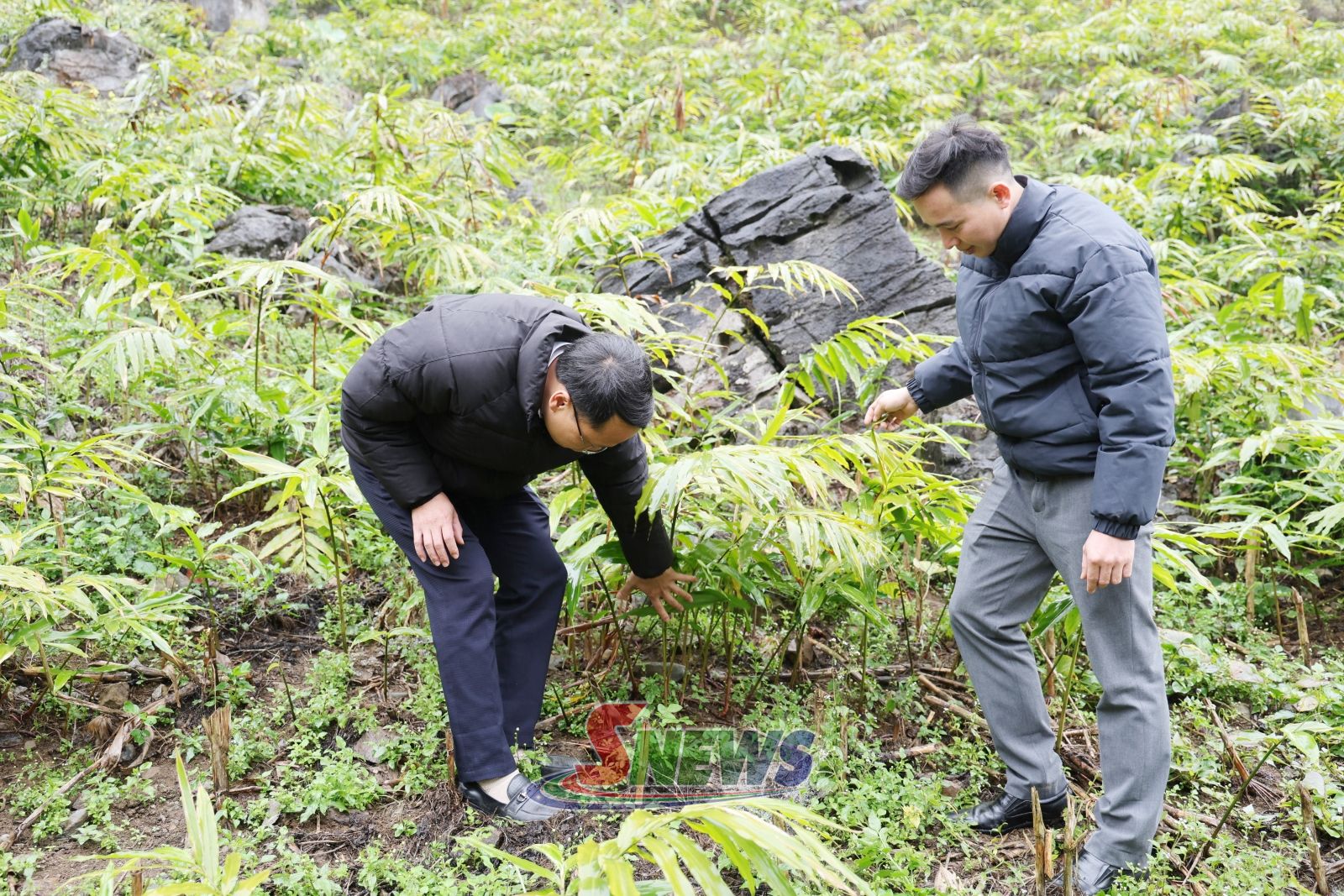
Muong Bang commune officials guide residents in Tuong Han hamlet on harvesting purple amomum.
To establish medicinal herb cultivation as a stable production sector, the commune People's Committee has instructed its General Services Centre to provide technical guidance on planting and care, while studying and selecting quality planting materials. The longer-term goal is to develop a local supply base for seedlings.
The commune is also seeking to connect growers with markets and explore partnerships with businesses involved in medicinal herb purchasing and processing, with a view to gradually establishing an integrated value chain from cultivation to consumption.
Tran Hai Thanh, Chairman of the commune People's Committee, said the commune will continue reviewing and assessing areas suitable for expanding medicinal herb cultivation beneath forest canopies. It will also encourage households to cooperate in production, improve product quality and strengthen links with businesses to secure stable outlets.
Alongside purple amomum, the commune is studying the potential for cultivating other medicinal plants, including Panax notoginseng and Paris polyphylla. Crop selection will be based on ecological conditions, adaptability and market demand to ensure economic viability without compromising existing ecosystems or forest coverage, Thanh said.
From the initial pilot plots, medicinal herbs are gradually demonstrating their adaptability and economic value beneath Muong Bang's forest canopy. As forests provide residents with additional sources of income, their incentive to protect these resources also grows. Further assessment, refinement and selective expansion of the model could help unlock the commune's forestry potential, improve livelihoods, preserve forests for sustainable development./.




You have 500/500 characters left
Please enter 5 or more characters!!!