


Leveraging its favorable climate and soil conditions, Yen Son commune is gradually shifting towards safe and sustainable agricultural production. By supporting businesses, cooperatives and farmers in adopting scientific and technical advances and expanding production linkages tied to product distribution, the commune has developed a number of effective agricultural models, helping increase the value of farm produce and improve local incomes.
On a morning at the vegetable-growing area of Dai Ngan Cooperative, work is in full swing. Across rows of lush cabbage, tomatoes and cucumbers, members are busy harvesting, sorting and packaging produce for delivery to school kitchens. Crates of fresh vegetables are loaded onto vehicles one after another, ready for delivery to consumers.
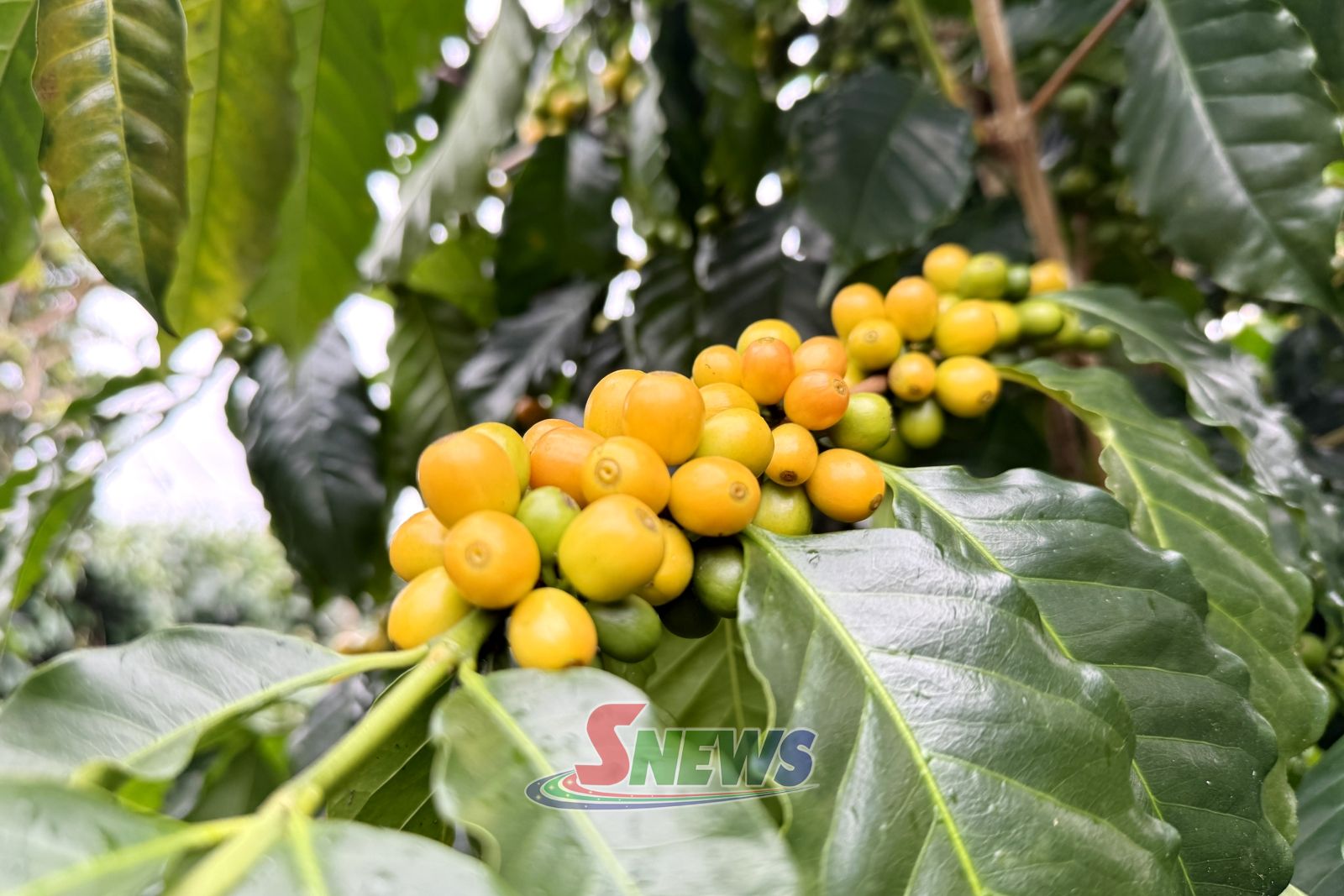
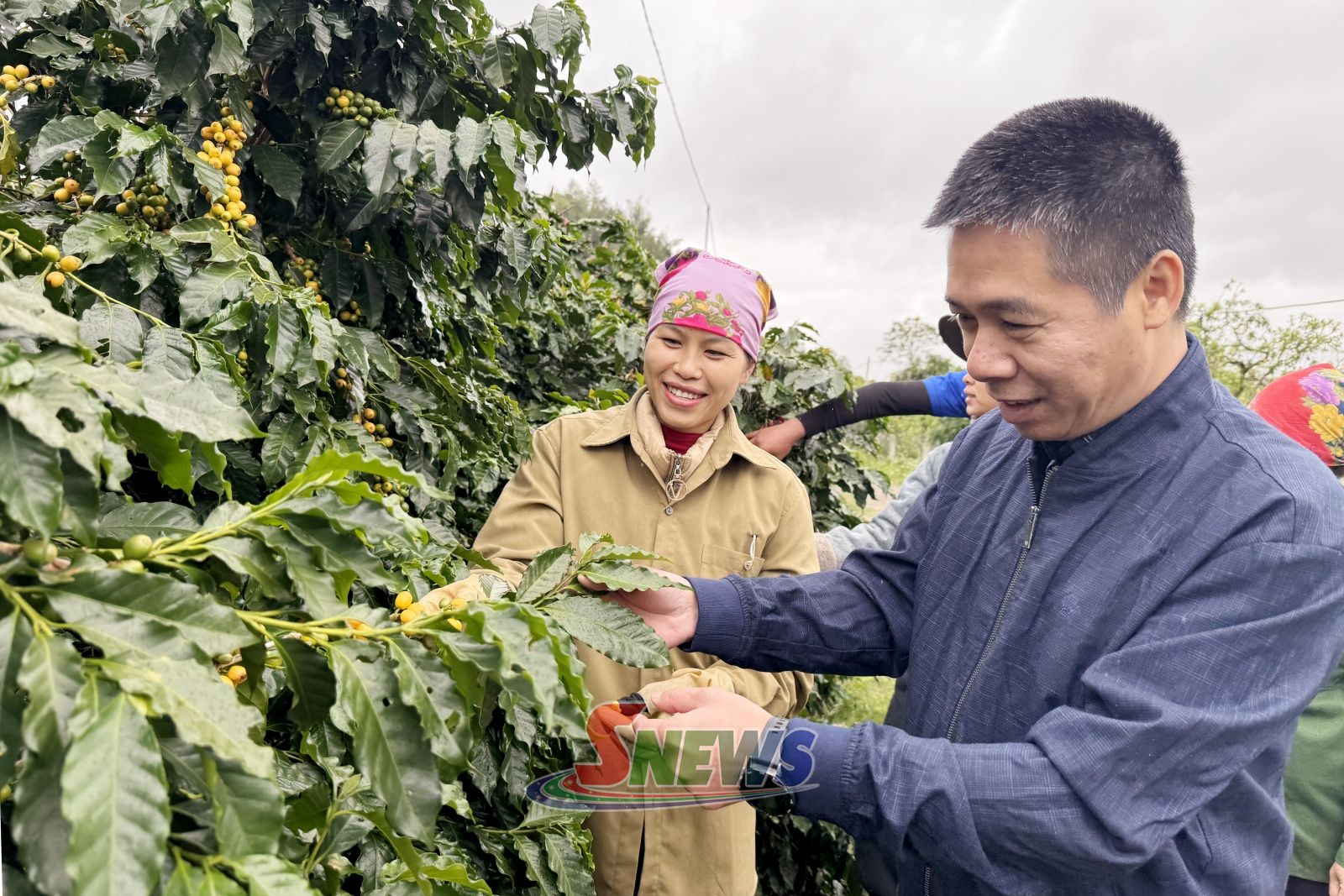
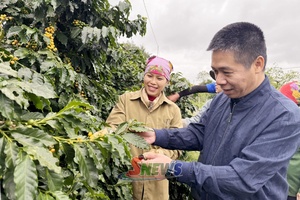
The Yellow Bourbon coffee-growing model at the family of Lo Thi Huong in Kim Son hamlet.
While quickly placing freshly harvested vegetables into crates, Lo Thi Mai, a member of Dai Ngan Cooperative, said her family previously relied on small-scale farming, selling most of its produce at local markets, where sales were unpredictable.
Since joining the cooperative, she has gained access to techniques for making organic fertiliser, maintaining production records and planning crop schedules. More importantly, the cooperative purchases all her produce, giving her family greater confidence to invest in farming and a stable source of income.
Established in August 2026, Dai Ngan Cooperative currently has 10 member households and nearly 20 affiliated ones, cultivating 15 hectares of vegetables and other crops.
To improve product quality, the cooperative guides farmers in applying organic production practices, using livestock waste to make compost, deploying biological traps for pest control, and strictly monitoring pesticide use and pre-harvest intervals.
Director Lo Thi Toan said participation in the GREAT Project had enabled the cooperative to receive training in management skills and establish market connections.
Based on surveys of demand from schools and businesses, the cooperative proactively develops production plans and coordinates planting schedules among member households to ensure a stable supply.
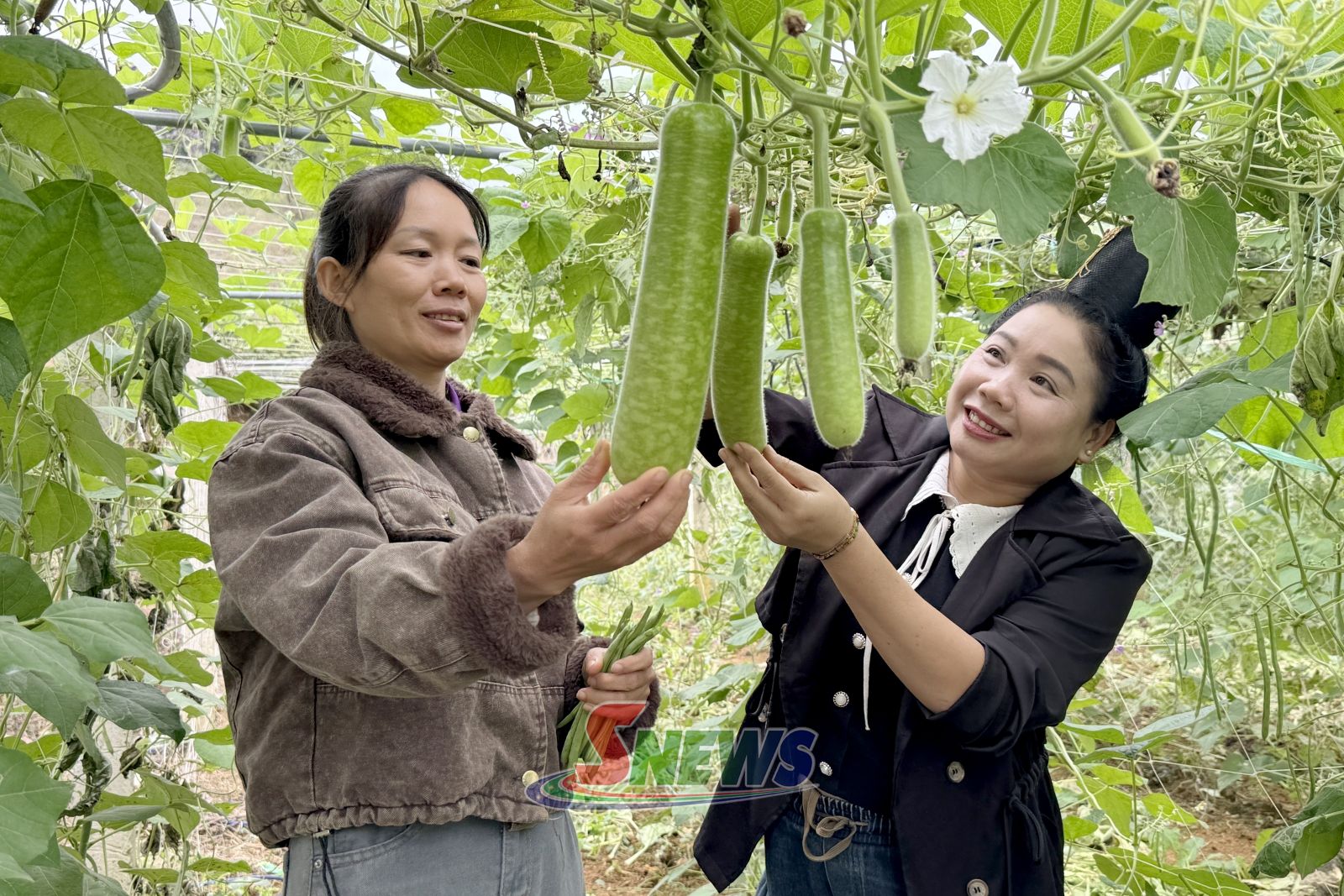
The cooperative currently supplies 500 kg to 1 tonne of vegetables and fruits daily to customers both inside and outside the province, at prices twice as high as those previously obtained through retail sales.
Alongside the development of safe vegetable production, many local households have also begun introducing new, higher-value crops. The family of Lo Thi Huong, a member of Kim Son Agricultural Cooperative in Kim Son hamlet, is among the pioneers in cultivating Yellow Bourbon coffee.
A variety of Arabica coffee, Yellow Bourbon is known for its delicate aroma, mild bitterness, sweet aftertaste and distinctive fruity and cereal notes. Although it requires more demanding cultivation techniques than conventional varieties, it offers significantly higher economic returns.
Huong said her family began growing Yellow Bourbon coffee using organic farming practices in 2024. The first harvest in 2025 yielded four tonnes of fresh cherries, selling for more than 30,000 VND (1.16 USD) per kg.
In 2026, output is expected to reach 8-10 tonnes, with selling prices 20-30% higher than those of conventional red Arabica coffee.
Support in completing growing-area documentation, obtaining QR codes for product traceability and listing products on e-commerce platforms has also made sales easier, encouraging the family to further expand production.
Building on these successful models, agriculture in Yen Son is gradually moving away from fragmented small-scale production towards market-oriented commercial farming supported by stronger production linkages.
Aligning production with quality standards, traceability requirements and consumer demand has enabled farmers to take a more proactive approach to production planning and gradually increase the value generated per unit of cultivated land.
To date, the commune has more than 1,000 hectares of fruit trees, 500 hectares of sugarcane, 130 hectares of coffee, 17 hectares of tea, 800 hectares of maize, over 118 hectares of rice, 70 hectares of cassava and 20 hectares of various vegetables.
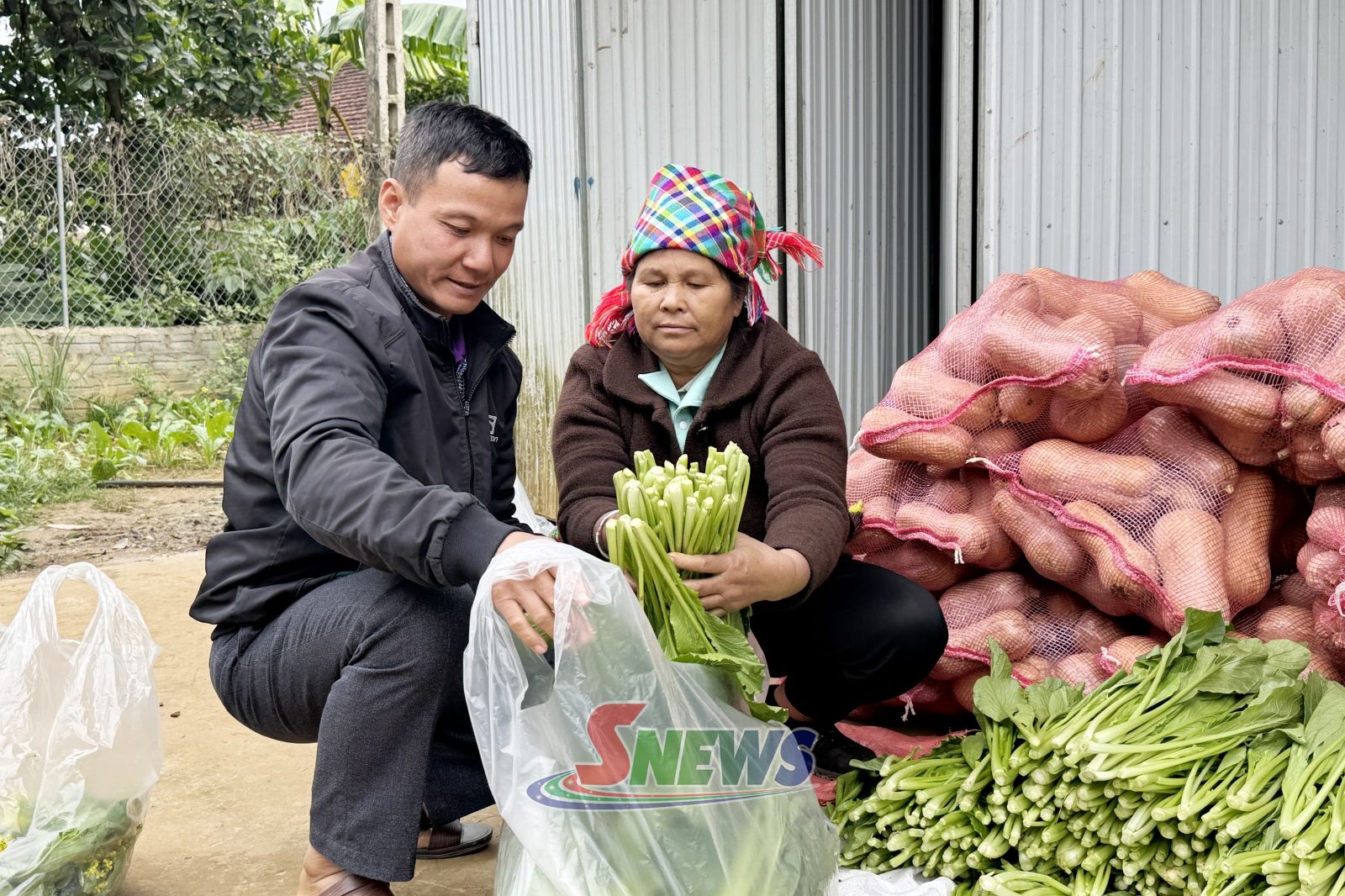
Several concentrated production zones have also been established, creating favourable conditions for expanding partnerships with businesses in agricultural processing and distribution.
According to Do Danh Long, Vice Chairman of the communal People's Committee, the commune will continue encouraging residents to establish cooperative groups and cooperatives and develop concentrated raw material areas linked to guaranteed product offtake.
It will also coordinate with specialised agencies to expand cultivation areas meeting VietGAP and GlobalGAP standards, effectively manage eight specialized growing-area codes, support product traceability labels, develop products under the One Commune One Product (OCOP) programme and promote agricultural products on e-commerce platforms.
From the green vegetable beds of Dai Ngan Cooperative to the Yellow Bourbon coffee hills entering harvest season, the transformation of agricultural production in Yen Son is becoming increasingly evident.
As farmers adopt new production approaches, cooperatives strengthen market linkages and local authorities provide support, agricultural products are not only fetching higher prices but are also gradually establishing a stronger market presence.
These efforts are laying an important foundation for Yen Son to make more effective use of its land resources, increase household incomes and move towards sustainable agricultural development./.



You have 500/500 characters left
Please enter 5 or more characters!!!