


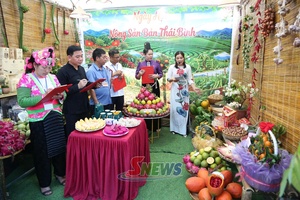
In Hang Trung 1 hamlet, Nong Xanh Cooperative is gradually developing a safe vegetable growing area, capitalising on the region’s cool climate, natural water sources and favourable soil conditions. Established in 2019, the cooperative now farms nearly 7 hectares, producing vegetables and fruits including kale, cabbage, cauliflower, kohlrabi, peas, bitter melon and cucumbers.
The cooperative has focused on reducing the use of chemical inputs, increasing the use of organic fertilisers, applying microbial products and relying on manual weeding. The approach helps control pests and diseases while improving product quality, stabilising yields and gradually increasing the value of farm produce.

Luu Tung Dinh, Director of Nong Xanh Cooperative, said it currently has seven official members and works with 40 farming households in the commune. Each year, the cooperative sells about 300 tonnes of safe vegetables and fruit, generating nearly 2 billion VND (77,150 USD) in revenue.
“Working together has allowed farmers to concentrate production, follow standardised farming practices and secure more stable outlets for their produce,” Dinh said. “It also provides more predictable incomes for participating households and cooperative members.”
Beyond cooperatives, farmers in Van Ho are increasingly forming groups to coordinate production and marketing. One example is the safe vegetable growers’ group in Hang Trung 1 hamlet.
Based on the suggestion of the Van Ho Farmers’ Association, the group plans to establish a professional farmers’ association with 10 participating households. Members have selected crops suited to the local climate and soil, including tomatoes, cucumbers, cabbage and cauliflower, while agreeing on common cultivation practices and adopting safer production techniques.
The aim is to gradually develop a concentrated vegetable-growing area, secure a more reliable supply of produce, improve productivity and build sustainable links with buyers.
Hoang Van Nong, a farmer in Hang Trung 1 hamlet, said cooperation among households gives farmers greater control over production and allows them to pool enough output to meet orders from supermarkets.
“Stable markets give farmers greater confidence to maintain production,” he said. Household incomes currently range from about 6-12 million VND a month, depending on the size of each farm.

The Van Ho Farmers’ Association is also working to connect farmers with businesses and cooperatives, identify new production models, provide technical guidance and help find markets for agricultural products.
The association is encouraging the establishment of professional farmers’ groups, bringing together members engaged in the same occupation to support one another.
Van Ho now has 19 agricultural cooperatives and three professional farmers’ associations with a combined membership of 105. These organisations give farmers greater opportunities to exchange experience, access new farming techniques and expand production, while helping build concentrated production areas and improve the quality and value of agricultural products.

Nguyen Van Bac, Vice Chairman of the Van Ho commune People’s Committee, said the development of high-tech and organic agriculture linked to processing and exports has been identified as a key economic priority for 2025-2030.
The commune plans to shift less productive farmland toward crops with stronger local advantages and market demand, while reorganising production on a larger and more coordinated scale to improve the quality and value of agricultural products.
A key focus is strengthening ties among farmers, cooperatives and businesses to develop commercial-scale production areas and gradually build value chains spanning cultivation, processing and distribution. The goal is to secure stable markets and raise farmers’ incomes.
By changing their approach to farming and strengthening links from production to sales, farmers in Van Ho are gradually improving the economic returns from agriculture.
A more market-oriented approach to crop selection, combined with greater cooperation and shared economic interests, is helping agriculture in Van Ho move toward larger-scale, safe, modern and sustainable production./.

You have 500/500 characters left
Please enter 5 or more characters!!!