

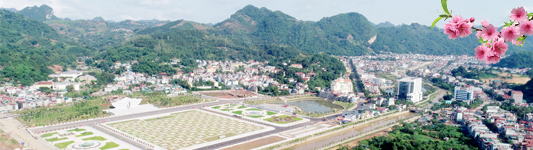
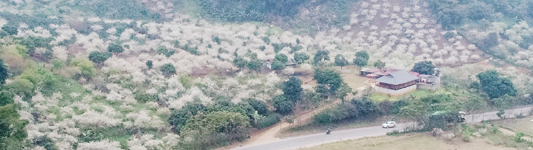

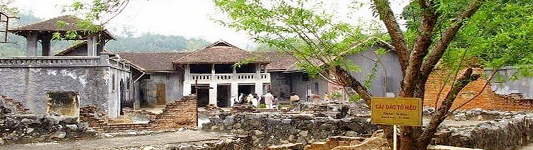
Muong Bam is more than 60km from Thuan Chau commune’s centre and borders Co Ma, Long He and Bo Sinh communes, as well as Muong Luan and Xa Dung communes in Dien Bien province. The commune was not subject to a merger and has a population of more than 10,700, comprising three ethnic groups - Thai, Mong and Kho Mu. It covers more than 76sq.km, including around 1,200ha of agricultural land.
Many households in the area still rely on traditional farming practices, with small-scale production, limited access to capital and inadequate technical knowledge leaving living conditions difficult.
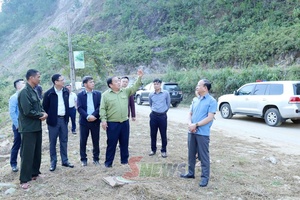
Recognising that improving people’s livelihoods must begin with changes in agricultural production, the commune’s Party Committee and authorities have focused on reorganising production areas and guiding the restructuring of crops and livestock in line with local natural conditions and market demand.
At the same time, the commune has worked with the Vietnam Bank for Social Policies and the Vietnam Bank for Agriculture and Rural Development (Agribank) to help residents access loans for production investment. Total outstanding loans under various credit programmes in the locality have now reached nearly 50 billion VND (1.92 million).
Ta Dang Hai, Chairman of the Muong Bam commune People’s Committee, said that to help residents change their approach to production, the commune has focused on providing access to capital while regularly sending officials to hamlets to raise awareness and guide farmers in replacing low-efficiency crops with fruit trees and industrial crops, as well as developing large-scale livestock farming through stall-feeding combined with grass cultivation for animal feed.
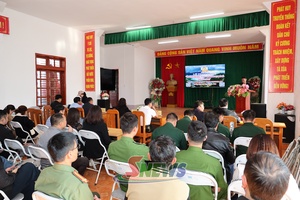
To improve production efficiency, the commune has also worked with the provincial Centre for Agricultural Extension and Digital Transformation to establish community agricultural extension teams, sending technical staff directly to hamlets to guide residents in caring for crops and livestock under new production processes.
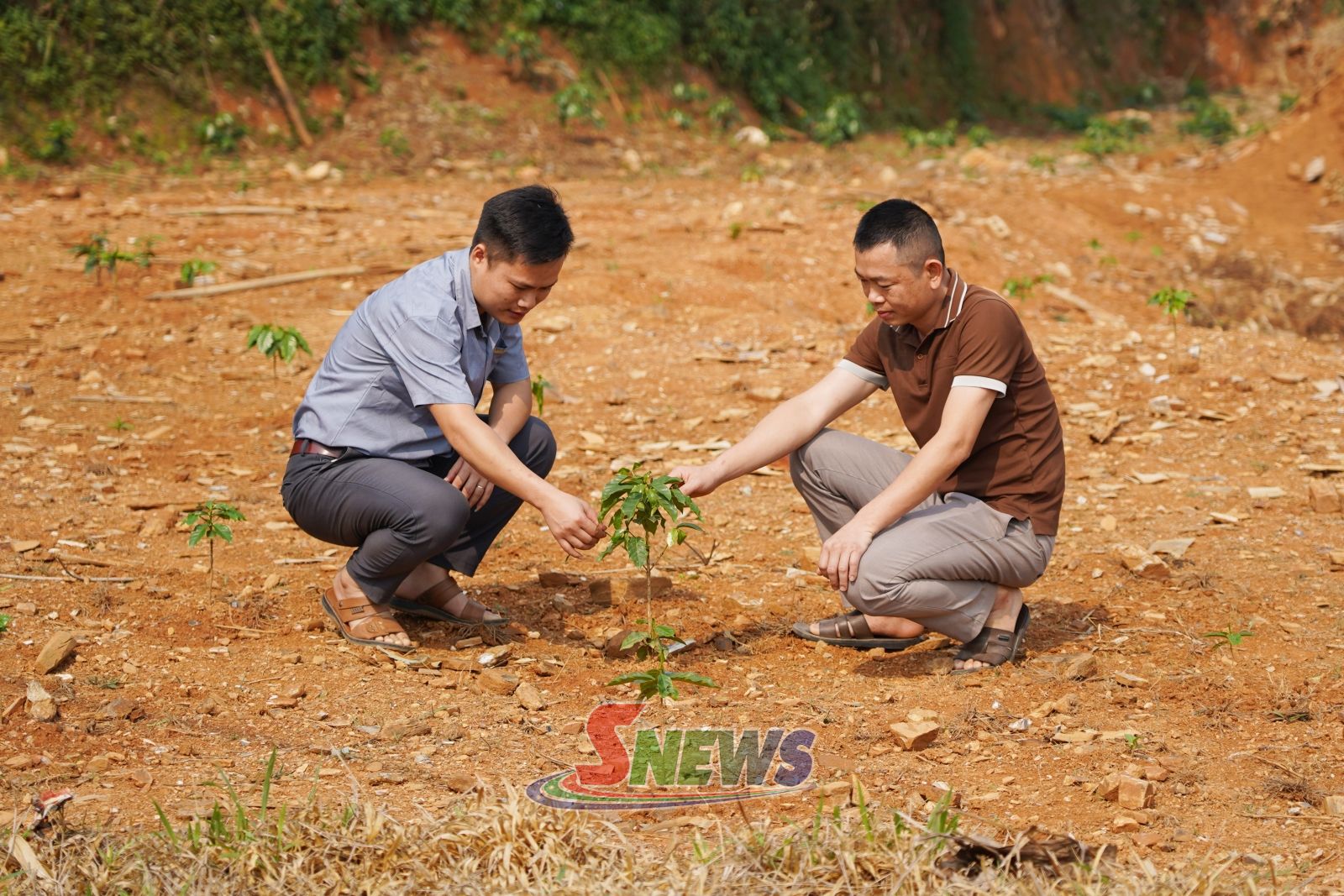
The commune also encourages organic farming and the use of agricultural by-products to produce organic fertiliser, helping reduce production costs and protect the environment.
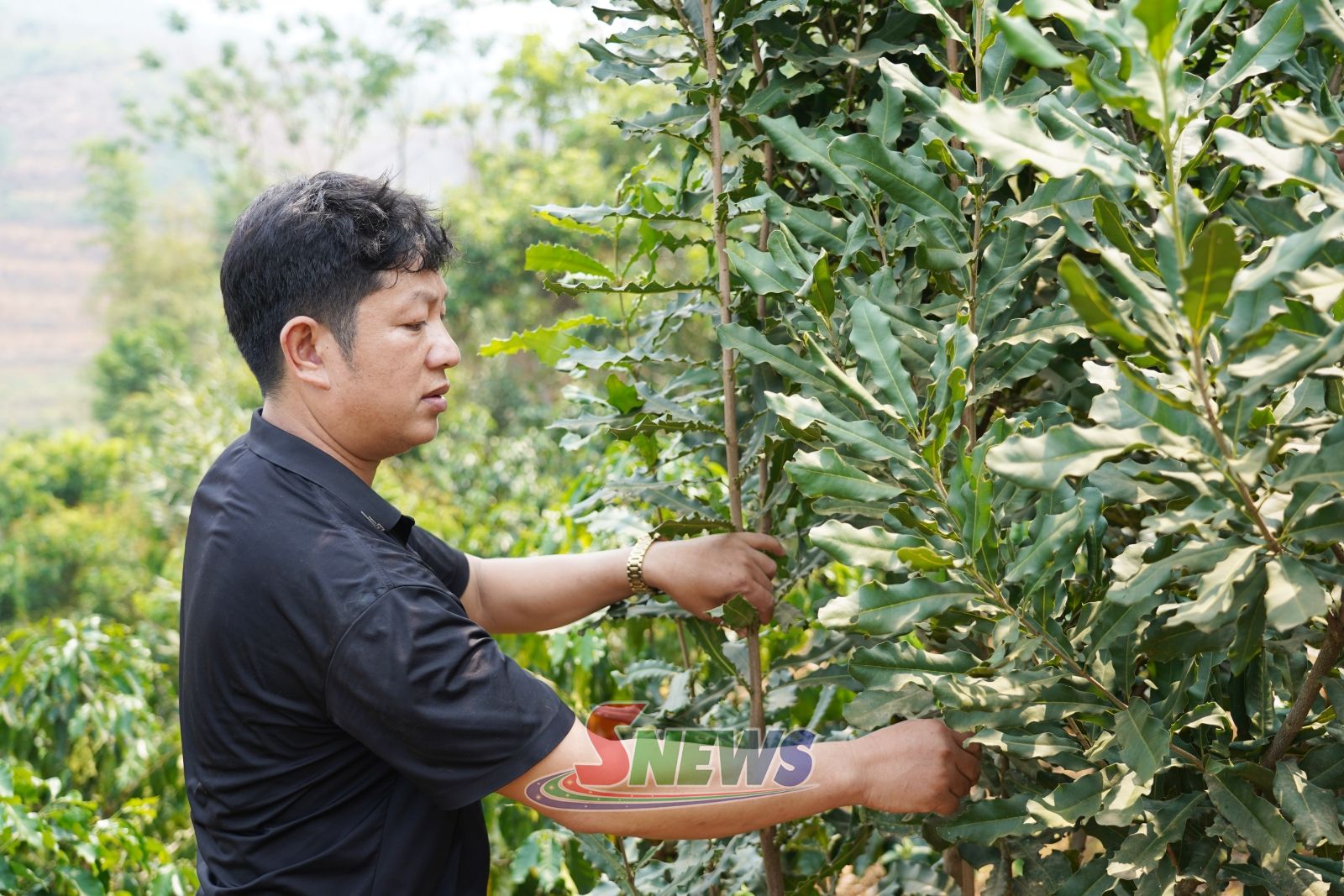
As someone directly involved in providing technical guidance, Lo Van Quang, an agricultural extension officer at the commune’s General Services Centre, said that instead of relying on theoretical training, technical staff now work directly with farmers in the fields and livestock sheds, showing them how to carry out each task so that the techniques are easier to understand, apply and adapt to real-world conditions.
Thanks to this approach, many previously low-productivity areas in Muong Bam have been converted to higher-value crops. Residents are gradually taking the initiative in applying scientific and technical advances, following proper cultivation processes and developing livestock farming toward commercial production.
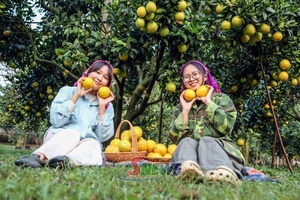
The commune now has nearly 177ha of coffee and almost 180ha of fruit trees, along with 17ha of macadamia and more than 9ha of cardamom. Food crops cover more than 473ha. In livestock farming, nearly 208ha of grass has been planted as feed, while the commune has more than 9,000 head of livestock and over 40,400 poultry.
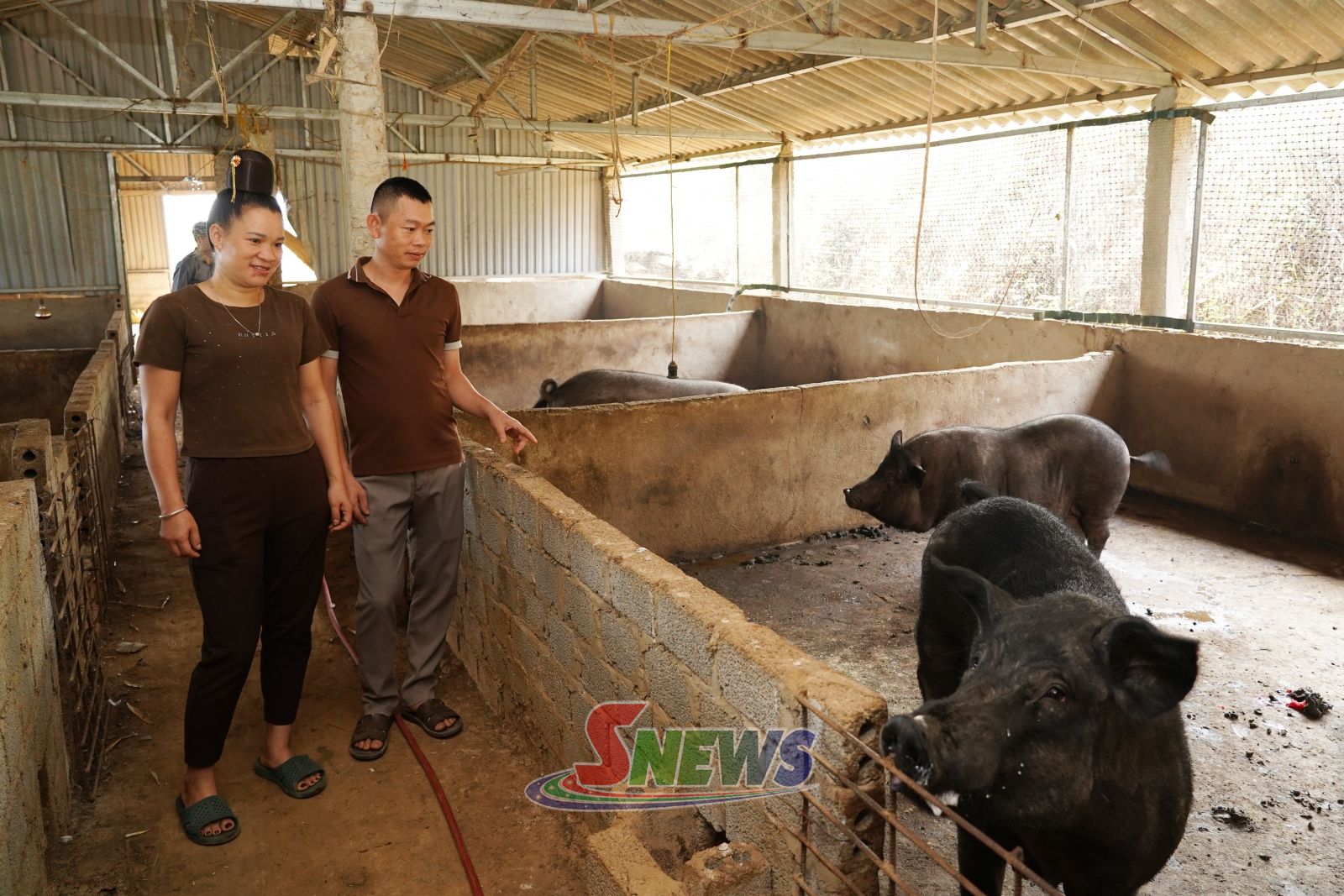
The family of Lo Van Thinh in Na Cau hamlet is among those that have taken the lead in transforming their production model. Previously, their 2ha of land was mainly used for mixed home-garden crops, generating low returns. After receiving technical guidance and assistance in accessing capital, Thinh converted 1ha to coffee, while using the remaining land to build cattle sheds and grow grass.
This year, the coffee plantation began producing, yielding more than four tonnes of coffee cherries. His cattle herd is sold in two batches each year, with 15-18 head sold per batch. After deducting costs, the family earns more than 120 million VND a year.
Thinh said that in the past, production relied mainly on experience and therefore generated limited returns. With technical guidance and access to loans for investment, his family became more confident in changing its production model. Their economic situation has since become more stable, with living standards improving year by year.
Bold changes in production thinking are gradually transforming local people’s lives. This is an important driving force for Muong Bam to work toward its target of reducing the poverty rate to below 15% by 2030, as set out in the Resolution of the commune Party Congress for the 2025-2030 term.


You have 500/500 characters left
Please enter 5 or more characters!!!