


Long Hom is home to 362 Mong households in the mountainous commune of Phieng Cam. The narrow, steep dirt road connecting the hamlet with the commune centre has long made travel difficult. During the dry season, it is shrouded in dust, while in the rainy season it becomes muddy and slippery. Agricultural produce such as corn, cassava and coffee has to be transported by motorbike. Students also face difficulties getting to school. A concrete road has therefore long been a hope and aspiration for generations of local residents.
The Tong Chinh-Na Va road project is 7 km long, with a 3m-wide concrete surface. It has a total investment of more than 15 billion VND (590,000 USD), funded by the National Target Programme on Socio-Economic Development in Ethnic Minority and Mountainous Areas. The project is implemented over 2025-2026, with the Phieng Cam commune People’s Committee as the investor and Khang Lan Co., Ltd. of Chieng Sinh ward as the contractor. The road is an important transport link for the mountainous commune of Phieng Cam.
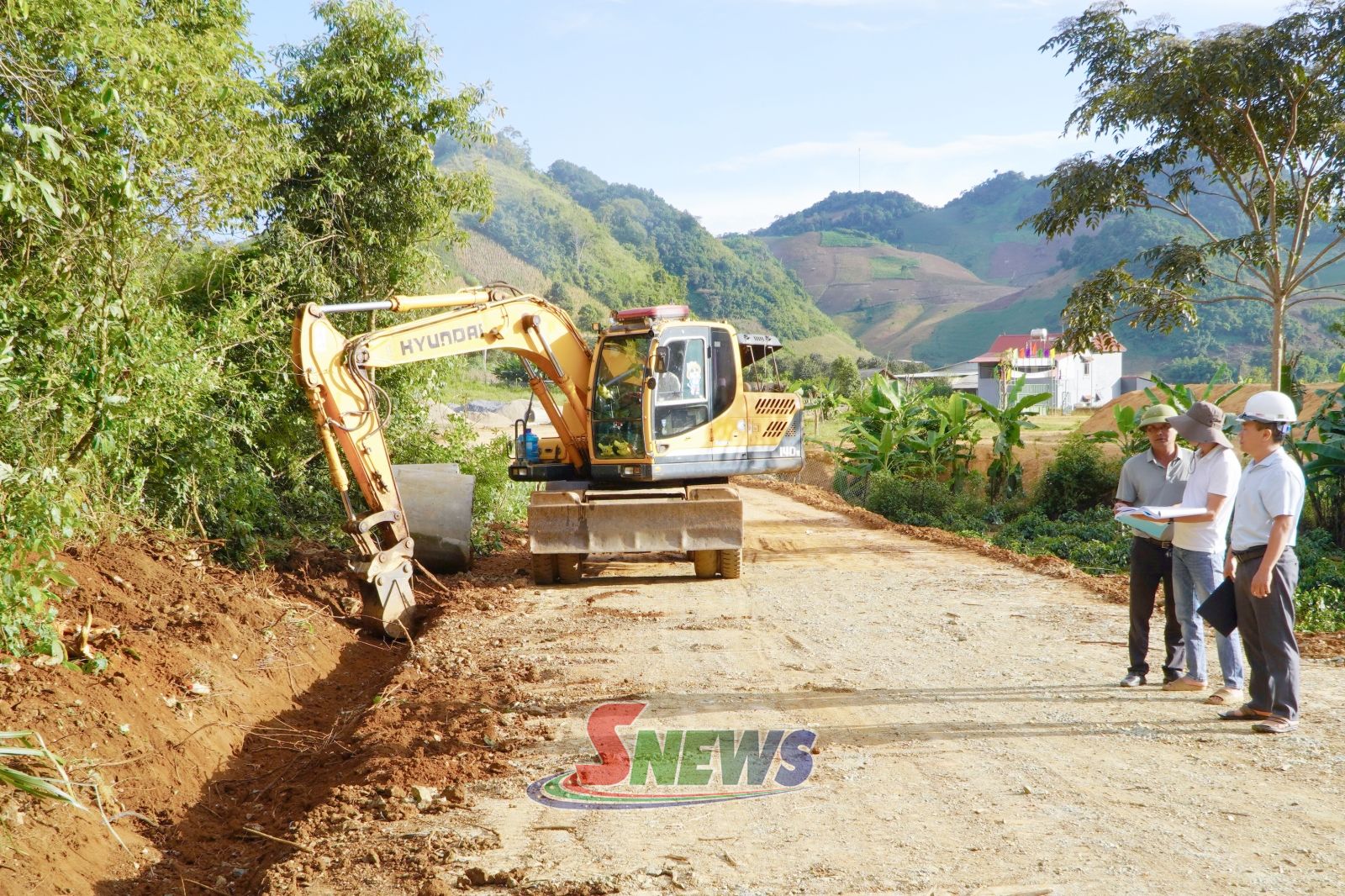
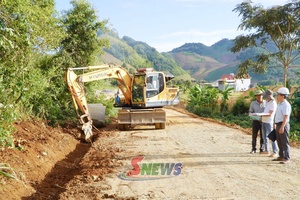
Construction activity has been brisk in recent days, with multiple work crews operating simultaneously. Machinery has been running continuously, while workers focus on completing drainage ditches, culverts and the concrete road surface.
Tran The Khang, Deputy Director of Khang Lan Co., Ltd., who has been directly overseeing construction, said the company is taking advantage of favourable weather and mobilising as many workers and vehicles as possible, while organising work crews efficiently. Alongside efforts to accelerate construction, the company is paying particular attention to ensuring that the project complies with its design and technical and quality requirements. About 70% of the work has now been completed, with the company targeting completion in December 2026.
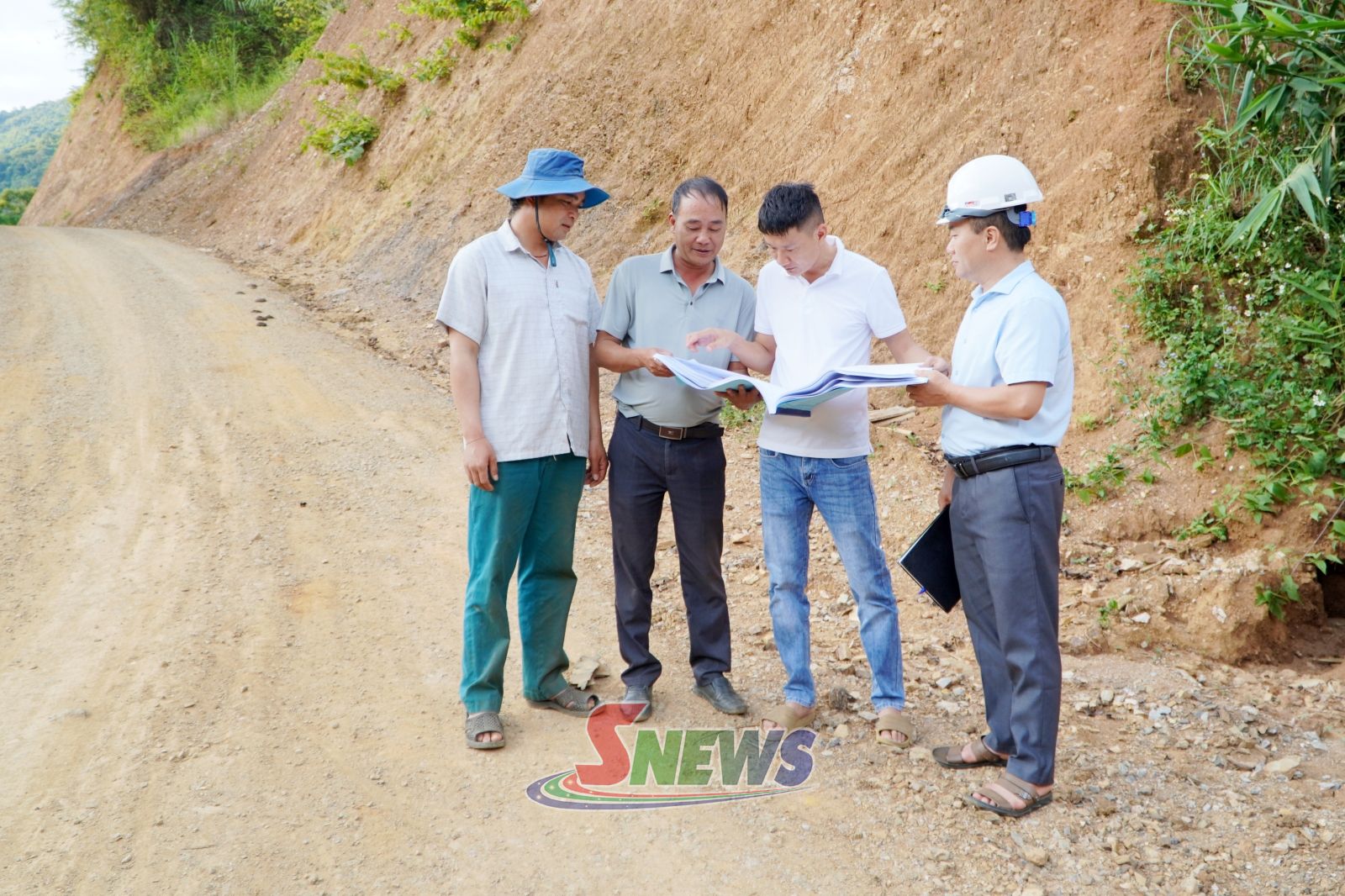
For residents of Long Hom, the road has been a long-standing aspiration. Since the project began, 45 affected households have voluntarily donated thousands of square metres of land and moved fences and trees to hand over the site without seeking compensation.
Ly A Pao, who frequently visits the construction site and whose family is among those whose land has been most affected in the hamlet, said his family had voluntarily donated 1,500 square metres of coffee- and corn-growing land within the road clearance area.
“It is certainly a loss to part with productive land, but the road is for the long-term benefit of the entire hamlet. Once the new road is completed, travel will be easier and it will also be easier to transport coffee and corn,” he said. “That is why my family agreed to donate the land so the project can be completed soon.”
Giang A Senh, the hamlet head, also regularly visits the site to monitor construction and works with the contractor to address problems that arise. He said there are 127 households living along the Tong Chinh-Na Va route. The area is also a major production zone, with nearly 10 hectares of corn and 985 hectares of coffee.
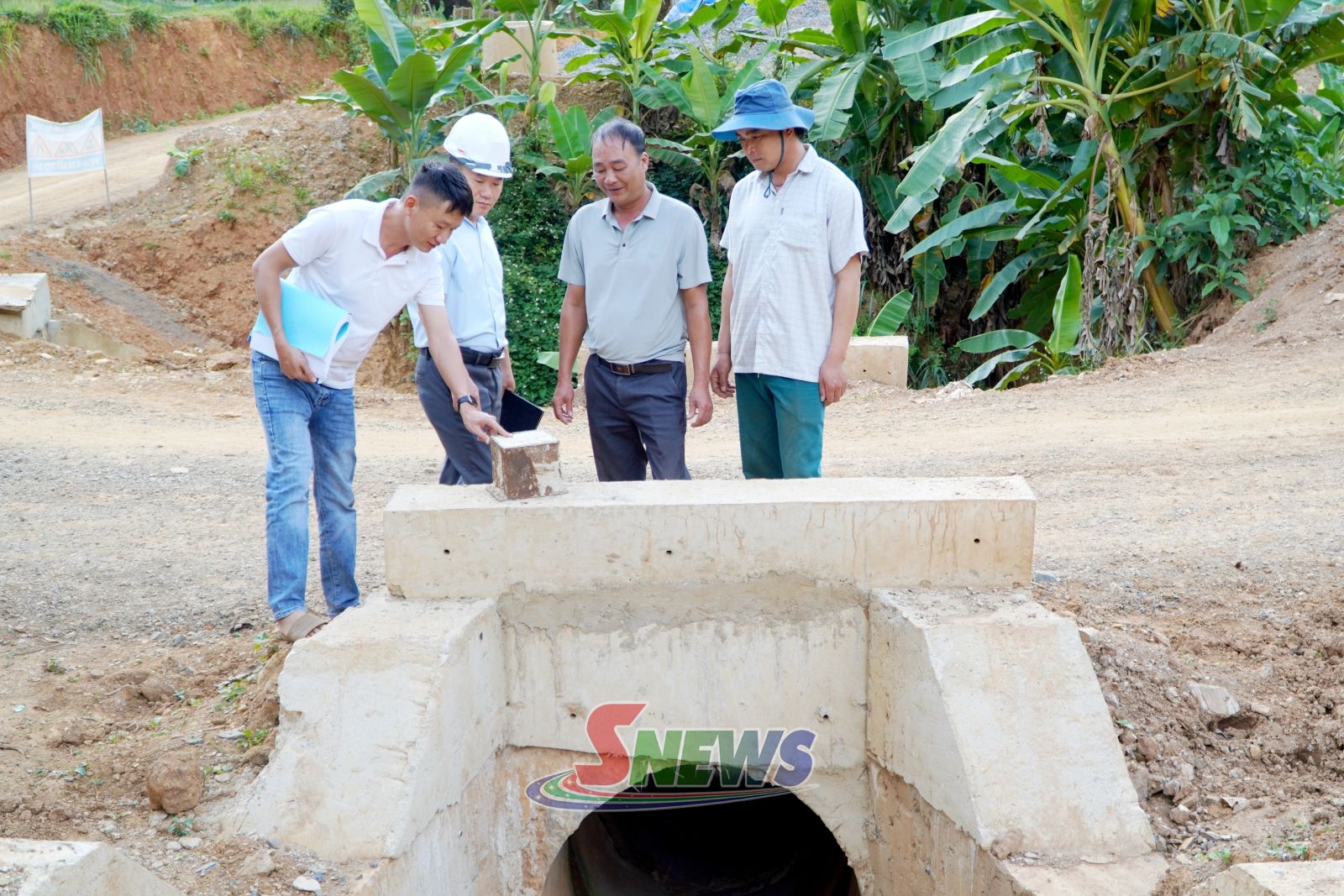
“The biggest difficulty comes during the harvest season. Coffee and corn have to be transported by motorbike all the way to Provincial Road 113 to reach buyers,” he said. “Once the road is completed, vehicles will be able to travel more easily, production materials will be easier to bring in, and trucks will be able to reach the fields to collect harvested coffee and corn, reducing the time, effort and costs for local residents.”
To facilitate the project, Phieng Cam commune established a working group and coordinated with the hamlet to explain the purpose and significance of the project to households whose land lies within the road corridor.
Alongside urging the contractor to speed up construction, the commune People’s Committee has regularly assigned technical officials to inspect the site, monitor progress and coordinate timely responses to problems arising during construction. The goal is to ensure both timely completion and quality so that the road can deliver long-term benefits once it is put into use.
Dang Tien Dung, Chairman of the Phieng Cam commune People’s Committee, said that following administrative restructuring, the commune now has 15 hamlets and more than 270 km of rural roads, including 19 inter-commune routes and 34 hamlet roads. Only about 48 km have so far been upgraded with permanent surfaces.
“Investment in and completion of the transport system is therefore important for the locality,” Dung said. “Once completed, the Tong Chinh-Na Va road will provide better connections between the hamlets and the commune centre, serve residents’ travel needs and facilitate the transport of production materials and agricultural products, contributing to local socio-economic development.”
With close direction from local Party committees and authorities, support from residents and the contractor’s commitment, the road is expected to be completed and opened on schedule. It will shorten travel distances from residential areas and production zones to the commune centre and major transport routes, while creating better conditions for trade and production and gradually improving transport infrastructure in Phieng Cam.
The road is also expected to provide greater opportunities for remote mountain hamlets to tap their potential and improve local living standards.







.jpg)






You have 500/500 characters left
Please enter 5 or more characters!!!