


 Ban blossoms are used to decorate trays, making them more visually appealing.
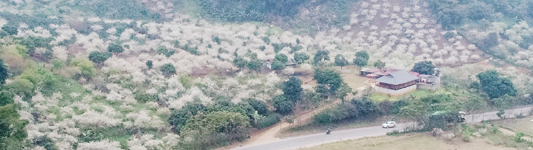
In the spiritual life of the Thai ethnic community in the Northwest, ban flower is closely associated with daily life, traditions and long-standing culture, symbolising faithful and enduring love.
In culinary culture, ban blossoms are a prized ingredient used to create distinctive dishes that capture the unique flavours of March. Few flowers offer such a wide and elaborate range of preparation methods as the ban flower. From salads and stir-fries to soups and bone stews, each dish carries its own unique taste.
.
 Dishes made from ban blossoms.
Driven by her love and passion for Thai ethnic cuisine, Quang Thi Cuong is among those pioneering efforts to elevate traditional culinary culture to new heights, offering an appealing menu at Nang Ban Sinh Quang restaurant, a popular and well-frequented dining spot in Chieng Coi ward.
Speaking about dishes made from ban flower, Cuong said that to make a delicious ban flower salad, it is essential to select freshly bloomed blossoms with thick petals and stamens still holding the early morning dew. After being picked, the blossoms are cleaned by removing the stems, gently washed to avoid bruising, then lightly blanched and mixed with bitter bamboo shoots or wild vegetables, along with spices measured according to the cook’s experience.
When eaten, ban flower offers a light, crisp and slightly sweet taste, blending with the bitterness of bamboo shoots and the pungent spiciness of garlic, chili and mac khen pepper. This combination stimulates the palate, making the dish appealing and unforgettable even for first-time diners.
 Ban flower salad served at Nang Ban Sinh Quang restaurant.
In March, as spring rains refresh the forests, bitter bamboo shoots come into season. Long regarded by local communities as a precious gift from the mountains and forest, bitter bamboo shoots are a familiar dish closely tied to the lives of generations in highlanders.
Their season also marks the beginning of traditional festivals of the Thai, La Ha, Kho Mu and Khang ethnic groups, held to express gratitude to deities and to pray for favourable weather, bountiful harvests, good health, peace and a prosperous, happy life.
 Wild bamboo shoots, a precious gift from the mountains and forests.
Only at the onset of March do tender bamboo shoots emerge from the ground, nestled beneath layers of decaying leaves, carrying a delicate sweetness and a mild bitterness. When combined with ban blossoms in salads or soups, the bitterness of the shoots blends with the pungent spiciness of garlic, chili and mac khen pepper, awakening the palate. This is then softened by the lingering sweetness of the ban flower, creating a balance that makes the dish’s aftertaste both memorable and irresistible.
Nguyen Dinh Tuan, owner of the Tuan Gu restaurant chain in the Moc Chau National Tourist Area, said the restaurant prioritises the use of fresh local ingredients and adapts ethnic cuisine to meet customer demand. As a result, dishes are selected based on the availability of seasonal ingredients.
During this period, the menu prominently features dishes made from bitter bamboo shoots and ban blossoms, both to diversify offerings and to introduce Son La’s distinctive culinary culture to visitors.
 Simple yet appealing dishes made from bamboo shoots and wild vegetables.
Having visited Son La many times, Trinh Minh Tien, a visitor from Lam Dong province, shared his fondness for the region’s ethnic cuisine: “I am very impressed by dishes made from ban blossoms, bitter bamboo shoots and various wild vegetables, blended with the distinctive spices of the Northwestern mountains. The ban flower salad alone offers a unique and captivating taste. Diners can finish an entire plate and still feel light, without any sense of heaviness or boredom - on the contrary, they often find themselves wanting more."
March cuisine in Son La is not merely a combination of local ingredients, but a fusion of historical depth, cultural beauty and warm hospitality. Each pristine white ban blossom and each early-season bitter bamboo shoot carries the breath of the mountains and forests - priceless gifts from nature with unforgettable flavours. And so, every March, Son La seems to extend an invitation to visitors from afar, welcoming them to immerse themselves in the rich and captivating flavours of Vietnam’s northwestern highlands.













You have 500/500 characters left
Please enter 5 or more characters!!!