

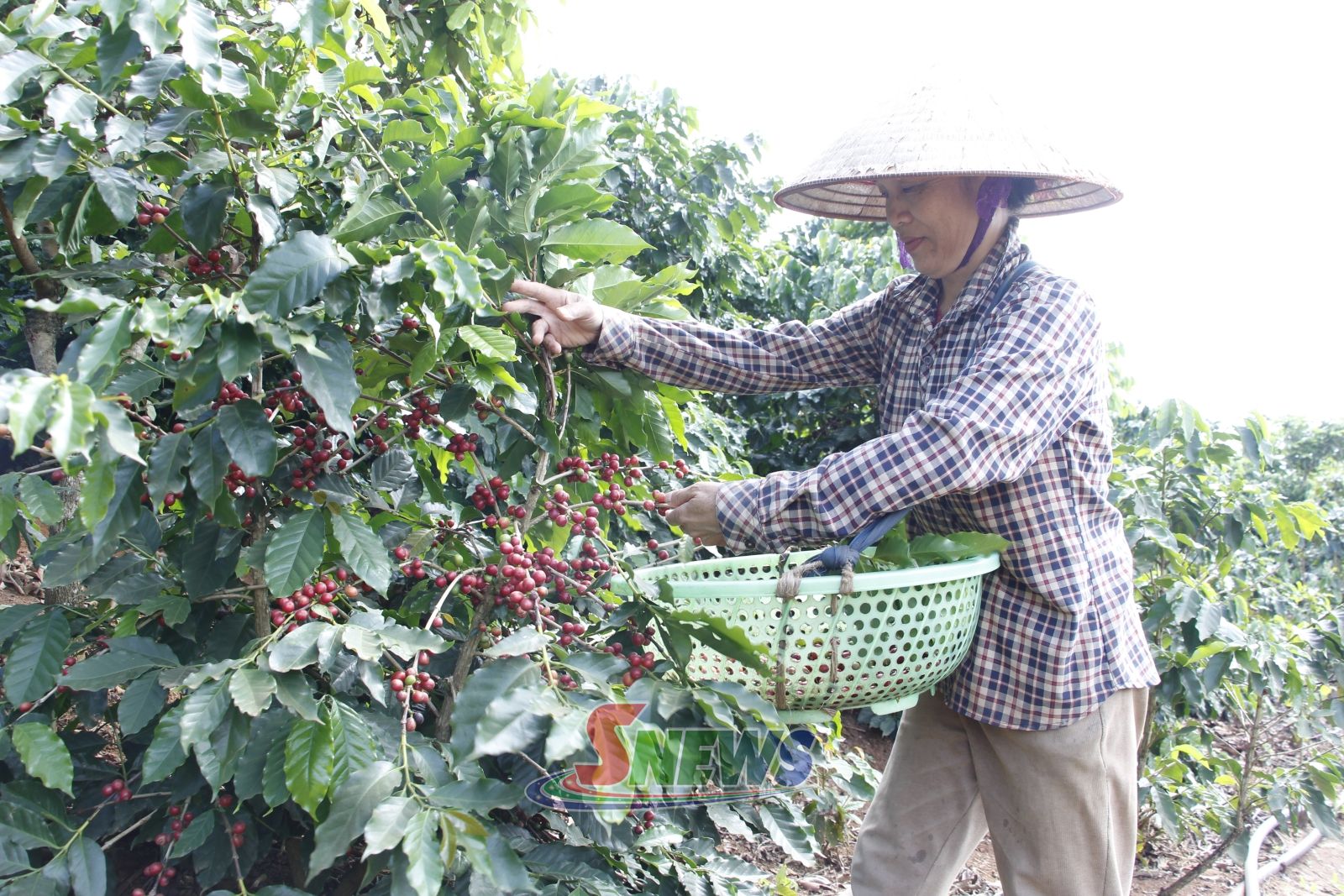
As the harvest season gets underway, farmers across Chieng Coi are busy picking ripe coffee cherries, bringing a bustling atmosphere to plantations throughout the ward. In Residential Area 8, where coffee covers 221 hectares, yields this crop are estimated at 10-12 tonnes of fresh cherries per hectare.
.jpg)
Nguyen Xuan Phao, a local farmer, said his family owns 5 hectares of coffee and has years of farming experience combined with advanced techniques learned through training courses organised by the ward.
The approach has helped his coffee trees produce larger and more uniform cherries this year, he said, adding that output is expected to reach about 50 tonnes. With peak-season prices averaging around 25,000 VND ($0.96) per kg, the family expects revenue of roughly 1.2 billion VND ($46,120).
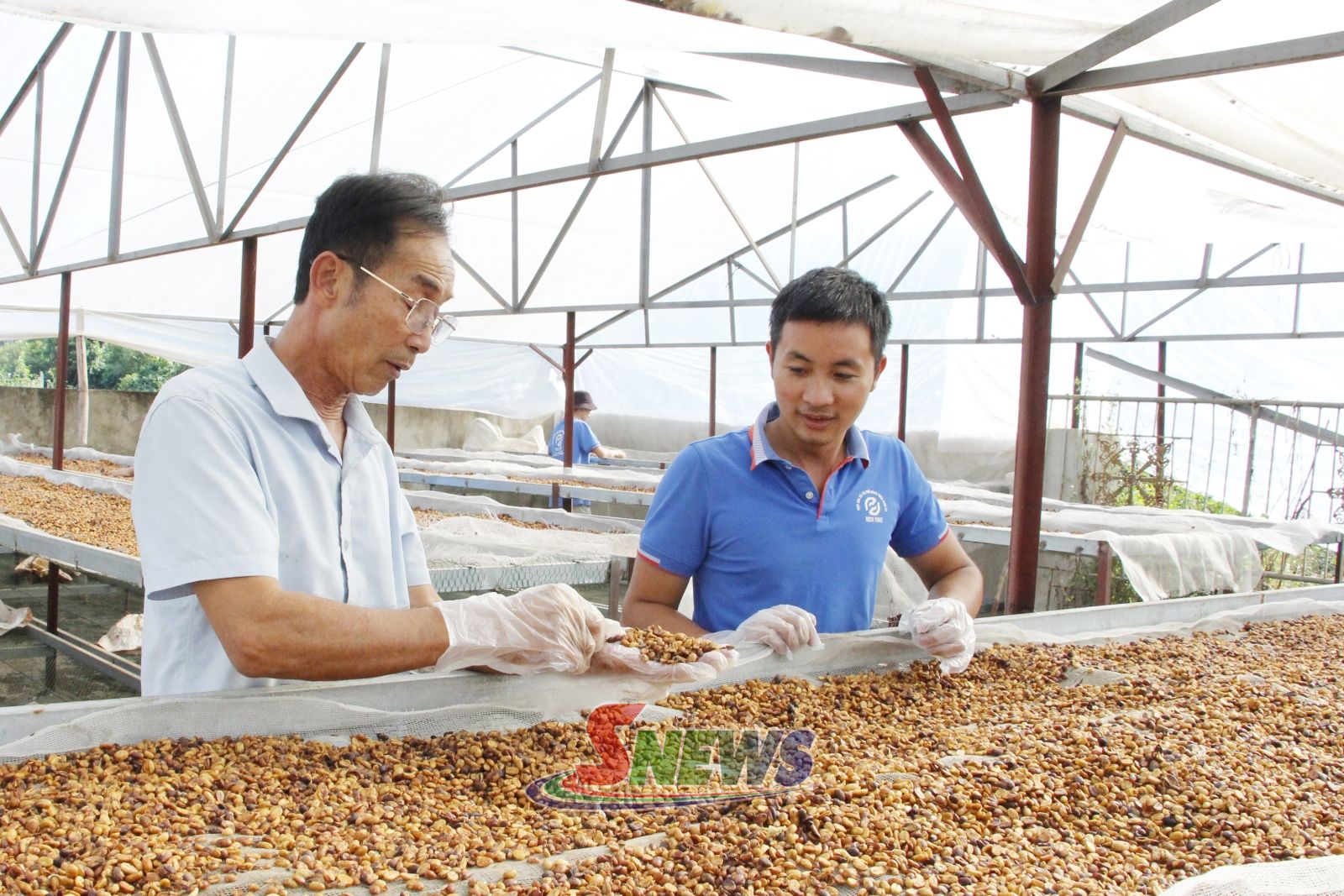
As a key hub for coffee production and market linkages in the ward and Son La province, Bich Thao Son La Coffee Cooperative in Residential Area 8 currently manages more than 60 hectares of specialty THA1 coffee grown under organic practices.
The cooperative also works with more than 800 farming households and cooperatives across the province, creating a supply area of more than 1,000 hectares. Its preliminary processing and export processing lines have a capacity of 60-80 tonnes of green coffee beans per day.
Nguyen Xuan Thao, the cooperative's director, said that in July it received 1 billion VND in funding from the Thien Tam Fund to invest in deep processing equipment. The investment is expected to provide stable employment for 25 disadvantaged households and seasonal jobs for 50-60 workers, he said.
In the 2026-27 crop year, the cooperative expects to sell between 2,000 and 4,000 tonnes of green coffee beans, including about 120 tonnes of specialty coffee, to Germany, the US, the UK, Japan and the Republic of Korea.
Ot Dau hamlet is another major coffee growing area in the ward, with 377 households cultivating more than 315 hectares. Le Van Huong, the hamlet head, said close support from the ward, including technical training and guidance on replanting, had given farmers greater confidence to invest in, maintain and expand their coffee plantations. Coffee farming has helped lift average per-capita income in the hamlet to more than 150 million VND a year, he said.
To improve coffee quality and increase the value generated from each hectare, the Chieng Coi People's Committee has worked with relevant agencies to establish a 1.5-hectare pilot model for climate-resilient coffee plantation rehabilitation in Ot Dau hamlet.
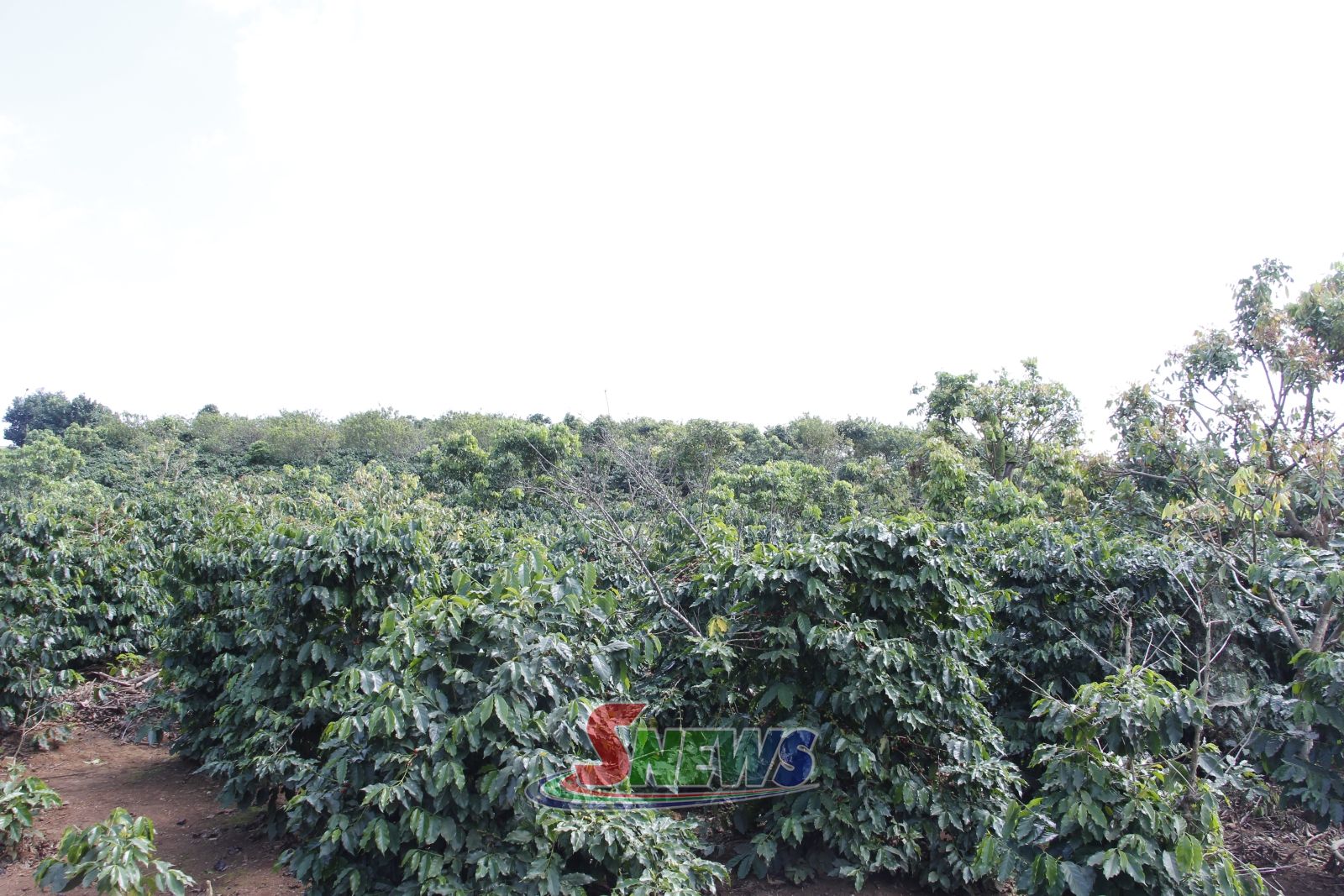
The programme promotes the maintenance of vegetation cover to prevent soil erosion and provides technical training for hundreds of farmers in low-emission agricultural production, microbial composting, efficient fertiliser use, coffee cultivation and plantation rehabilitation.
The ward has also raised awareness among farmers and provided guidance on meeting the European Union Deforestation Regulation (EUDR).
So far, farmers across the ward have cut down and replanted 43 hectares of old coffee plantations, while more than 10 hectares have been newly planted or replanted.
To secure quality planting material for replanting, three facilities in the ward have been certified as seed-source gardens. They include a 0.5-hectare garden with 2,500 TN1 seedlings in Residential Area 9, Hom Yen; a 0.2-hectare garden with 1,000 TN2 seedlings in Hun hamlet operated by the Tay Bac Agriculture and Forestry Development and Research Centre; and a Catimor SLA seed garden with 1,200 plants operated by Chien Thang Plant Varieties Cooperative in Residential Area 8.
Looking ahead, Chieng Coi aims to further develop its coffee sector on a sustainable basis. Doan Xuan Thi, Vice Chairman of the Chieng Coi People's Committee, said the immediate goal is to work with Bich Thao Coffee Cooperative to complete an application for recognition by the provincial People's Committee of a high-tech agricultural production zone by the end of 2026.
The ward will also work with relevant agencies to review and build a database of coffee growing areas that complies with the EUDR, he said.
By 2030, Chieng Coi aims to raise the average annual value of coffee production to 200-250 million VND per hectare and replant more than 250 hectares with new varieties during 2026-30.
The ward plans to focus on developing sustainable Arabica coffee production through linkages among farmers, cooperatives and businesses; expand the use of advanced agricultural technologies; increase production of specialty coffee and coffee certified as organic, 4C or Rainforest Alliance; and promote environmentally friendly processing. It will also continue providing farmers with technical training and transferring agricultural technologies.
Coordinated measures by local authorities, combined with the proactiveness of farmers and cooperatives, are laying the foundation for Chieng Coi's coffee growing region to strengthen its brand, increase the value of its crop and pursue sustainable growth./.






You have 500/500 characters left
Please enter 5 or more characters!!!