

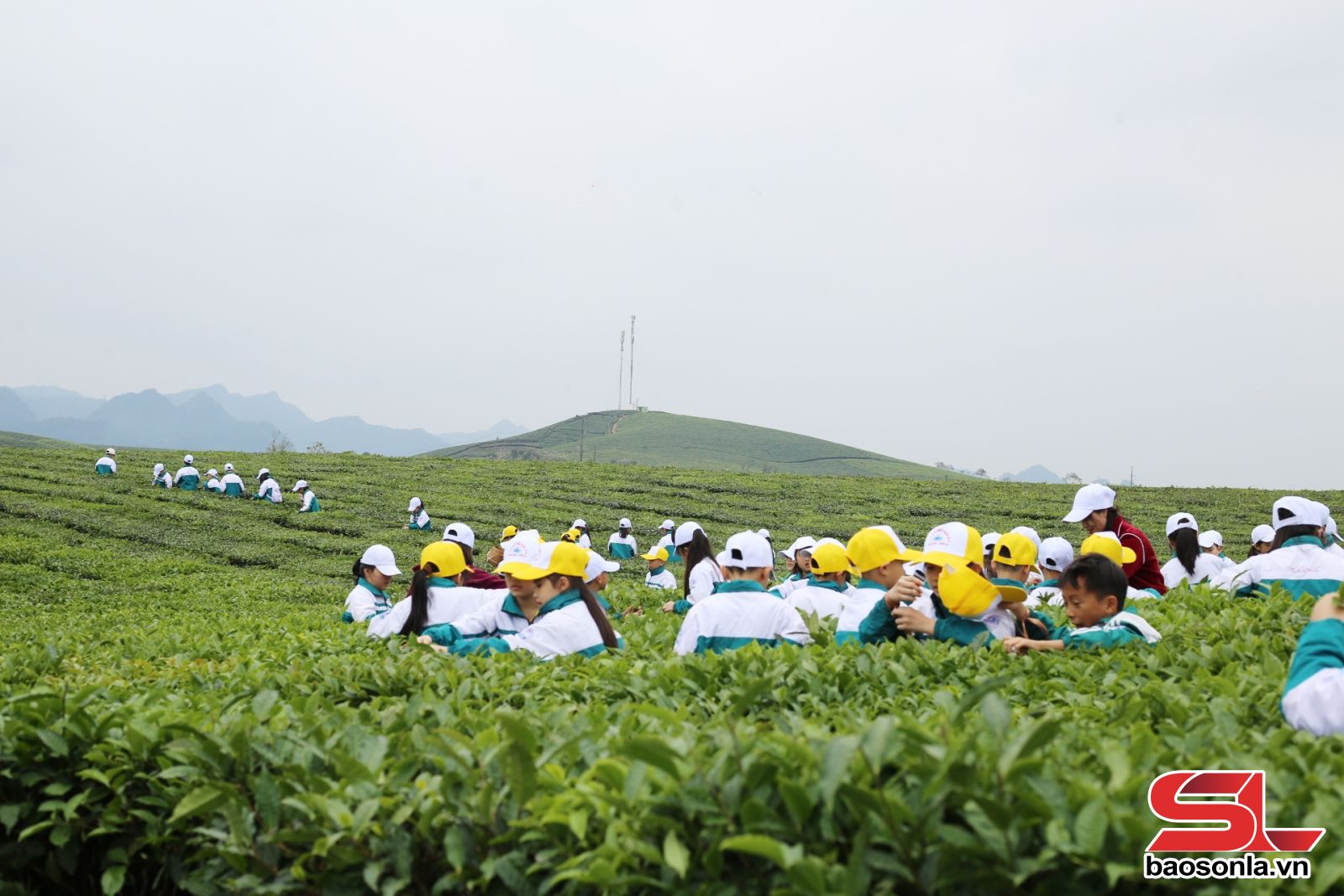
Students experience tea picking at Mocha Hill Tourist Area, Van Son ward.
At Mocha Hill Tourist Area, visitors not only admire the lush green tea hills but also learn about tea harvesting and processing. Ngo Huy Viet, Director of Mocha Hill, said the site manages 3 hectares of tea plantations. Visitors can transform into “real farmers,” starting their journey by wearing traditional baskets and hats to hand-pick tea buds, then exploring traditional and modern roasting techniques, and finally enjoying a fragrant cup of tea amid the fresh natural surroundings.
This model produces clean products while serving as an effective tourism approach, directly and vividly promoting Moc Chau tea to domestic and international visitors. The site is currently building the organic tea brand “Mocha Tea,” with an annual output of about 500 kilogrammes of dried tea.
With creativity and innovation, since mid-2025, Mocha Hill has introduced a new product line: matcha peanut candy. The combination of the rich nuttiness of peanuts and the distinctive mild bitterness of green tea powder creates an appealing flavour. Enjoying crispy candy with a hot cup of tea in the breezy tea hills brings a sense of peace and relaxation. Boxes of matcha peanut candy have become popular specialty gifts for visitors to take home.
.jpg)
Visitors experience making matcha peanut candy at Mocha Hill Tourist Area, Van Son ward.
Nguyen Thi Thu Ha, a visitor from Hanoi, shared after finishing roasting tea and packaging candy: “My family has visited the Moc Chau Plateau many times, but the experience at Mocha Hill is different. Picking tea, inhaling its aroma in the workshop, and making matcha peanut candy excited my children. The harmony between tea and candy flavors makes this a memorable agricultural cultural experience.”
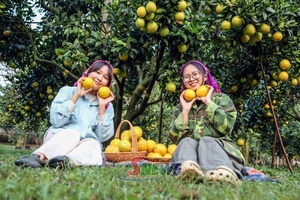
Meanwhile, the 19/5 Agricultural Development Services Cooperative, established in 2000, cultivates 20 hectares of plums and apricots and has invested in modern workshops and machinery with a processing capacity of 300-500 tonnes of fruit per year. From fresh plums and apricots grown on hillside farms, the cooperative produces branded products such as plum wine, apricot wine, dried plums, and dried apricots.
Mai Duc Thinh, Director of the 19/5 Cooperative, emphasised that deep processing creates higher added value and helps farmers remain committed to local specialty crops. In 2025, the cooperative received 288 million VND (11,000 USD) from the province’s industrial promotion fund to invest in two modern vacuum dryers, each with a capacity of 300 kilogrammes per batch. This has improved product quality and reduced pressure to sell fresh fruit. A complete processing chain enables stable production and sustainable livelihoods for farmers in the raw material area.
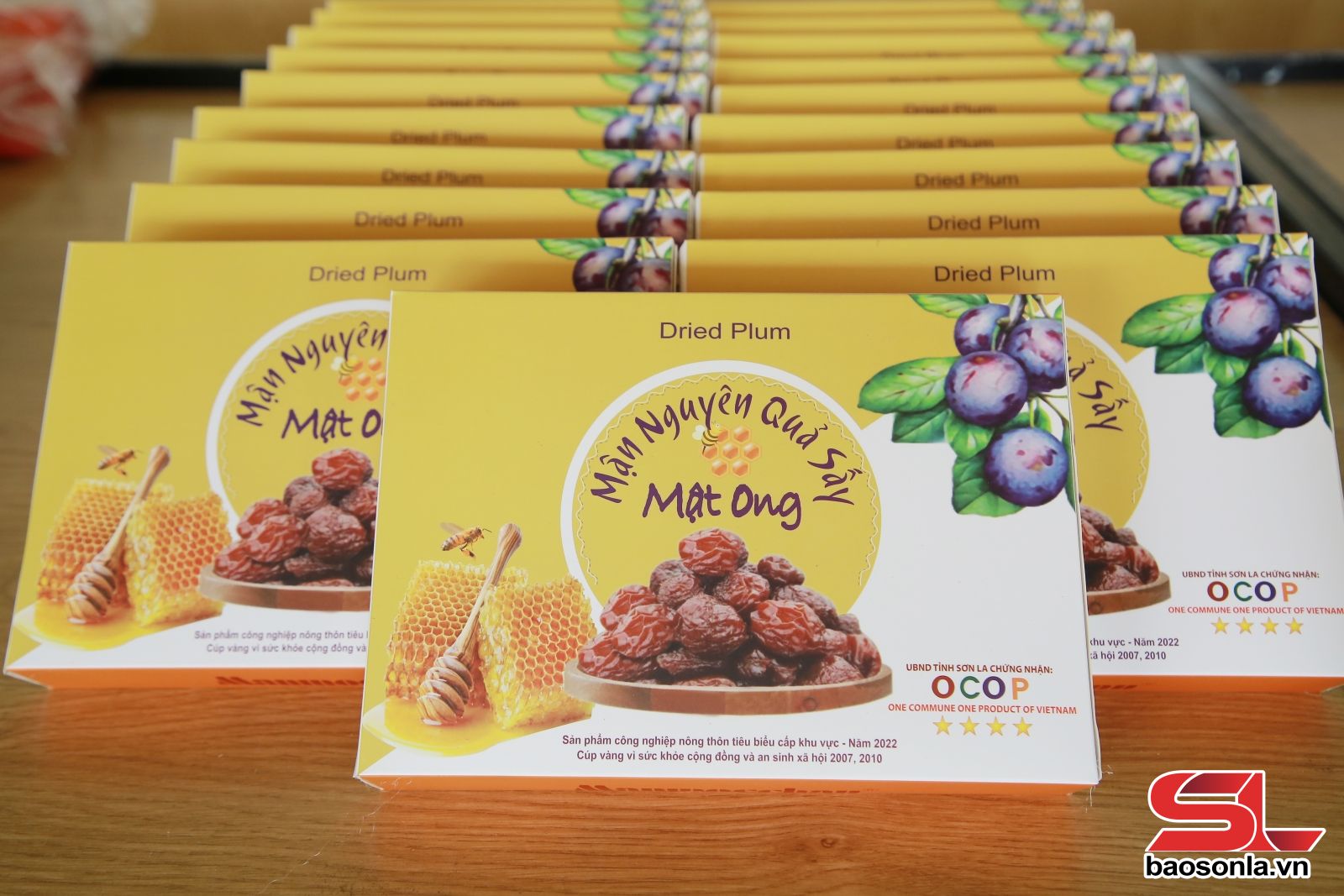
Van Son ward’s agricultural landscape is increasingly diverse, with more than 155 hectares of fruit trees producing an estimated 2,700 tonnes of fresh fruit annually, and 840 hectares of tea yielding 7,595 tonnes of fresh tea buds. Enterprises, cooperatives, and households actively apply scientific and technological advances: 29 cooperatives and households use water-saving irrigation systems; 28 have built greenhouses or net houses; five cold storage facilities and one refrigerated truck are maintained for preservation and transport. The production value per hectare of cultivated land reaches 66 million VND.
Tran Quang Hoang, Vice Chairman of the ward People’s Committee, said local authorities will continue facilitating administrative procedures to attract enterprises and cooperatives to invest in deep processing. The ward also encourages expanding high-tech agricultural models linked with the One Commune One Product (OCOP) programme to elevate local brands. With the dynamism of cooperatives and the responsiveness of residents, Van Son is expected to develop more high-quality agricultural products that deliver sustainable economic value.
The coordinated efforts of local authorities and the renewed production mindset of cooperatives and farmers in Van Son ward have resulted in high-quality agricultural products associated with processing investment. This enhances market competitiveness, generates tangible economic benefits, and contributes to the locality’s socio-economic development.


You have 500/500 characters left
Please enter 5 or more characters!!!