

 Cage fish farming on Quynh Nhai reservoir.
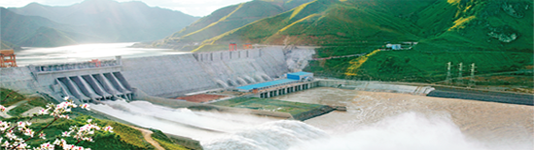
Arriving at the Son La hydropower reservoir these days, visitors standing on the Pa Uon Bridge can look out across the lake and see hundreds of fish cages clustered together and bobbing on the water. It is hard to imagine that the once-turbulent Da River has been transformed into what is now described as a “Ha Long Bay in the heart of the Northwest.”
Across the vast reservoir, more than 2,800 fish cages have been developed in a systematic and durable manner by 24 cooperatives and hundreds of small-scale producers and traders. Annual aquaculture output and natural catches in the area exceed 1,000 tonnes, with cage farming accounting for more than 750 tonnes.
The range of farmed fish species is highly diverse, with both common varieties and high-value species. In recent years, in addition to selling commercial fish, cooperatives and households have increasingly moved into processing to diversify products and enhance the value of local aquatic products.
 Da River fish cakes and sausages on display at the 2026 Quynh Nhai Culture, Sports and Tourism Week.
Pioneering seafood processing in Quynh Nhai, Dao Thi Hieu’s household business in Sub-zone 3 currently has two products — Da River fish cakes and sausages recognised as three-star OCOP (One Commune One Product) items. In addition, the family also produces made-to-order products such as fish floss, fermented shrimp paste and dried fish for customers both within and outside the province, with consumption reaching nearly one tonne per month.
Cooperatives and producers across the commune are also actively maintaining commercial fish farming while expanding into seafood processing. The most common products include frozen fish cuts, deboned fish fillets, dried small fish and various dried fish products. Several large cooperatives, including Ho Quynh Aquaculture Cooperative, An Binh Cooperative and Do Thiet Cooperative, are focusing on producing premium commercial fish, particularly high-value specialty species such as hemibagrus, black carp and bagrid catfish, which offer strong economic returns and stable demand.
 Tourists purchase processed fish products in Quynh Nhai.
Recently, Song Da Xanh Aquaculture Cooperative has successfully developed a bio fish protein fertilizer product. The liquid organic fertilizer is produced using hydrolysis technology based on fish raw materials and by-products from dried fish and fish cake processing. It is designed for foliar spraying or soil application across vegetables, fruit trees, industrial crops, and ornamental plants.
The cooperative currently produces around 20 tonnes of fish protein fertilizer per year, supplying local farmers and orchards within the province.
The “Song Da Xanh” bio fish fertilizer project was highly rated for its feasibility and won second prize at the “Business Acceleration Lever” competition organised by the GREAT 2 sub-project management board under the provincial Women’s Union in April.
 Fish protein fertilizer production at Song Da Xanh Aquaculture Cooperative.
Alongside efforts to encourage and guide cooperatives and local residents in developing aquaculture, Quynh Nhai commune is also placing strong emphasis on protecting and restoring natural fishery resources.
The locality has strengthened inspections and monitoring of fishing activities, taking a strict stance against destructive practices such as the use of explosives, electric fishing devices, and fine-mesh nets. At the same time, it periodically conducts fish stocking campaigns to replenish aquatic resources in the reservoir.
 Processed aquatic products.
Quynh Nhai identifies aquaculture as a key sector for harnessing local advantages and creating sustainable livelihoods for residents.
The commune plans to maintain and upgrade existing OCOP-certified aquatic products while working with relevant agencies, units, and enterprises to research and develop new processed aquatic products in the time ahead. It is also stepping up trade promotion and market connectivity to help cooperatives and local producers expand consumption channels.
More effective use of water resources, combined with a renewed approach to processing and product commercialisation, is revitalising aquaculture and fishing activities in Quynh Nhai. A shift toward value-added seafood processing is seen as a long-term solution for the sustainable development of the sector in the reservoir area.

.png)


You have 500/500 characters left
Please enter 5 or more characters!!!