

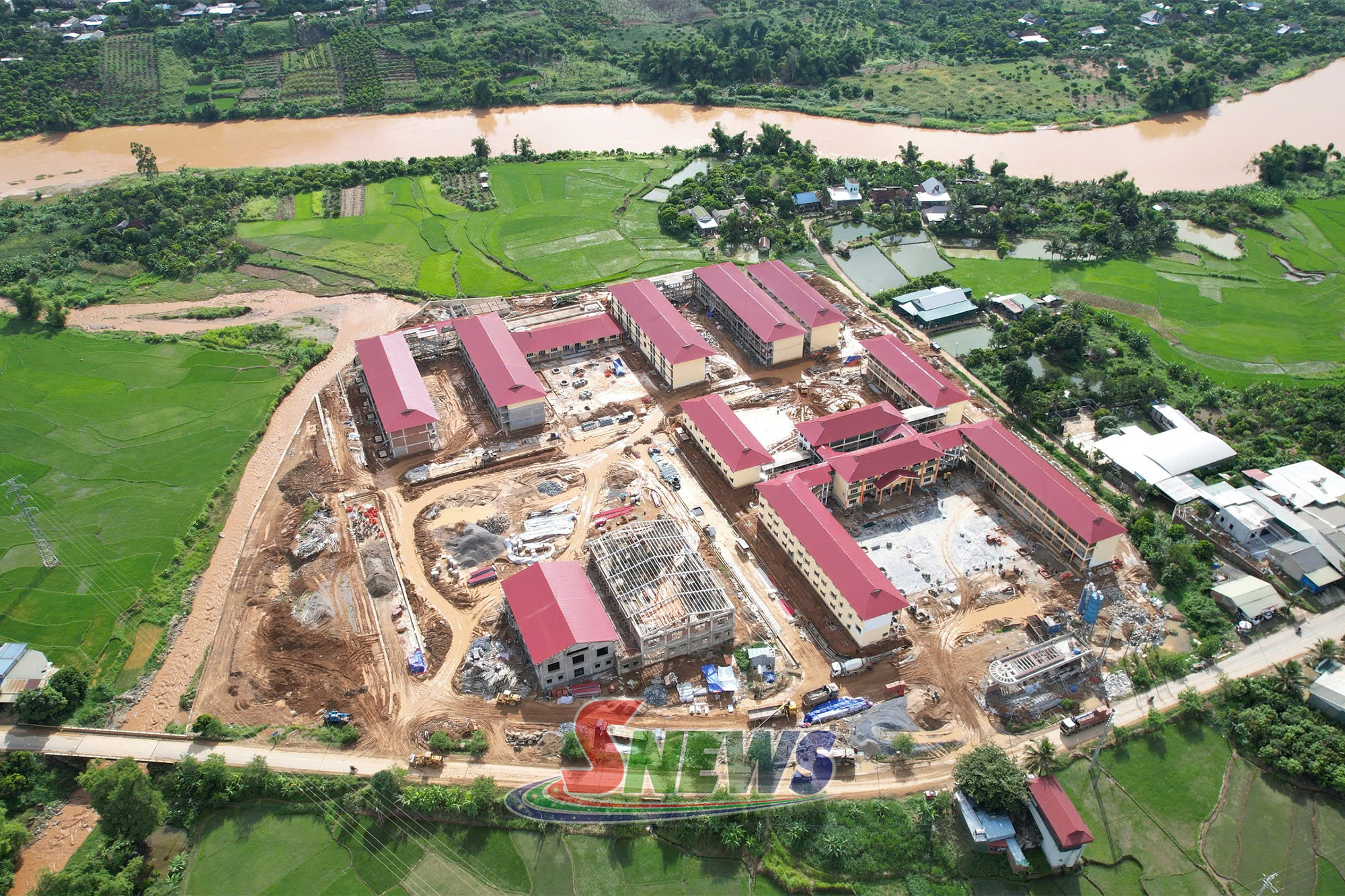
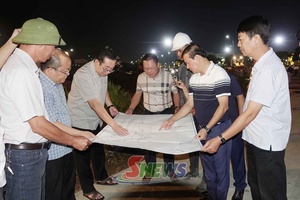
At the Phieng Pan Primary and Secondary Boarding School, construction has entered a busy phase. Work began on October 22, 2025, with total investment of nearly 240 billion VND (9.2 million USD). The project includes 30 classrooms, boarding facilities, subject-specific classrooms, a multipurpose building, library, sports grounds and other supporting facilities, designed to accommodate more than 1,000 students.
Construction in the border area has faced a number of challenges, including high material transportation costs, prolonged rainfall and fluctuations in material prices. To keep the project on schedule, the contractor consortium has increased manpower and equipment and adjusted construction plans to make the most of favourable weather conditions.
To support the contractors, the provincial Military Command mobilised 80 military personnel and 100 militia members from several localities to assist with construction. The project has now entered the finishing stage, with the military and contractors continuing to work on the remaining tasks in an effort to put the school into operation before the start of the new academic year.
After spending 10 days working at the construction site, Tong Van Huong, a militia member from To Hieu ward, said he was happy to help build a school for local children.
“Working conditions are still difficult, but everyone works together and supports one another,” Huong said. “Seeing the project take shape day by day gives us even more motivation to contribute so the children can soon have a better place to study.”
The involvement of military personnel and militia has provided additional manpower at a time when workloads are heavy and deadlines are tight, allowing contractors to work on multiple items simultaneously.
Do Van Thang of Phu Tho-based Phuc Thang Co., Ltd., a contractor involved in the project, said the support from soldiers and militia had enabled the company to organise several tasks at the same time, particularly during the push to accelerate construction.
“They work responsibly and seriously, making it easier for us to organise construction and complete the project’s components on schedule,” Thang said.
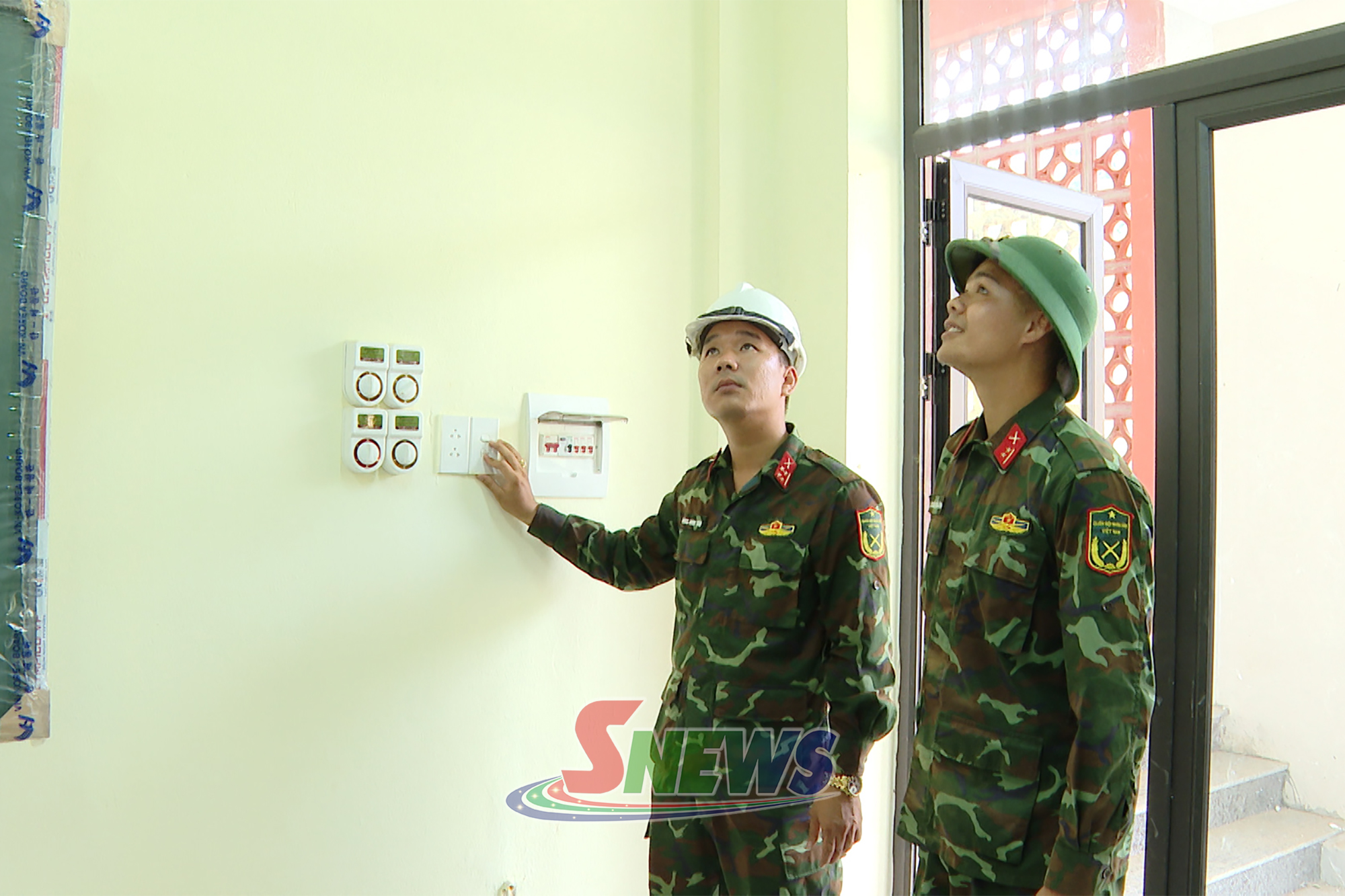
The provincial Military Command is the investor of three projects: the Phieng Pan, Muong Leo and Chieng Khuong Primary and Secondary Boarding Schools. Military personnel and militia from localities have been mobilised during construction to work with the investor and contractors on appropriate tasks and help keep the projects on schedule.
Col. Tran Minh Hung, Deputy Commander of the provincial Military Command, said the command had proposed that Military Region 2 reinforce the workforce at the school sites under its investment.
“Based on actual requirements, personnel have been assigned appropriately to coordinate with the investor and contractors throughout construction,” Hung said. The command has also focused on educating military personnel and militia about the significance of the mission, promoting a strong sense of responsibility and strict compliance with construction-site regulations and occupational safety requirements.
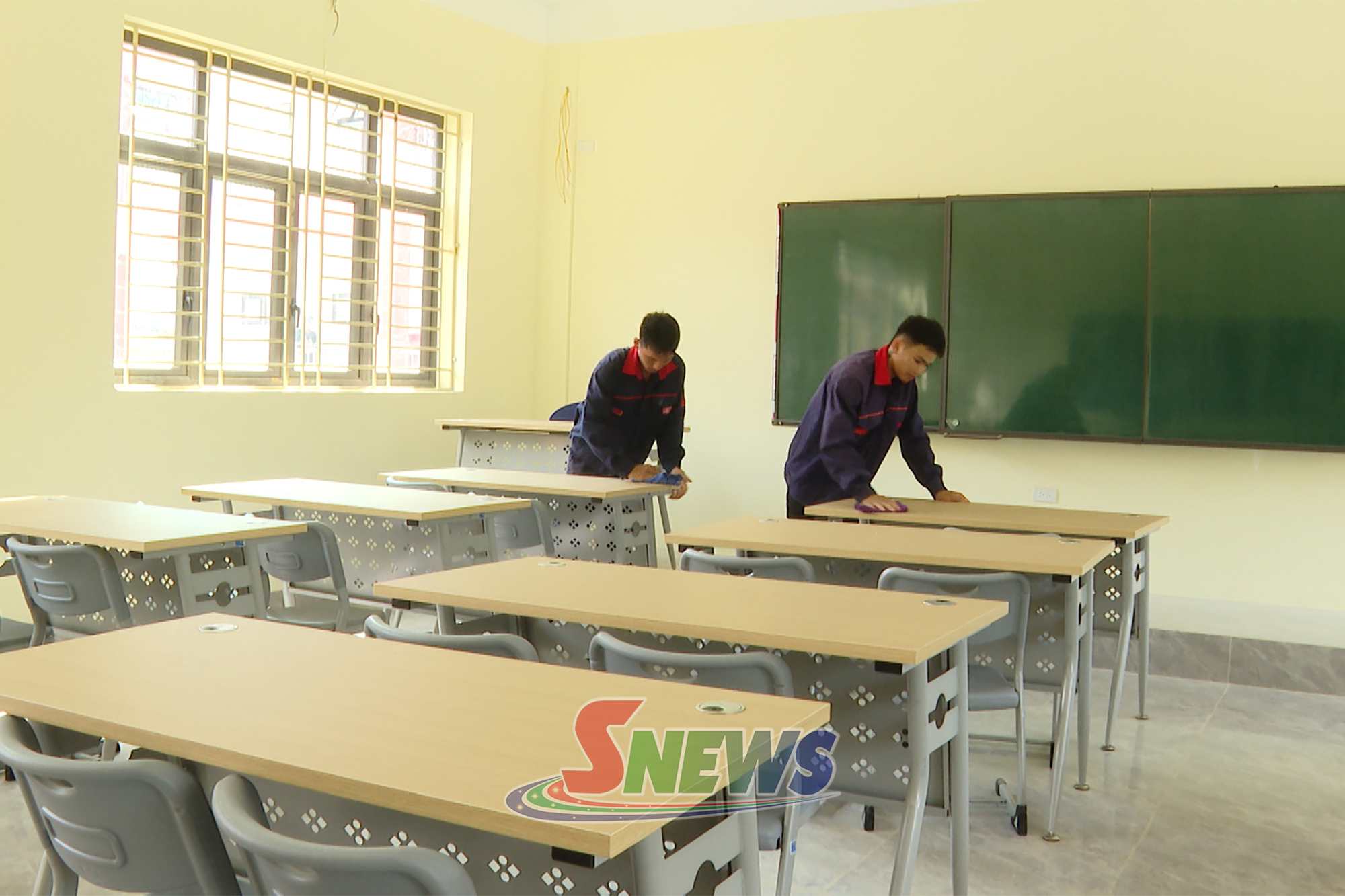
Meanwhile, teachers, school staff and parents at the inter-level boarding schools in the border areas are also preparing for the new academic year. As individual facilities are completed, schools are cleaning the premises and arranging furniture and equipment so they can be put into use as soon as possible.
Phung Thi Lien, Principal of the Chieng Khuong Primary and Secondary Boarding School, said teachers, soldiers, militia members and parents were working together to clean and organise facilities as different sections of the school were completed.
“Everyone is contributing in their own way, both to prepare for the new academic year and to create a clean and welcoming environment,” she said.
With the combined efforts of investors, contractors, military personnel, schools and parents, the inter-level boarding school projects in Son La are being accelerated and are expected to be ready to welcome students for the 2026-27 academic year, helping improve learning and living conditions for children in the province’s border areas./.






You have 500/500 characters left
Please enter 5 or more characters!!!