

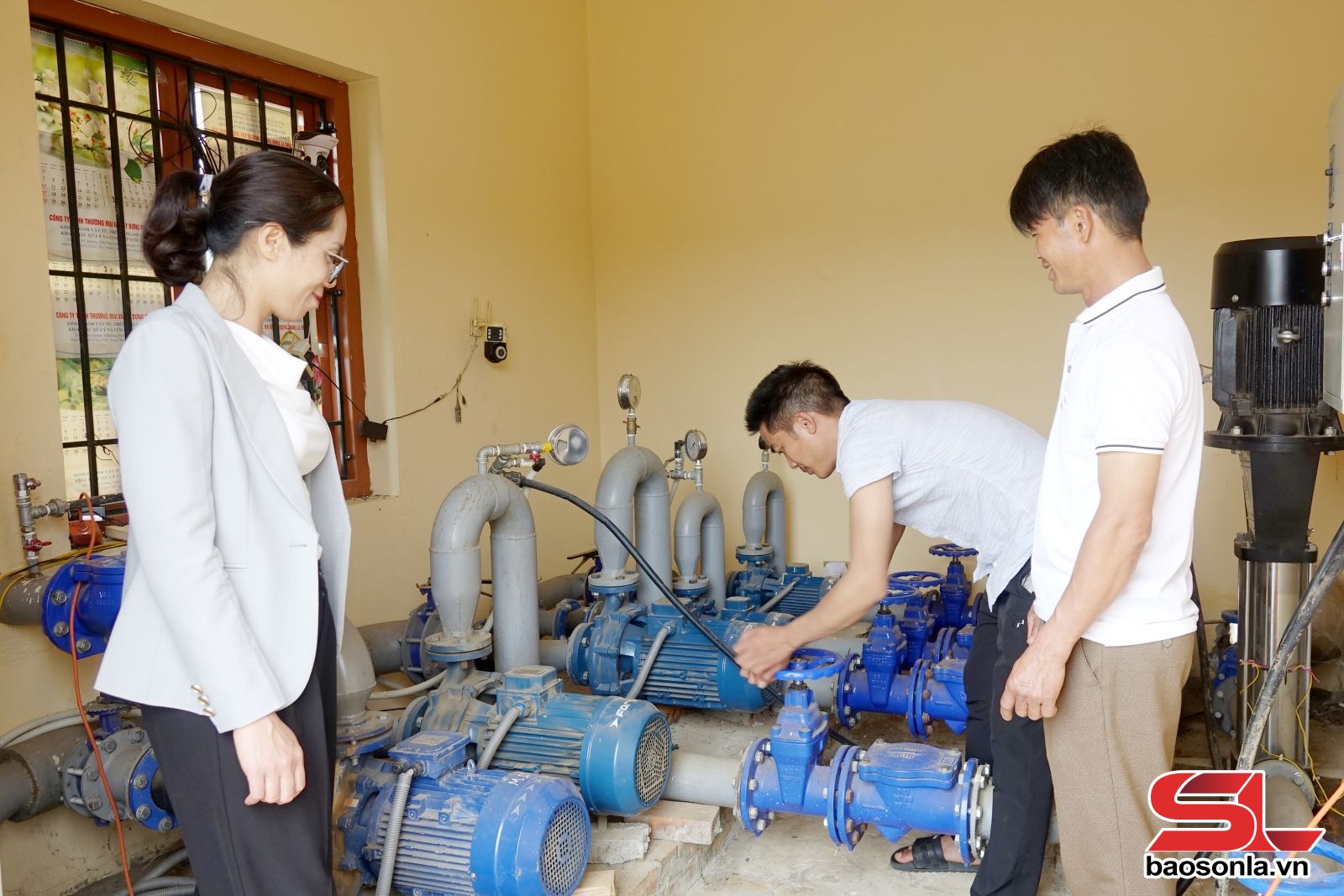
Technical staff operate the treatment system at the Chieng Sung commune Water Supply Station.
The Chieng Sung commune Water Supply Station was built in 2008 with a designed capacity to supply water to more than 600 households. In 2018, the project was upgraded and expanded, increasing the total number of beneficiary households to 1,161. After treatment, water is delivered through a pipeline system to each household for daily use, significantly improving local living conditions.
Ho A Sanh from Yen Binh hamlet, Chieng Sung commune, shared: “Previously, my family and other households in the hamlet had to use self-flow water from streams. During the rainy season, the water was muddy, and in the dry season, there was often a water shortage. Since the water station was upgraded and expanded, 210 households in the hamlet have had stable access to clean water, making daily life much more convenient and ensuring quality.”
To ensure stable operation, the managing unit strictly maintains operational procedures, conducts regular inspections, and promptly addresses any arising issues. Nghiem Xuan Tho, head of the Chieng Sung Water Supply Station, stated: “We assign workers to operate the system regularly, monitor water sources, and inspect the treatment system and pipelines. During the dry season, we increase nighttime pumping to store water and prioritise supplying highland hamlets first, ensuring continuous water provision. We also frequently check and repair leaks to minimise water loss along the pipeline.”
At the Chieng Xom Water Supply Station in Chieng An ward, the system is currently supplying domestic water to 719 households. Vu Duc Canh, a station operator, said: “In addition to maintaining stable operations, we coordinate with local authorities to raise public awareness about protecting water sources, preventing livestock grazing near upstream areas, and maintaining environmental sanitation. We also periodically collect water samples for professional agencies to analyse and assess quality, promptly detecting and addressing any affecting factors to ensure that supplied water always meets standards and that the system operates sustainably.”
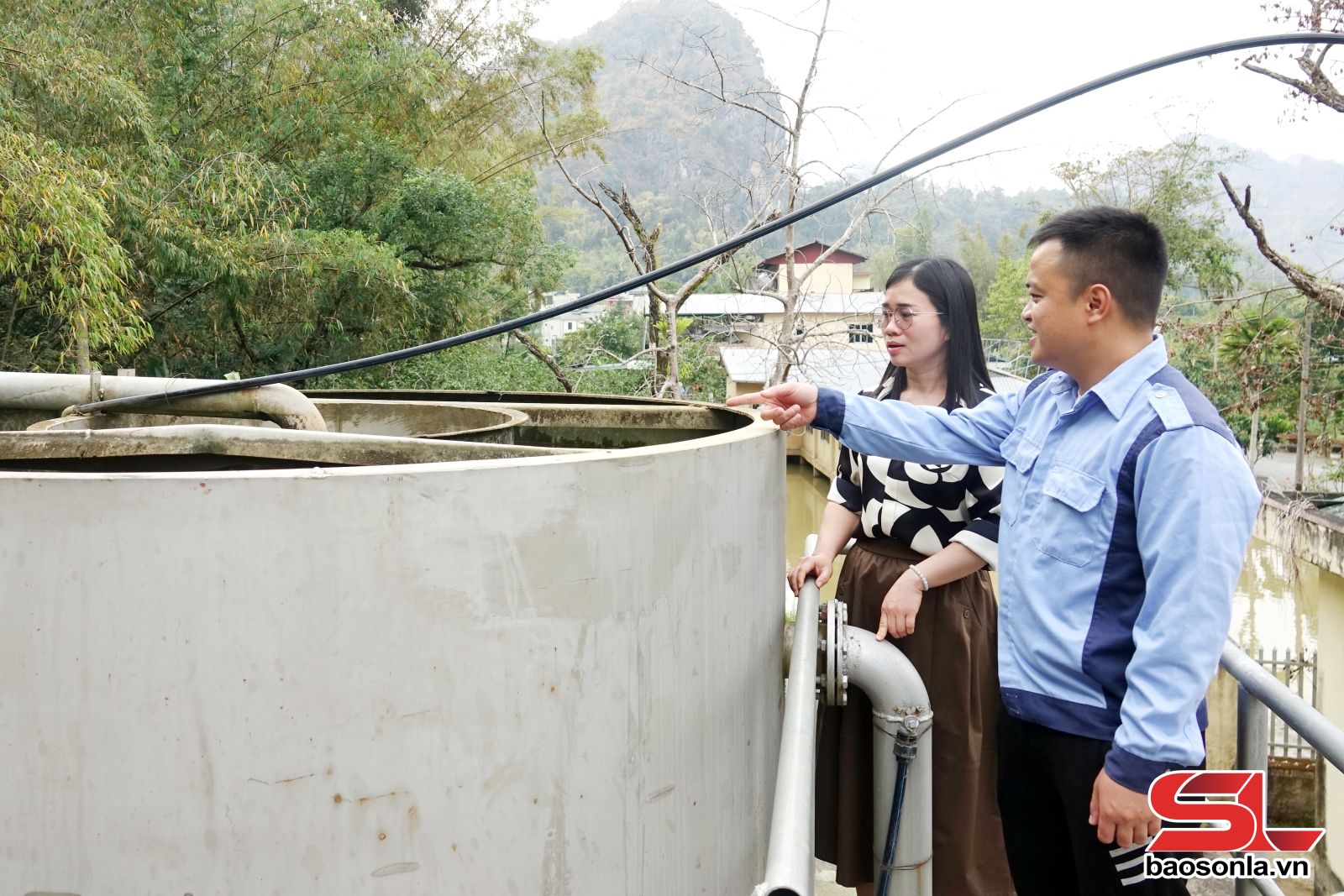
Inspecting the filtration tank to ensure water quality before supplying residents at Chieng Xom Water Supply Station in Chieng An ward.
The province currently has 1,840 centralised rural domestic water supply facilities. The proportion of rural households using hygienic water has reached 96.7%, of which 40.6% use clean water meeting national standards. Among these, 36 facilities are managed and operated by the provincial Centre for Water and Environmental Monitoring, while the remainder are managed by commune-level People’s Committees. Nguyen Ngoc Khoat, Director of the centre, stated: “The centre assigns operators to each facility, establishes operation teams, arranges duty shifts, keeps detailed logs, and regularly inspects, repairs, and maintains the systems to ensure stable domestic water supply for residents.”
In addition, water quality control is strictly implemented. Each year, the centre collects water samples from facilities for analysis and assessment, promptly detecting issues and applying appropriate solutions. However, managing and operating rural water supply facilities still faces certain challenges. Some systems were built many years ago, and their pipelines have deteriorated and require repair and upgrading. Water sources in some areas are unstable, especially during the dry season, affecting supply capacity. Meanwhile, resources for maintenance remain limited. In response, managing units have proactively reviewed and assessed facility conditions, developed appropriate operation plans, and improved operational efficiency. They also coordinate with local authorities to encourage residents to use water economically and protect both water facilities and sources.
The province’s investment in and effective management of centralised rural domestic water supply systems have significantly improved living conditions for rural residents. With continued support from authorities at all levels and greater public awareness of water conservation and protection, these facilities will continue to operate effectively, contributing to improved quality of life and sustainable new-style rural development.








You have 500/500 characters left
Please enter 5 or more characters!!!