
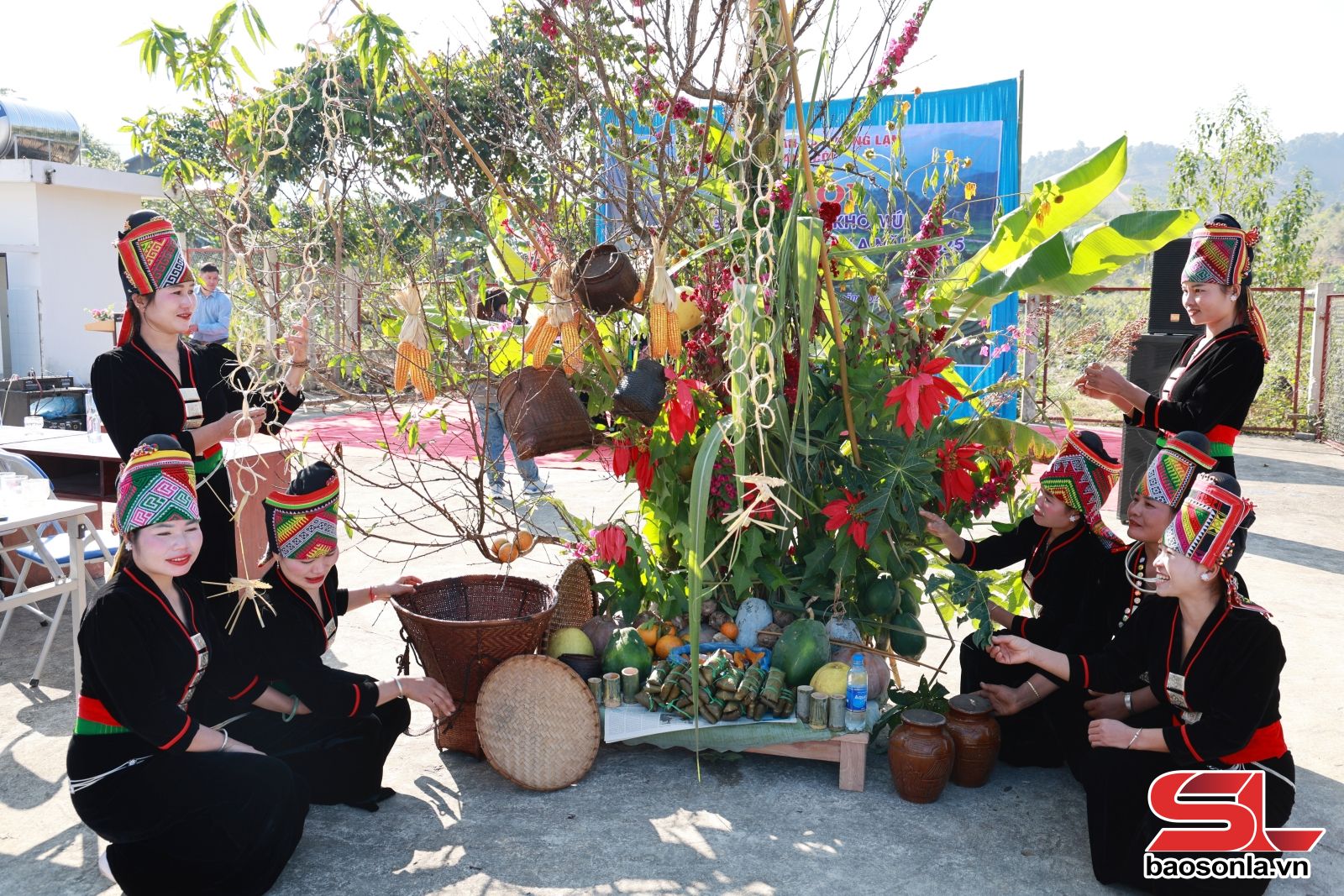
Residents of Cang Coi hamlet in Muong Lan commune take part in the Magro Festival.
Returning to Cang Coi this time, we found ourselves swept into the vibrant flow of villagers heading to the Magro Festival (traditional prayer-for-harvest celebration), organised by the Muong Lan commune People’s Committee at the hamlet cultural house.
The festivities open with a solemn ritual held at the home of the hamlet shaman, where ancestral spirits are invited to join the Lunar New Year celebrations and blessings are sought for favourable weather, abundant crops and a year of peace.
The mood then shifts to jubilant celebration, with graceful traditional dances and lively folk games filling the air with energy, strengthening community bonds.
Pit Thi Binh, a resident of Cang Coi, said with delight that the Magro Festival is held every December, when the rice has been safely stored in granaries and locals can finally relax after the harvest. It is a time to give thanks to the gods and ancestors, and to pray for good crops and good fortune in the year ahead.
Seeing children and grandchildren gather in full, healthy and thriving, she said, fills her with joy — and with pride that her community’s cultural identity continues to endure rather than fade with time.
In its efforts to safeguard and preserve Kho Mu traditions, Cang Coi has actively translated the Party’s resolutions, directives and guidelines on building an advanced culture rich in national identity into daily life.
Quang Van Bien, Party cell secretary and head of the hamlet, said that each year, community meetings incorporate discussions aimed at raising awareness of cultural preservation. At the same time, respected elders and artisans are encouraged to pass down the language, traditional attire and folk melodies to the younger generation.
-truyen-thong-cua-dong-bao-kho-mu-ban-cang-coi.jpg)
The traditional Velr Guong (Au eo) dance of the Kho Mu community in Cang Coi hamlet.
Thanks to those sustained efforts, the Kho Mu community here has preserved its mother tongue — part of the Mon–Khmer language group — with more than 95% of residents speaking it fluently. Folk verses and traditional songs continue to be passed down orally, carried from one generation to the next.
At the heart of hamlet performances is the Velr Guong (Au eo) dance, a rhythmic hip-swaying routine inspired by everyday labour — harvesting rice, planting corn, chasing birds from the fields, gathering vegetables or scooping shrimp from streams. The local art troupe practices regularly to keep the movements fluid and alive.
During festivals and Lunar New Year celebrations, the beat of drums and gongs blends with the resonant sounds of handmade instruments such as tang bu flutes, bamboo pipes and hun may (dao dao), creating a distinctive symphony that echoes through the forests along the borderlands.
Cang Coi has also formed and sustained a 10-member community art troupe that serves as the cultural heartbeat of the hamlet.
With annual funding support, the group rehearses regularly and performs for residents at home and across the commune, while also taking part in cultural exchanges, contests and festivals. Just as importantly, its members pass on the Au eo dance and traditional folk songs to the younger generation.
Wedding and funeral rites, though adjusted to align with modern life, continue to retain their distinctive character.
At weddings, the tradition of the groom living with the bride’s family has been shortened, yet it remains a meaningful reflection of Kho Mu family values.
During funerals, rituals such as breaking a section of the house wall, setting up a new hearth or performing the knee-anointing rite to ward off misfortune are still observed - enduring customs that embody the community’s tribute to the departed.
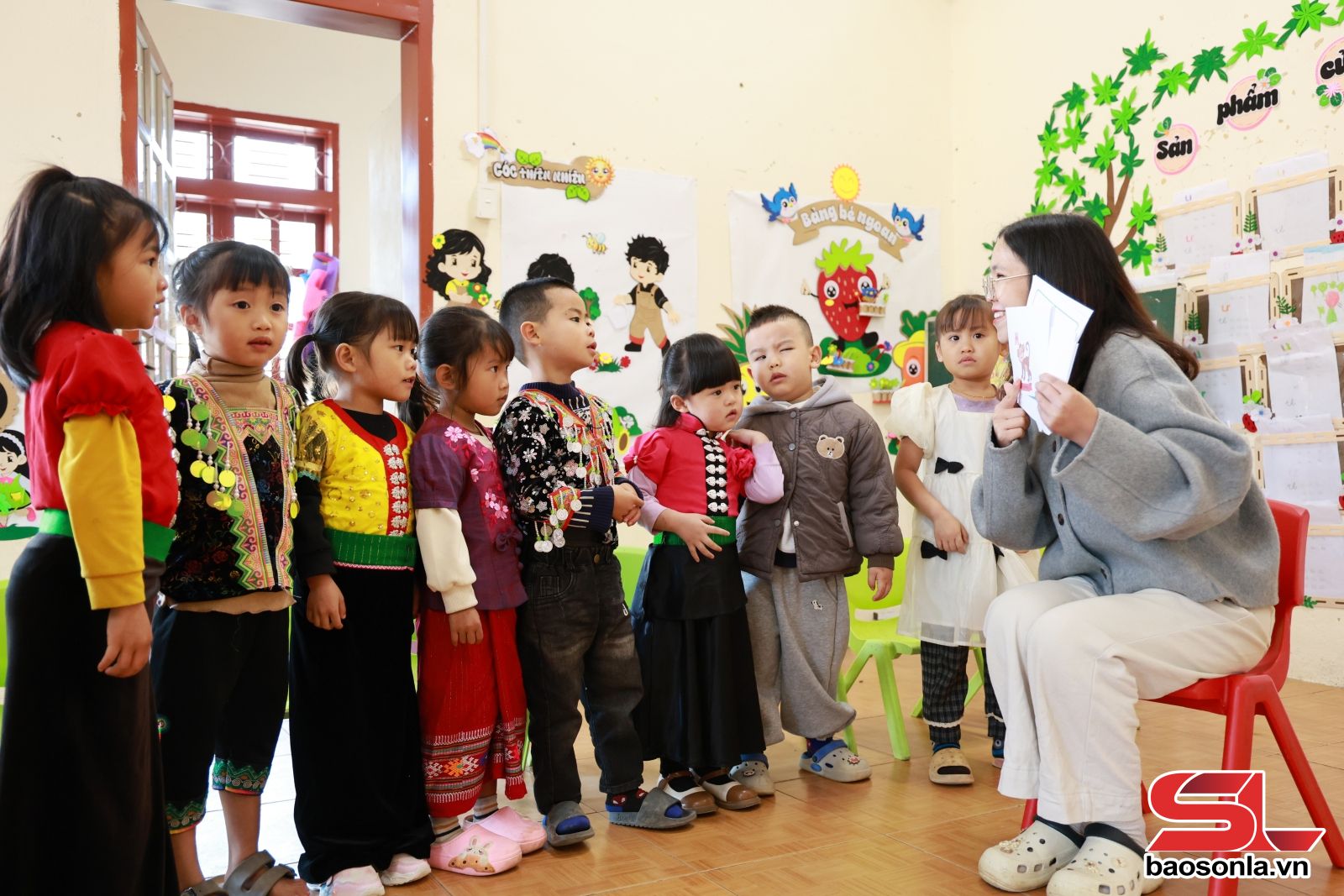
Kho Mu children in Cang Coi hamlet wear their traditional attire at school.
Traditional dishes such as five-coloured sticky rice, bamboo-tube rice, chicken cooked with sour bamboo shoots — and especially doong uong soup, a distinctive broth made from smoked meat and foraged forest greens — remain staples on feast trays prepared for honoured guests.
Cultural exchange, particularly with the Thai ethnic group as seen in elements of attire, has not blurred the community’s identity. Instead, it has created a harmonious and vibrant fusion.
We left Cang Coi, but the echo of drums and gongs and the gentle sway of the Au eo dance lingered long after our departure.
There is also welcome news for the Kho Mu community here: the Muong Lan commune People’s Committee is working with the provincial Conservation–Museum Division and the provincial Culture and Sports Center to research, document and compile a dossier seeking national recognition of the Magro Festival as an intangible cultural heritage in 2026.
Through these varied efforts to safeguard tradition and with the shared commitment of every family and clan, the enduring cultural values of the Kho Mu people are poised to live on, forming a bedrock of confidence as locals build more prosperous lives along the nation’s borderlands.


You have 500/500 characters left
Please enter 5 or more characters!!!