


.jpg)
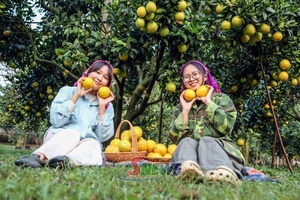
Farmers in Muong Sai commune tend to orange orchards.
According to Luong Van Bua, Vice Chairman of the Muong Sai commune People’s Committee, during the 2020–2025 period, Muong Sai commune (formerly Muong Sai and Nam Et communes) mobilised funding from National Target Programmes and the Project on Population Stabilisation and Socio-economic Development in the Son La Hydropower Resettlement Area (Project 666). These resources were invested in essential rural infrastructure, including centralised clean water supply systems, rural power supply projects, and the concreting of 13 roads. To date, all inter-commune roads, over 90% of inter-hamlet roads, and 100% of intra-hamlet roads have been cemented.
At the same time, the commune has supported residents with fruit tree seedlings and livestock breeds such as breeding cattle and goats, while providing guidance on restructuring crops and livestock and developing economic models suited to local conditions.
In 2025 alone, Muong Sai commune received more than 6 billion VND (228,354 USD) from National Target Programme 1719 to implement four projects, including the repair of school facilities, upgrading domestic water supply systems, and procuring equipment for commune officials and civil servants following administrative reorganisation and mergers under the two-tier local government model. In addition, the commune invested over 18.6 billion VND to harden the road connecting the central areas of Nam Et and Muong Sai. Other projects included repairing official-duty housing, constructing meeting rooms and auxiliary facilities, procuring working equipment at the commune headquarters, and developing the general plan for Muong Sai commune, funded by public investment capital and other sources.
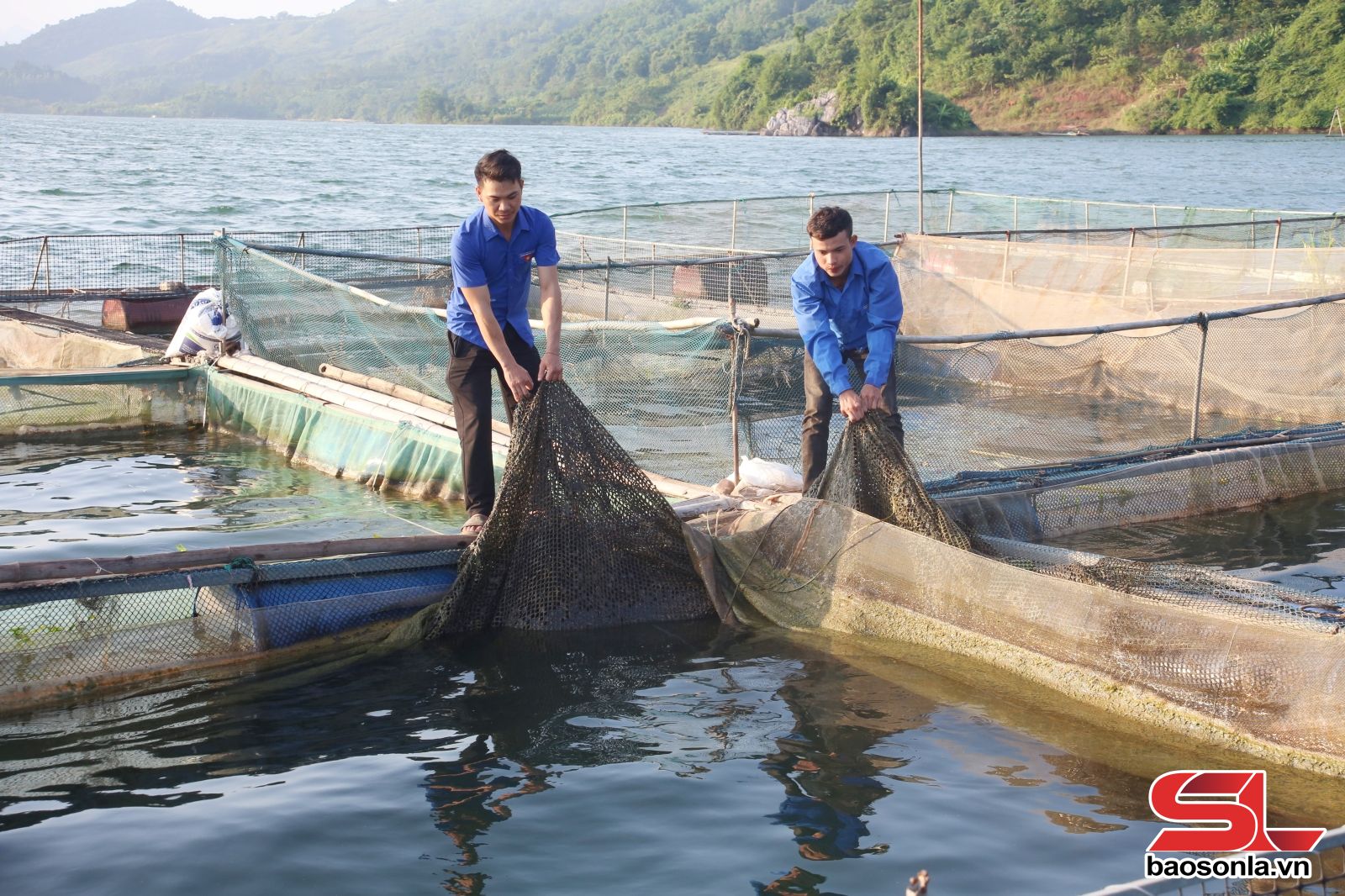
Muong Sai develops cage fish farming in the hydropower reservoir.
With support from various programmes and projects, the local economy has gradually improved, with a number of effective production models. Each year, residents cultivate about 5,000 hectares of upland crops, plant and care for more than 350 hectares of fruit trees, and raise over 95,000 head of livestock and poultry. The commune maintains more than 450 fish cages in the hydropower reservoir, with total aquaculture and catch output exceeding 600 tonnes per year. Currently, Muong Sai has eight cooperatives operating in agriculture and fisheries, and Nam Et orange has been certified as a 3-star OCOP product.
Local incomes have steadily increased, and by 2025 the poverty rate had fallen to just 4.5%, down 0.8 percentage points compared to 2024.
In Tom hamlet, home to nearly 100 households of the La Ha ethnic group, poor households have for many years received support in the form of plant seedlings and breeding livestock to establish stable livelihoods. The commune regularly assigns officials to conduct outreach and provide guidance on production methods, encouraging residents to shift from small-scale, free-range livestock raising to stall-fed, market-oriented production.
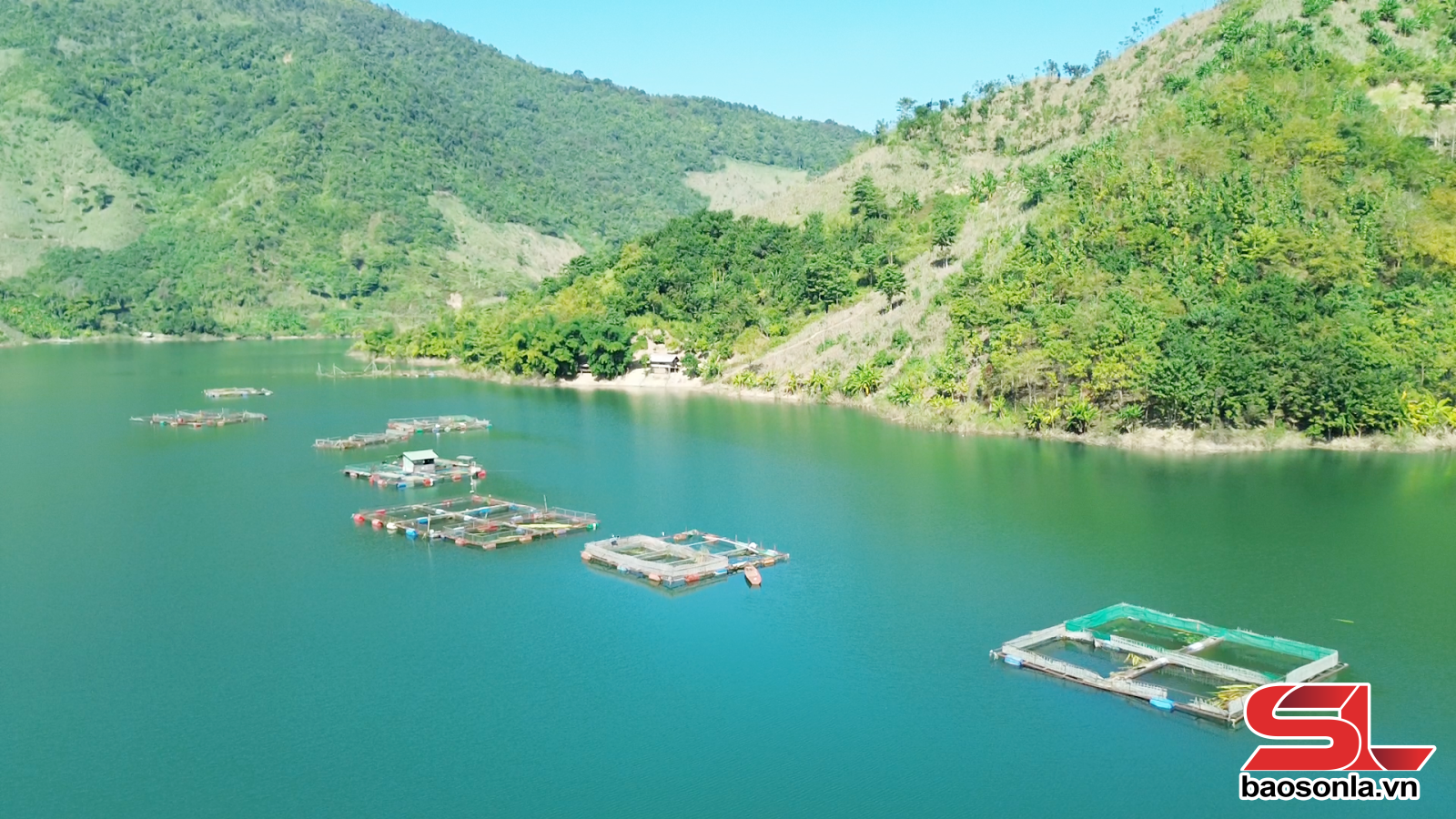
Cage fish farming in the reservoir area of Muong Sai commune.
Quang Van Panh, Party cell secretary and head of Tom hamlet, said that State support for production development has helped families gradually stabilise their lives. The hamlet currently has 330 head of livestock, 3,500 poultry, 140 hectares of maize, 60 hectares of cassava, and 3 hectares of fruit trees. In addition, residents protect more than 165 hectares of forest. Whereas in 2020 poor households accounted for more than one-third of the hamlet, there are now only eight poor households remaining. Recently, 13 households were also supported with water storage tanks, helping to address long-standing shortages of domestic water.
Building on these achievements, Muong Sai will continue to mobilize State support, prioritizing investment in essential infrastructure serving people’s livelihoods and production, while maintaining and improving new rural development criteria and ensuring sustainable poverty reduction. By 2030, the commune aims to eliminate poverty entirely, raise average per capita income to 49 million VND, and promote clean and organic agriculture, establish planting area codes, and further develop OCOP brands.







You have 500/500 characters left
Please enter 5 or more characters!!!