




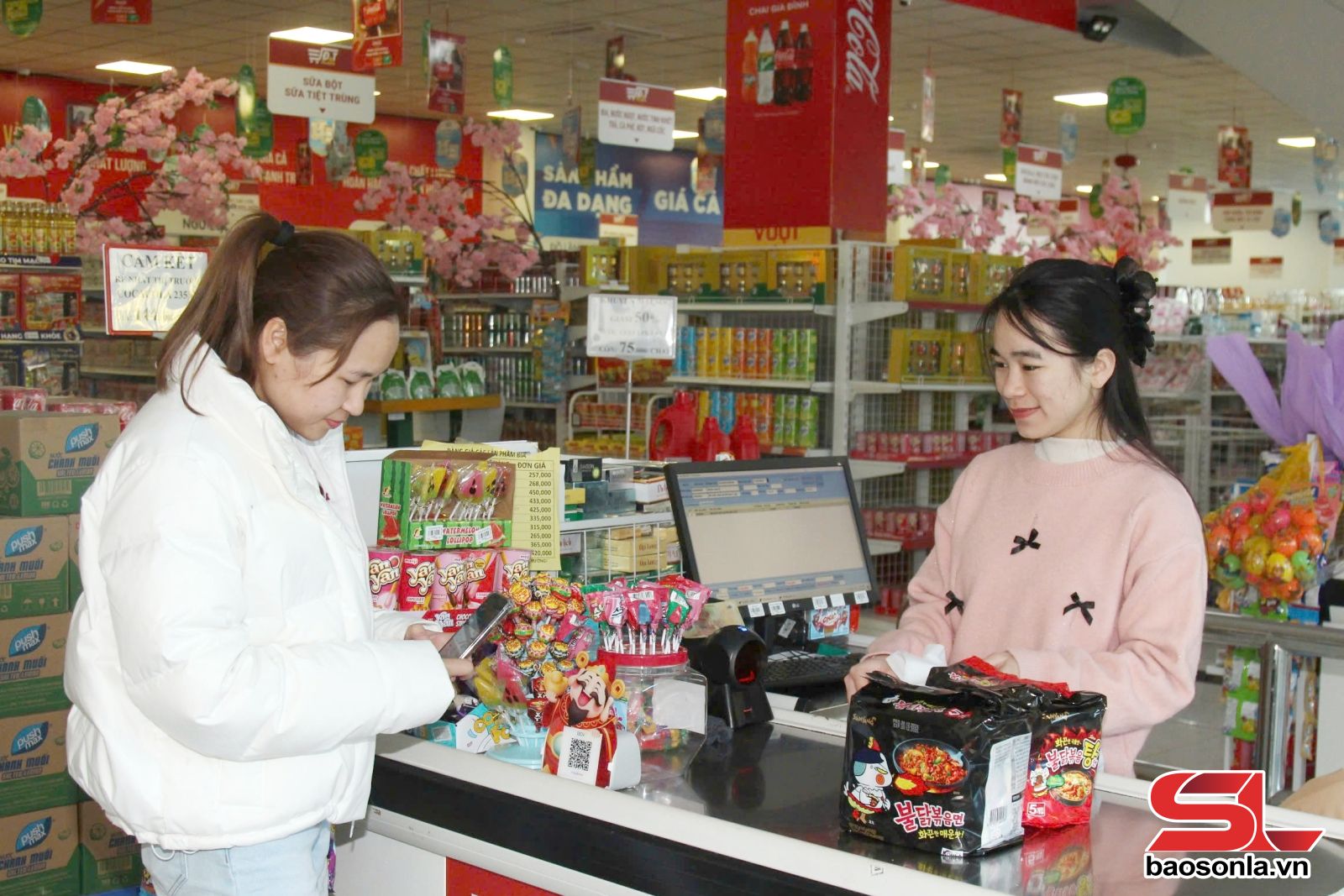
Retail remained the primary growth engine, with turnover exceeding 40.8 trillion VND, up 13.7% year on year and 3.3% above the growth scenario. The gains were driven by coordinated investment in commercial infrastructure, upgrades to rural markets, expansion of modern distribution networks and a push into e-commerce, all of which helped lift consumer spending. Many categories posted outsized growth, including vehicle repair services (up 28.39%), precious stones and metals (26.65%), and food and foodstuffs (18.09%).
According to Bui Van Chien, manager of D&T Plaza Son La, one of the province’s largest retail centres, the mall has expanded cashless payment options and online sales via social media, while rolling out frequent promotions to stimulate demand. Ahead of the Lunar New Year, the centre has built up inventories to ensure ample supply and stable prices.
Exports were another bright spot, with shipments reaching 225 million USD, a 13.6% increase from 2024. Key agricultural products such as coffee, tea, cassava starch and high-quality fruit were exported to 12 countries and territories.
The Son La cassava starch plant operated by Phu Yen Cassava Starch JSC in Chieng Mung commune, which supplies the Chinese market, met its 2025 business targets.
Deputy Director Ngo Quang Tuan said the factory purchased nearly 100,000 tonnes of fresh cassava roots, producing more than 30,000 tonnes of finished starch, of which 20,000 tonnes have been exported to China. For the 2025–2026 season, the plant aims to procure about 120,000 tonnes of cassava and produce 35,000 tonnes for export. The facility currently processes about 800 tonnes of fresh cassava per day, sourcing raw materials through partnerships with thousands of farming households in Son La and parts of neighbouring Dien Bien province.
Tourism and related services also expanded strongly, with services accounting for an estimated 42% of the provincial economy,, up 1.5% from 2024 and exceeding targets. Thanks to sustained infrastructure investment and cultural events and festivals, Son La has emerged as an increasingly attractive destination for domestic and international travelers. The province has strengthened its position on the global tourism map, highlighted by the Moc Chau National Tourist Area named as “Asia’s Leading Nature Destination” for the fourth time, alongside national-level planning for hydropower reservoir tourism zones.
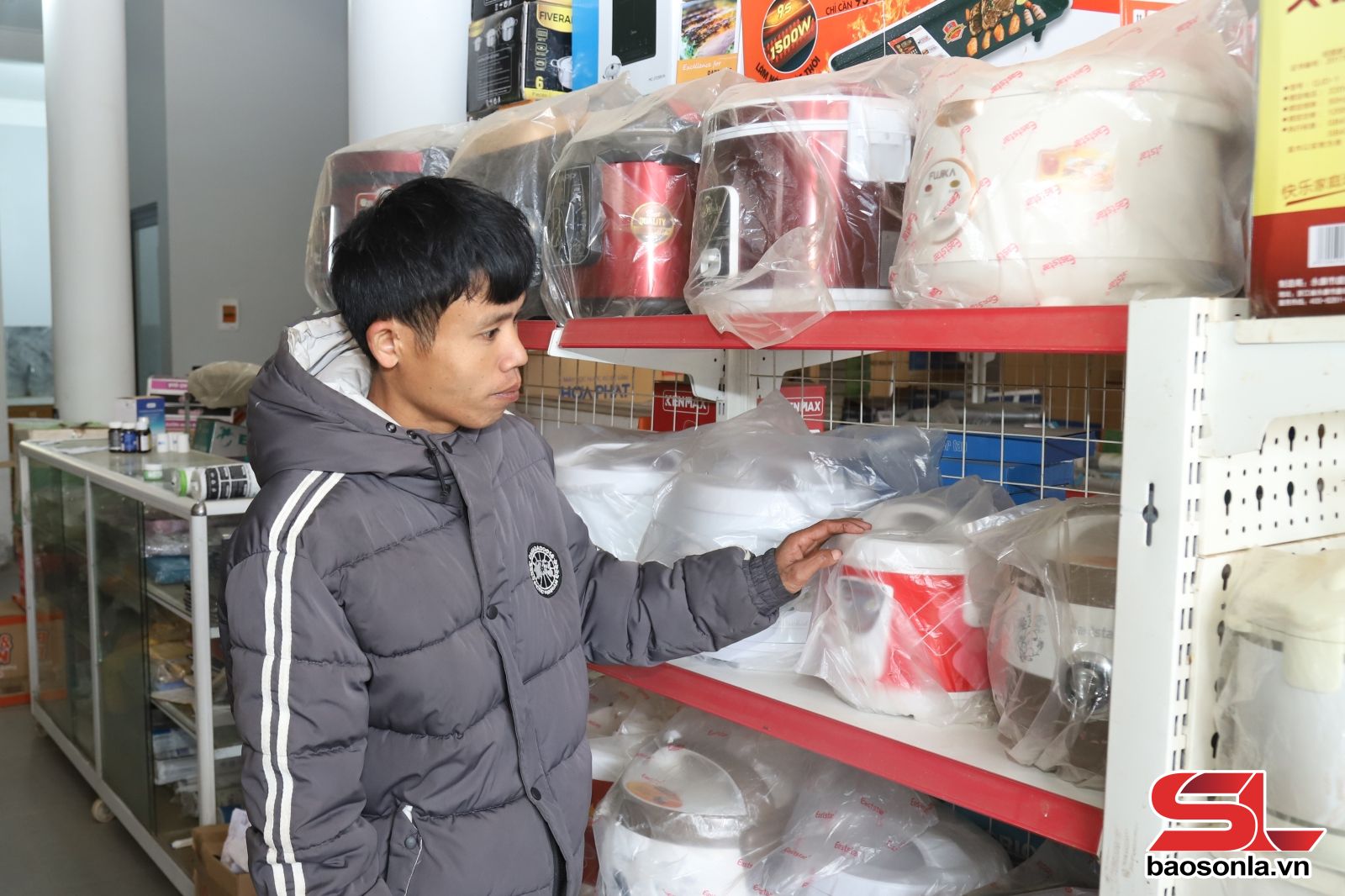
Residents of Chieng So commune shop for goods in the locality.
Buoyed by its fourth “Asia’s Leading Nature Destination 2025” title, Moc Chau continues to draw strong visitor interest. Investment in resorts and service diversification has helped meet rising demand.
Hoang Manh Duy, deputy chief executive of Moc Chau Island Tourist Area, said the site welcomed nearly 350,000 visitors in 2025, earning estimated revenue of more than 130 billion VND, a 40% increase from a year earlier. To sustain momentum, the operator has co-hosted major cultural and sporting events, upgraded service quality, expanded technology use and leveraged local cultural assets to offer distinctive experiences.
Quang Van Dung, Deputy Dỉwctor of the provincial Department of Industry and Trade, said the province has set targets for the 2026–2030 period that include total retail sales of more than 43.5 trillion VND and export turnover of 240 million USD, of which agricultural products are expected to account for 235 million USD.
In 2026, the department will roll out concerted measures, focusing on completing trade infrastructure in line with the master plan through 2050, upgrading rural markets and attracting investment into modern retail and distribution models. Efforts will also centre on accelerating digital transformation, supporting businesses and household traders in developing multichannel sales and cashless payments, stepping up demand stimulation through promotions, trade fairs and “Vietnamese Goods Weeks,” while tightening market stabilisation, oversight and consumer protection.
On exports, the province will step up support for businesses in accessing information on free trade agreements, non-tariff barriers and international standards, helping them expand into new markets, particularly the European Union, Japan and the Republic of Korea. Efforts will also focus on building sustainable agricultural brands, standardising cultivation areas and processing practices in line with GlobalGAP and organic standards for key products such as coffee, tea, longan and mango. Trade promotion activities are being overhauled with a stronger emphasis on digital transformation and online business matching.
The breakout in services and trade provides a solid foundation for the sector to enter a new cycle with confidence, enabling it to remain a central growth engine and support the province’s broader economic and social development targets.





You have 500/500 characters left
Please enter 5 or more characters!!!