


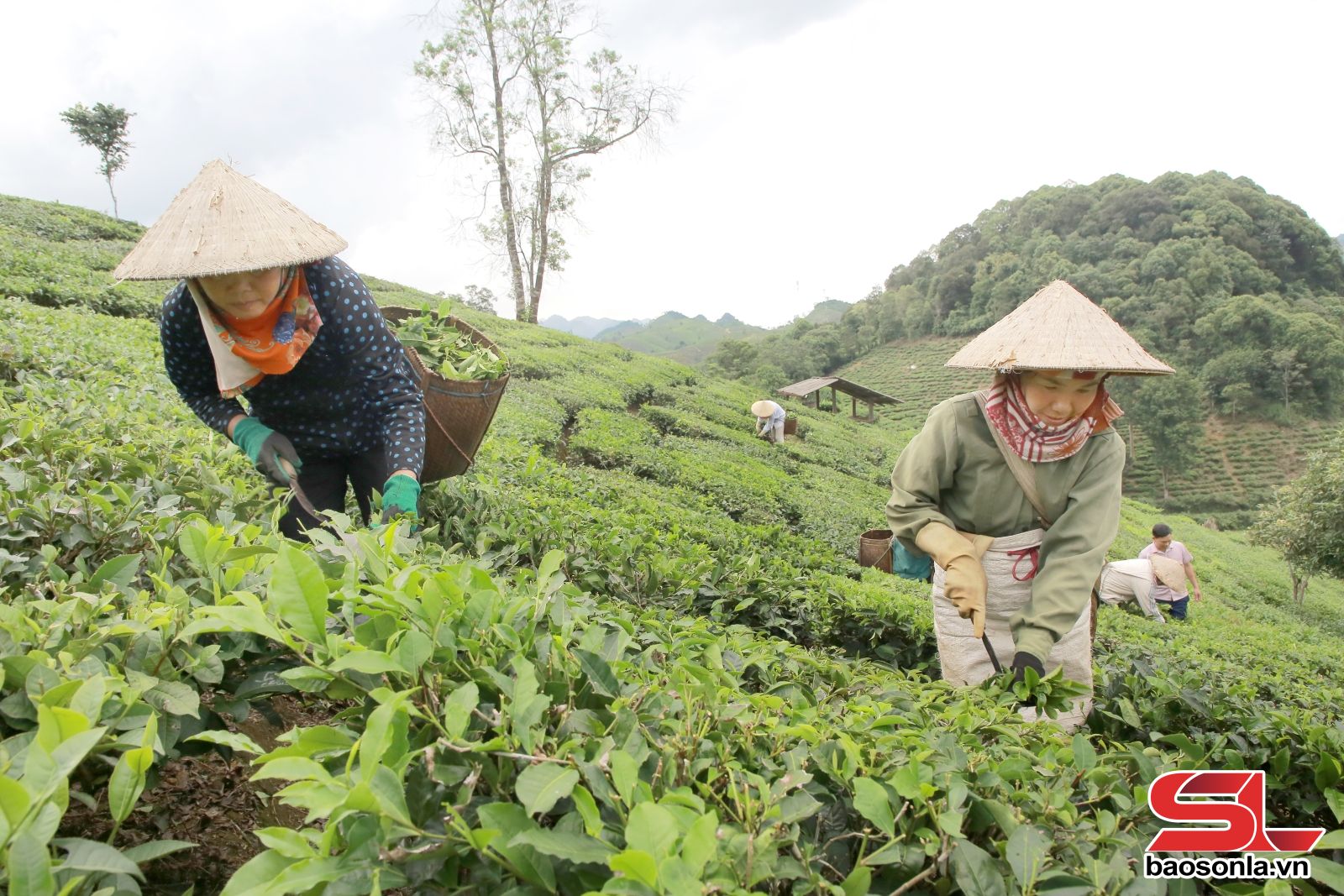
On the hillsides, residents are busily harvesting spring tea and caring for fruit trees after the harvest. Joy is clearly visible on people’s faces as their material and spiritual lives continue to improve.
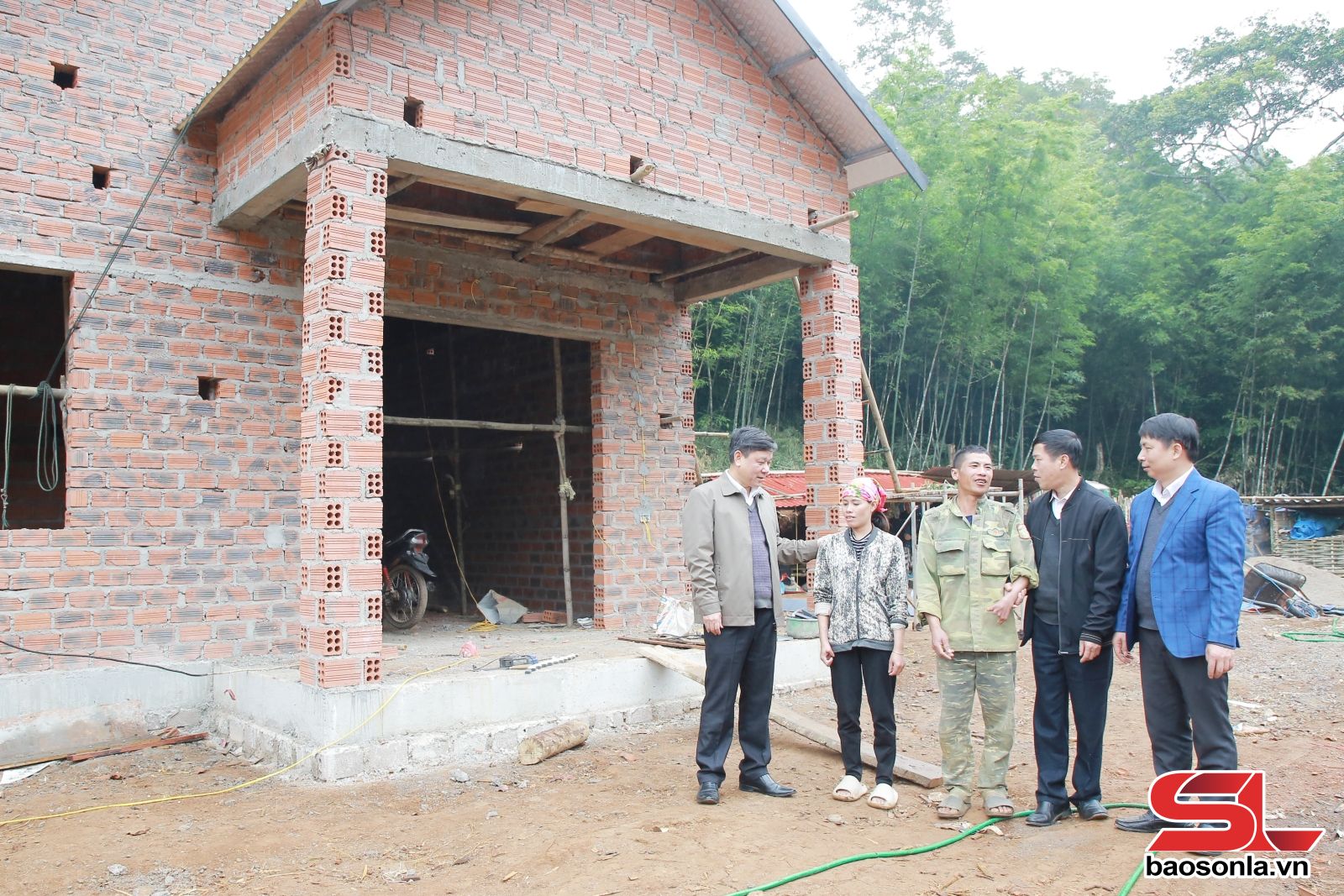
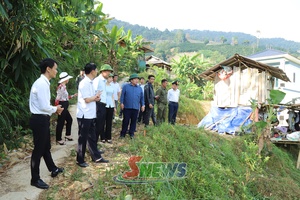
Accompanying officials of Long Sap commune to inspect the progress of eliminating temporary and run-down houses, we could clearly feel the joy and happiness of poor households as their dream of having a solid home has come true. Hoang Van Nam from A Ma 1 hamlet emotionally shared: “Due to the impact of Typhoon Bualoi, landslides damaged my family’s house. The communal Party committee and authorities promptly visited us, provided financial support, and mobilised villagers to contribute workdays to rebuild a sturdier house, helping my family feel secure in living and working.”
With the motto “leaving no one behind,” Long Sap commune has reviewed houses damaged by floods, temporary and dilapidated houses in the area to develop support plans. Tran Xuan Thanh, Chairman of the communal People’s Committee, said: “In 2025, together with funding support from the State, the commune mobilised social and mass organisations, and local people to contribute materials and workdays, and to make use of locally available materials, helping 14 poor households build and repair their homes. These solid houses have provided added motivation for households facing housing difficulties to feel secure in production, improve their lives, and sustainably escape poverty.”
.jpg)
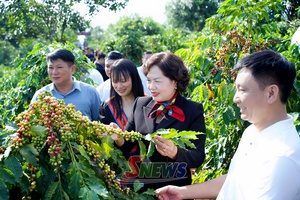
The commune has also strengthened coordination with specialised agencies to transfer scientific and technical advances, and to support seeds, equipment, and materials through community-based production development programmes and projects, creating jobs, increasing income, and improving the material and spiritual lives of poor, near-poor, and newly escaped-from-poverty households, most of whom are ethnic minorities. In 2025, the commune successfully implemented several new and effective production models, such as pear cultivation in Phieng Cai hamlet and macadamia cultivation in A Ma hamlet. In addition, raw material tea-growing areas in Muong Bo, A Ma 1, and A Ma 2 hamlets have been maintained and provided with guidance on safe farming techniques. To date, the entire commune has more than 920 hectares of fruit trees, 178 hectares of tea, and livestock farming has gradually developed with over 11,000 heads of livestock and 68,000 poultry. Infrastructure and facilities serving people’s livelihoods have received investment attention, and residents’ living standards continue to improve.
Vang A Thao from Phieng Cai hamlet, who received support to implement the pear-growing model, shared: “Previously, my family only grew maize, which was labour-intensive and unstable in price. With the commune creating conditions for us to visit and learn from models in Chieng Son commune and providing technical support for pear cultivation, in 2025, I boldly converted nearly one hectare of land to growing pear trees. The trees are growing well and initially show suitability to the local climate and soil. In addition, I have participated in community tourism training courses organised by the commune so that in the future I can welcome tourists to visit and pick pears in the orchard.”
In addition to technical support, the commune has also facilitated people’s access to preferential credit sources, helping them diversify livelihoods. Through coordination with the Vietnam Bank for Social Policies and savings and loan groups, poor and near-poor households have been able to borrow capital safely and effectively to develop and replicate production models. To date, more than 400 households in the commune have borrowed from the Vietnam Bank for Social Policies, with total outstanding loans exceeding 61 billion VND (2.34 million USD). Thanks to these policy-based loans, many households have escaped poverty, stabilised their lives, and contributed to reducing the commune’s poverty rate to 12.02%. The commune has completed 11 out of 19 criteria for new-style rural development.
Speaking about future orientations for improving people’s livelihoods, Tran Xuan Thanh, Chairman of the communal People’s Committee, said: “In 2026, the commune aims to raise average per capita income to 28 million VND per year and reduce the poverty rate to 10%. The commune will focus on implementing key solutions such as promoting the advantages of the Long Sap International Border Gate to develop trade, services, and tourism, and prioritising investment capital for intra-hamlet roads and domestic water supply systems.”
With the unity of the authorities and the people, it is believed that Long Sap will soon complete the criteria for new-style rural development, bringing increasingly prosperous and happy lives to local ethnic communities. National defence and security in border hamlets will continue to be firmly maintained, ensuring that Long Sap remains a peaceful and developing “frontier stronghold” of the Fatherland.




You have 500/500 characters left
Please enter 5 or more characters!!!