

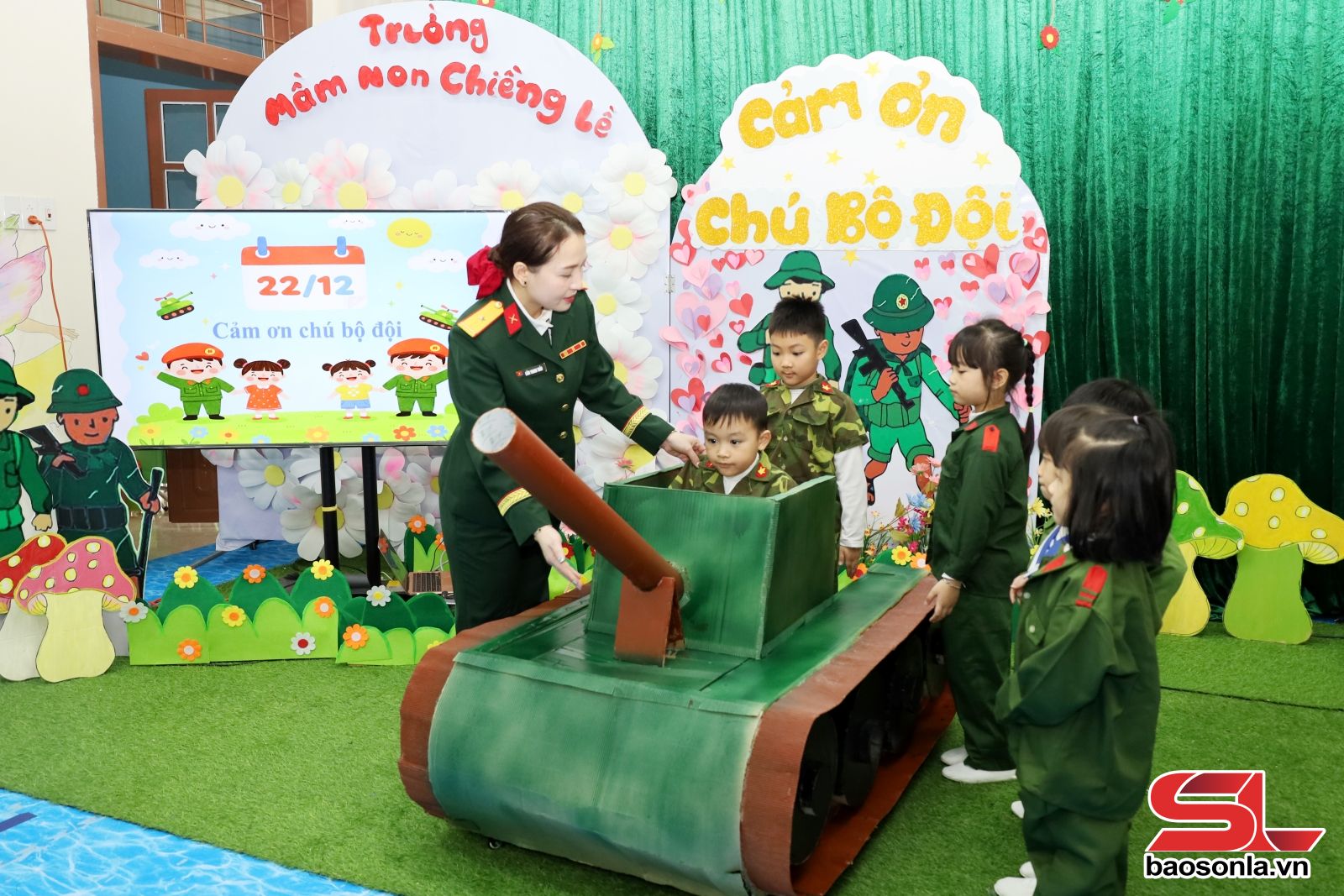
At Chieng Le Kindergarten, a lesson titled “Thank You, Soldiers” began with a musical play, “The Child of the Fatherland,” performed by teachers and students, depicting a soldier bidding farewell to his family before enlisting. The lesson skillfully transitioned from emotions to action through the character “AI Soldier” and a series of real-life challenges. The children transformed into “Little Soldiers,” carrying backpacks, driving model tanks, crawling through tunnels, or performing rescue missions for flood victims. The lesson concluded with a mind map consisting of three branches: Gratitude – Pride – Love, helping the children clarify what they had learned about national pride and responsibilities as a Vietnamese citizen.
Tran Thi Thanh Hoa, Vice Principal of Chieng Le Kindergarten, said the school focuses on developing hands-on learning activities to innovate classroom instruction and inspire children. Through these activities, students take on roles and engage in concrete actions, making the image of Uncle Ho’s Soldiers familiar and planting seeds of gratitude and love for the homeland in their young hearts.
-giup-tre-hinh-dung-ro-net-ve-long-biet-on-va-niem-tu-hao-doi-voi-chu-bo-doi_.jpg)
Cao Thi Thanh Hai, the parent of a student at the school, shared: “Seeing my child excitedly show off his soldier’s uniform and talk at home about tanks and marching soldiers, I felt truly delighted. These experiential lessons are meaningful and help the children become more confident and outgoing.”
At Thuan Chau High School, the leadership has instructed teachers to integrate local history education into formal classes and extracurricular activities related to December 22. In Literature and History classes, teachers weave stories of historical figures connected to Son La into their lessons, evoking in students a sense of pride in their homeland. During extracurricular sessions, students give presentations or perform short plays reenacting historical events, creating a forum for them to express their thoughts and feelings toward earlier generations.
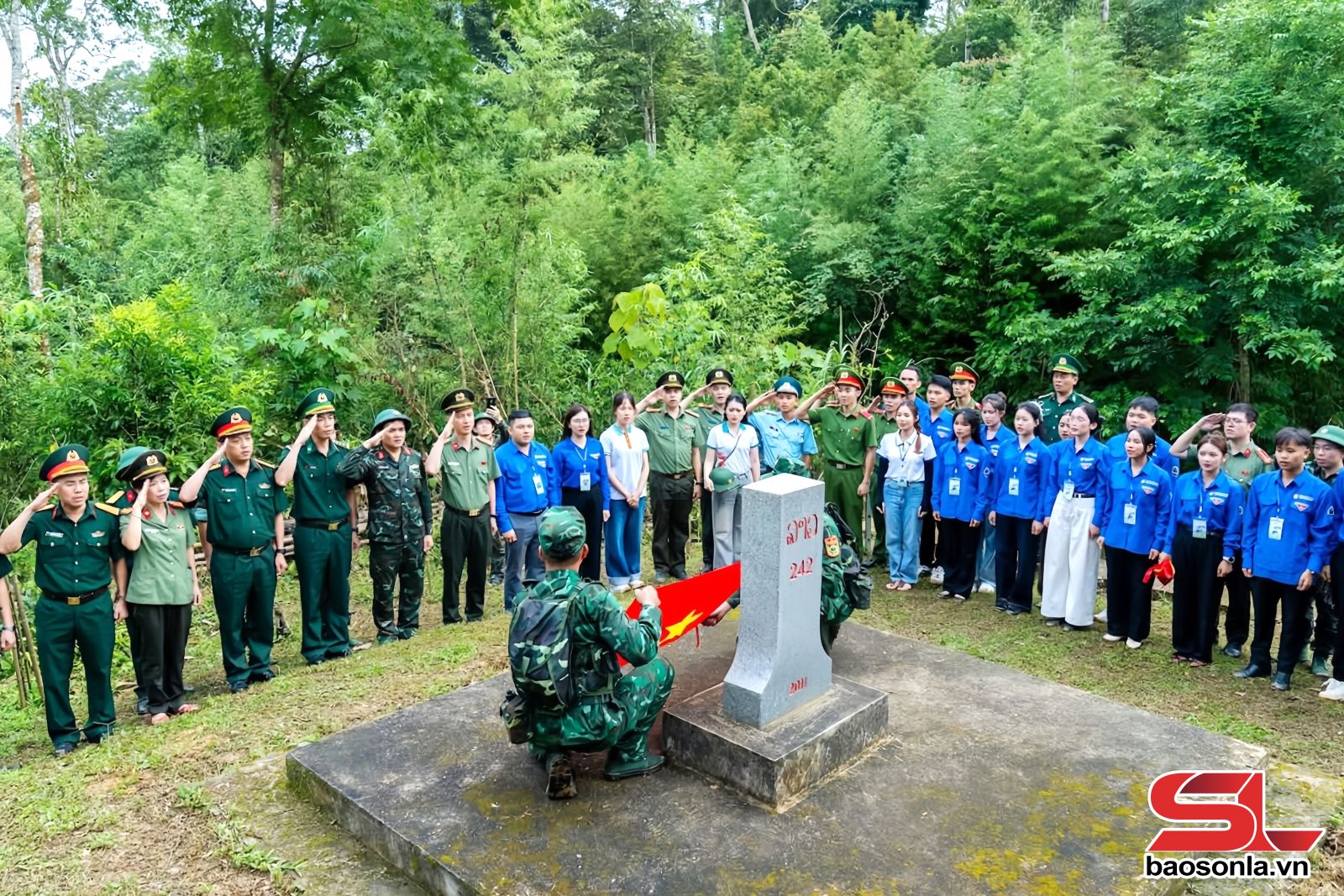
For Tay Bac University, revolutionary tradition education is carried out through meaningful youth union activities. During this year’s “Journey to the Roots,” the university’s Youth Union organised a “Border Lesson” at Marker 242 and Chieng Tuong Border Guard Station. Here, students listened to real-life stories of hardship faced by border guards as they protect the frontiers, and their relentless fight against drug-related crime to keep local communities safe.
Kieu Tien Luong, Secretary of the university’s Youth Union, said: “The ‘Border Lesson’ is a special model of political and ideological education that we continue to implement. Taking students to the border, allowing them to touch the sovereignty marker and witness firsthand the silent sacrifices of border soldiers, has become the most vivid lesson, helping them understand more deeply the responsibilities of youth toward their homeland.”
Experiential lessons and real-world activities organised by schools have proven effective. History lessons become more deeply rooted in students’ understanding, igniting passion and helping the younger generation appreciate the value of peace as they strive to study and grow.
.jpg)
You have 500/500 characters left
Please enter 5 or more characters!!!