

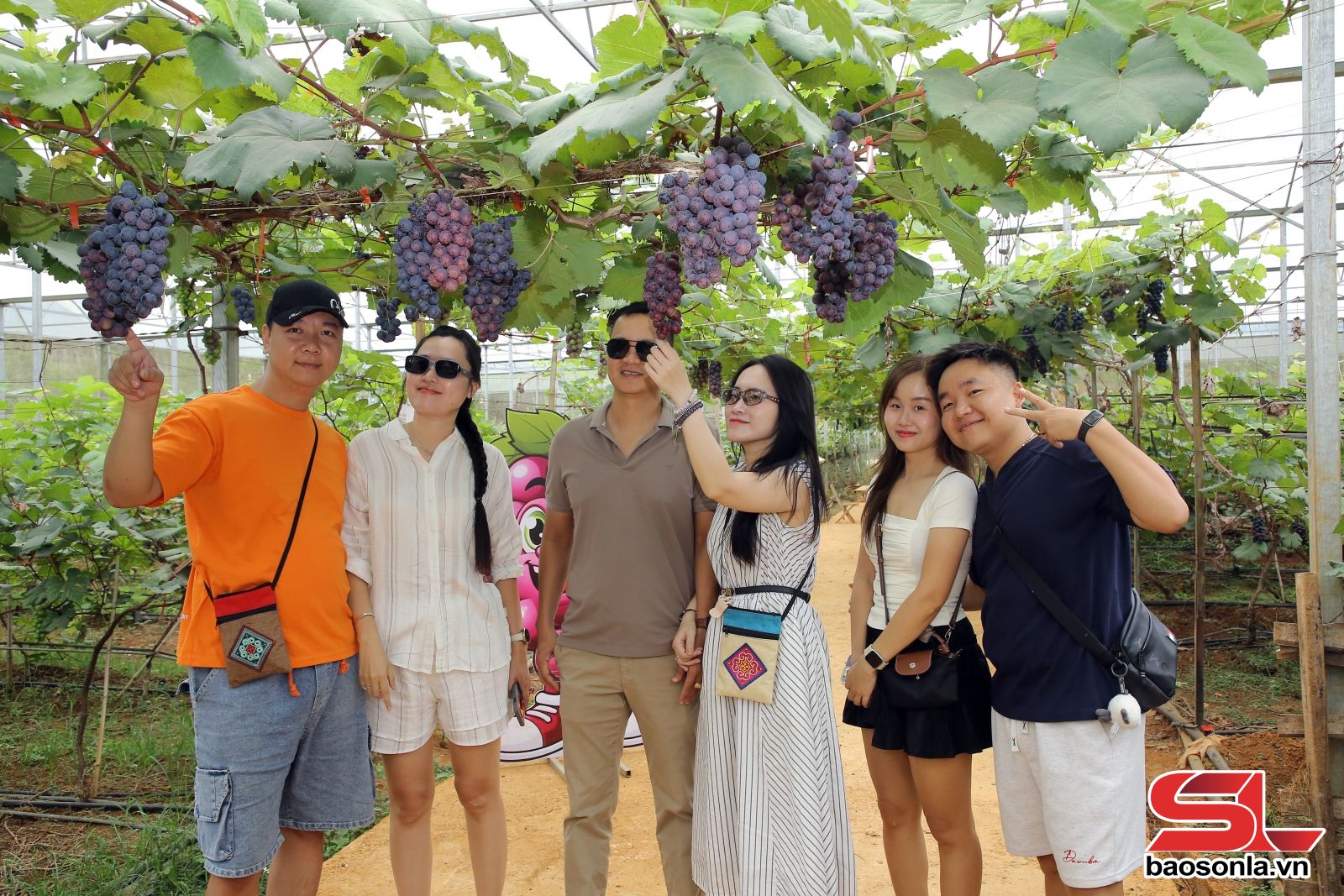
At this time of year, vineyards across the Moc Chau plateau are entering the harvest season and becoming attractive destinations for tourists seeking unique experiences. Visiting LamSon Farm Moc Chau in Moc Son ward, visitors are truly impressed by the lush green landscape, the neatly aligned rows of grapevines, and the clusters of plump grapes hanging from trellises, gradually turning a deep purple colour.
Behind these fruitful vineyards that welcome visitors lies the hard work and dedication of Moc Chau’s farmers. Growing grapes in a highland region with high humidity such as Moc Chau requires strict cultivation techniques. Greenhouses and net houses are carefully invested in to protect the vines from rain, pests, and diseases while maintaining optimal temperatures.
Nguyen Van Quyet, Manager of LamSon Farm Moc Chau, shared: “Currently, our farm has nearly 1 hectare of Ha Den grapes. This is a demanding grape variety that requires careful pruning techniques, proper fertilisation, and comprehensive care. In addition to maintaining the vineyard, we also focus on improving and decorating the surrounding landscape and creating attractive photo spots. Visitors can enjoy tasting the grapes firsthand and learn about our closed-loop cultivation process, which helps build trust in the Moc Chau clean agricultural brand.”
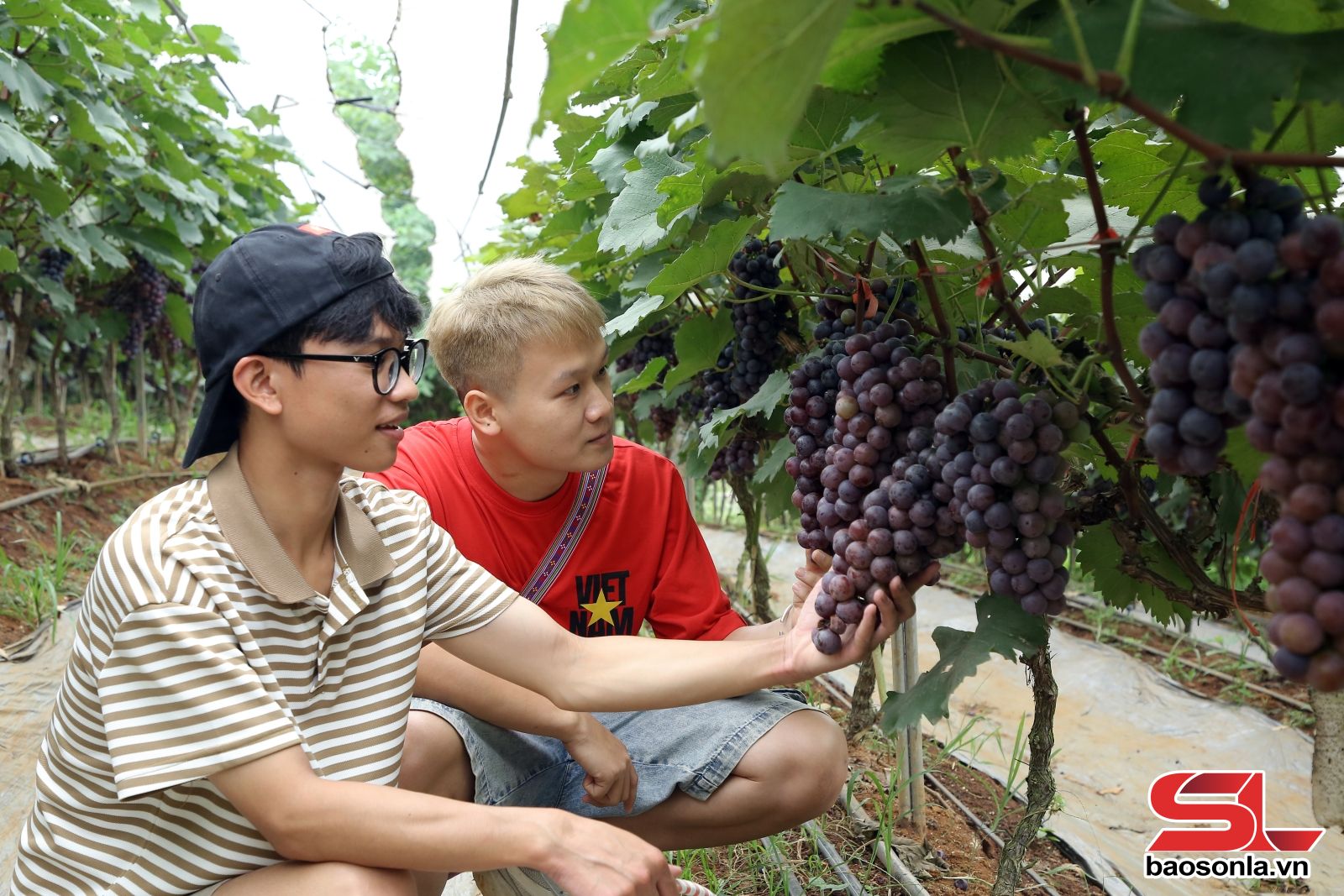
Having discovered LamSon Farm Moc Chau through social media, Nguyen Thi Nga from Hanoi took advantage of the weekend to bring her children for a visit. While selecting ripe clusters of grapes, she said: “Coming to the vineyard, we can enjoy the fresh air and learn more about safe agricultural production methods. Picking ripe grapes ourselves and tasting them directly in the vineyard is a very enjoyable experience for the whole family.”
Tam Hue vineyard in Bai Say residential area, Moc Chau ward stands out amid the surrounding fields, featuring a well-invested net-house system. Currently, the Ha Den grapes are in peak harvest season, with clusters of deep-purple, juicy grapes attracting many visitors who come to taste and purchase them directly in the vineyard.
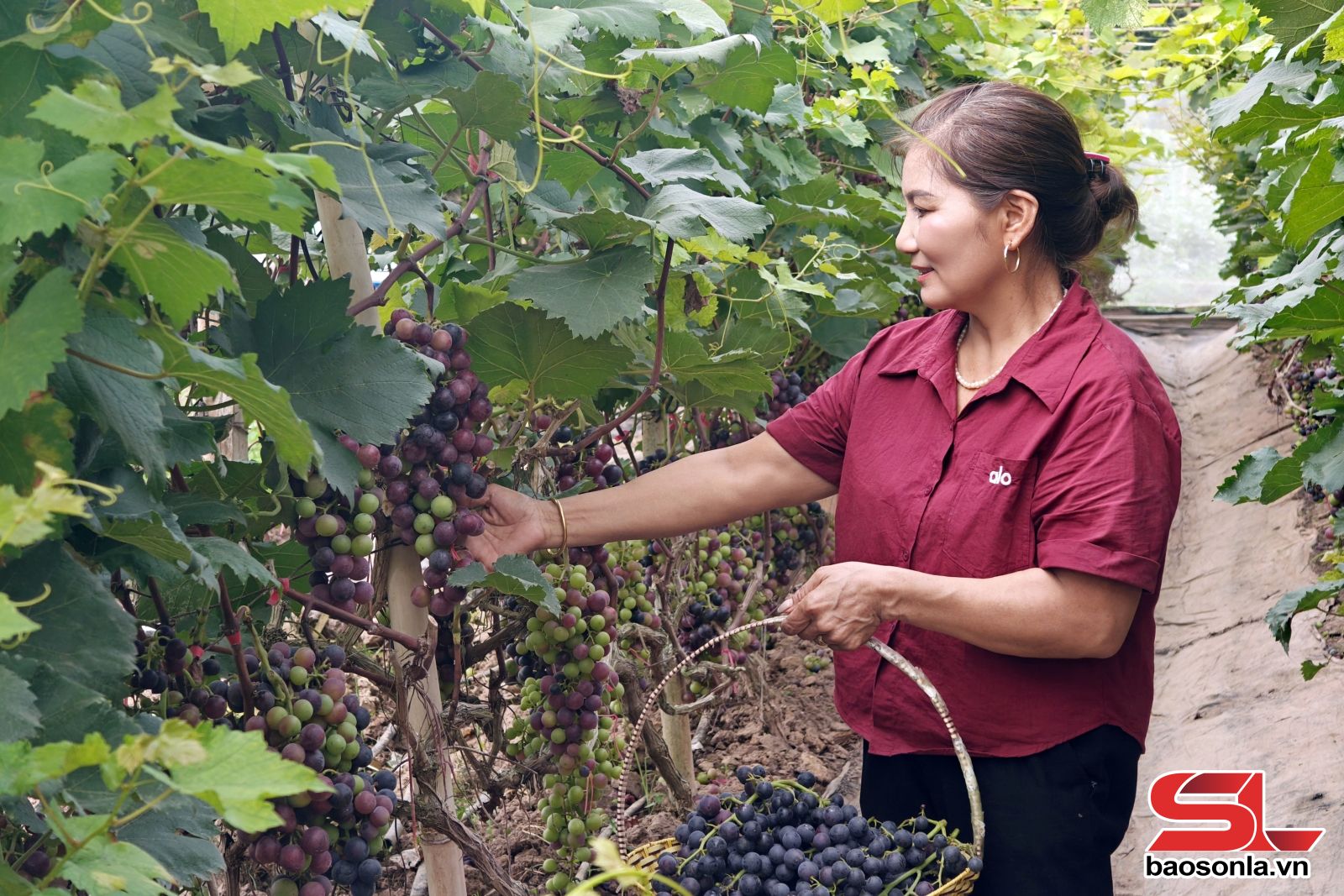
According to Vu Thi Hue from Bai Say residential area, her family currently cultivates more than 2,500 square metres of grapes. Initially, the vineyard was established solely for production and business purposes. However, as more residents and tourists showed interest, her family opened it to visitors. Today, the vineyard is connected with eco-tourism routes, allowing guests to take photos, pick and enjoy ripe grapes themselves, and purchase products as gifts.
“On weekdays, we welcome around 30 visitors, while weekends can see up to 200 visitors thanks to social media exposure. As a result, most of our harvested grapes are sold directly at the vineyard, eliminating concerns about finding markets for our products,” she said.
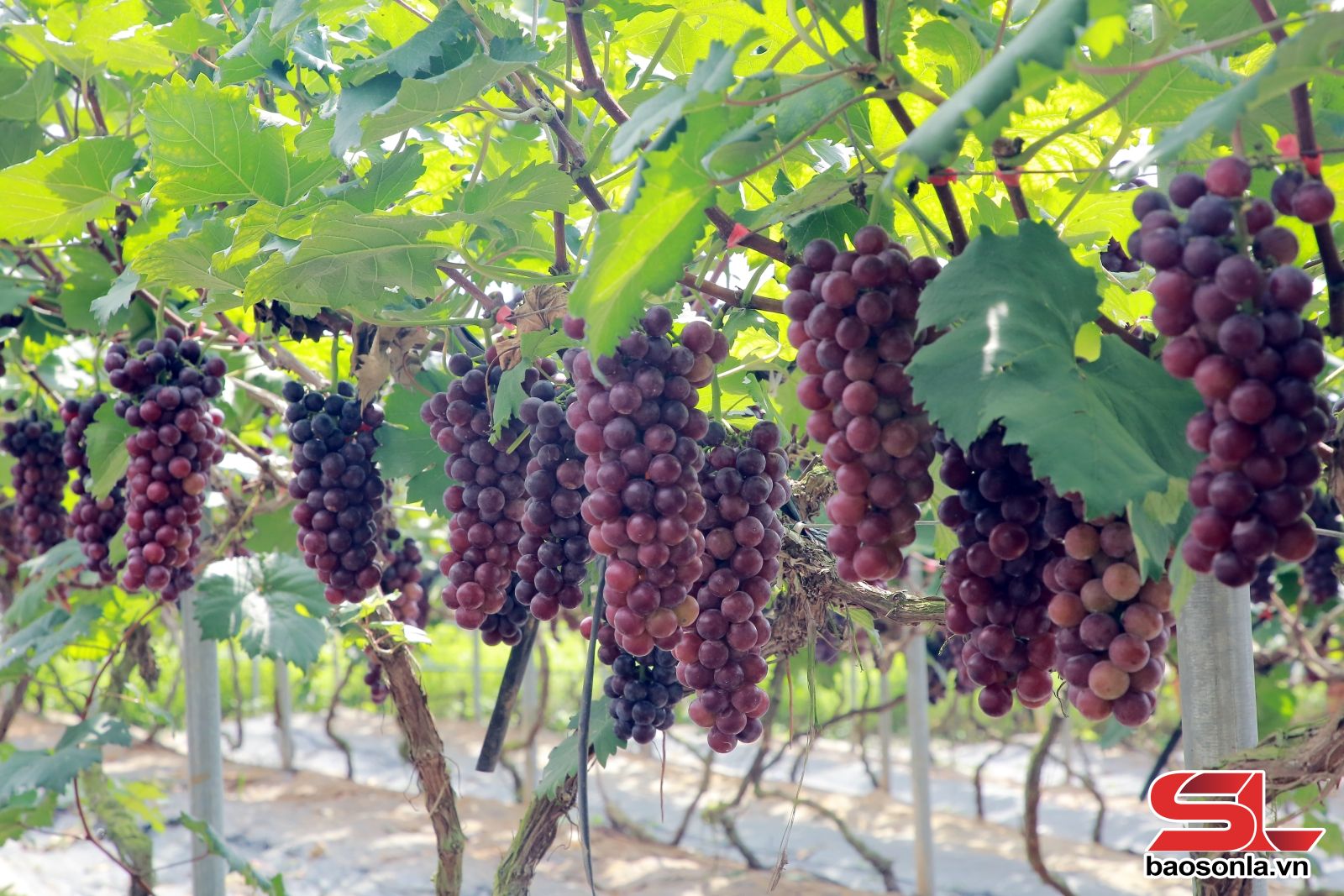
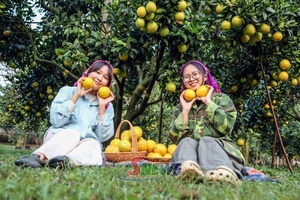
Joining her parents on the visit and picking small, ripe grape clusters herself, Nguyen Khanh Huyen from Quang Ninh province excitedly said: “This is the first time I have ever seen grapevines in real life. It feels very special and exciting. When picking grapes, I chose the ripest and most beautiful clusters to share with my grandparents and relatives at home.”
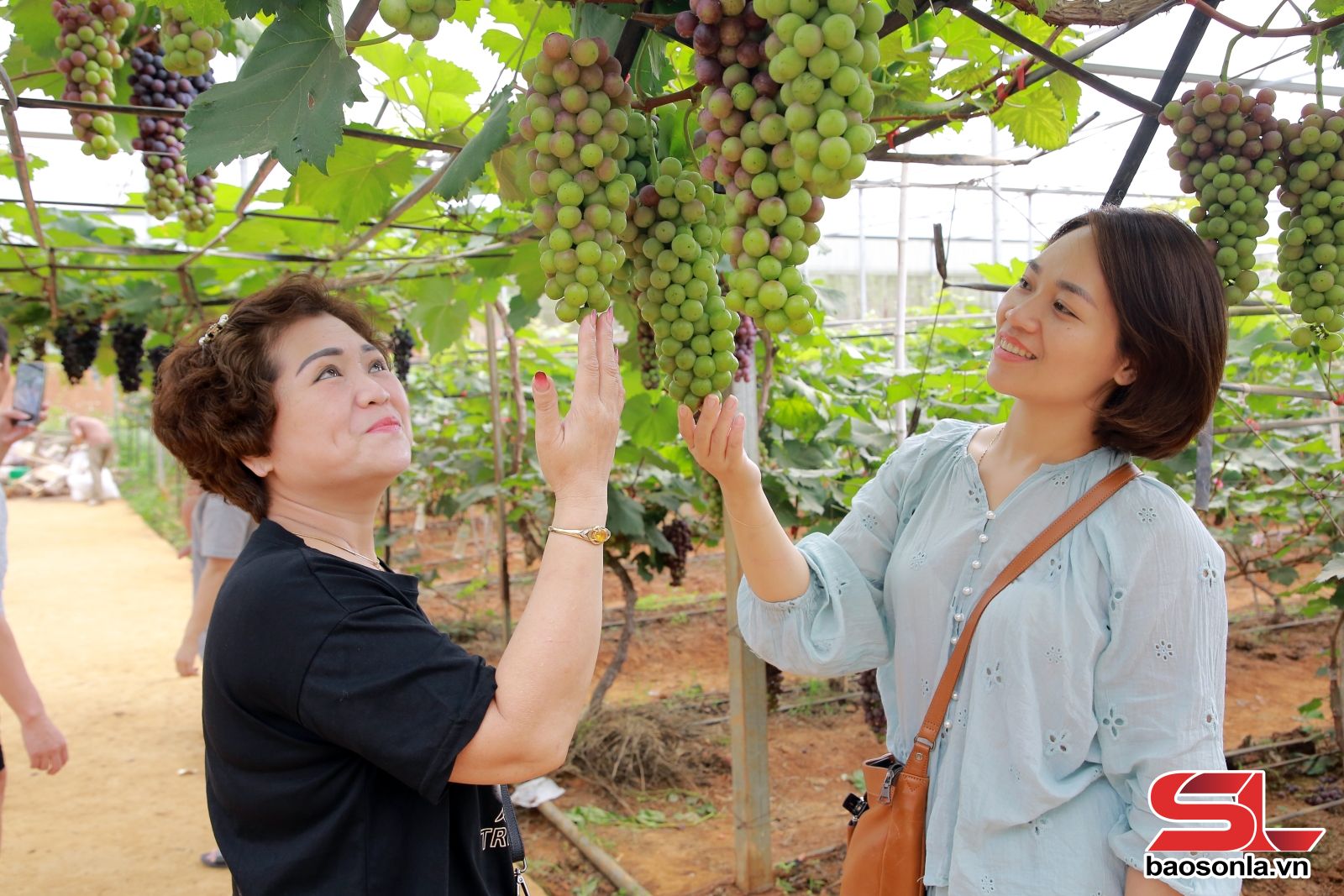
The vineyards on the Moc Chau plateau are increasingly becoming attractive destinations for tourists. Here, visitors can immerse themselves in the refreshing atmosphere of fruitful vineyards, harvest and enjoy fresh agricultural products firsthand, and relax amidst nature. This model, which combines agricultural production with eco-tourism, helps enhance the value of local agricultural products, diversify tourism offerings, and further strengthen Moc Chau’s appeal to both domestic and international visitors.
.jpg)








You have 500/500 characters left
Please enter 5 or more characters!!!