




.jpg)
The National Target Programme was approved in principle by the National Assembly under Resolution No. 257/2025/QH15 dated December 11, 2025 based on the integration of the three National Target Programmes on New-style Rural Development, Sustainable Poverty Reduction, and Socio-Economic Development in Ethnic Minority and Mountainous Areas, implemented during the 2021–2025 period .
For Son La province, the programme sets specific targets for 2030, including increasing the average income of rural residents 2.5–3 times the 2020 level; raising the average income of ethnic minority people to at least half of the national average; reducing the poverty rate (under the 2026–2030 multidimensional poverty standard) by an average of 1.5–2 percentage points annually; eliminating all especially disadvantaged communes and hamlets in ethnic minority and mountainous areas; and ensuring that 53% of the province's communes (36 communes) meet new-style rural standards by 2030.

Following the two-tier local government system, Son La province has 67 communes, all of which are located in ethnic minority and mountainous areas. Of these, 66 communes are classified as in Area III, while Mai Son commune in Area I.
Under the programme, the total central budget carried forward to 2026 for implementation across the province exceeds 953 billion VND (36.23 million USD). As of June 4, nearly 164.5 billion VND had been disbursed, equivalent to 17.25% of the plan.
For the local budget, more than 50 billion VND was carried forward for implementation in 2026. To date, only nearly 500 million VND has been disbursed, reaching 0.96%.
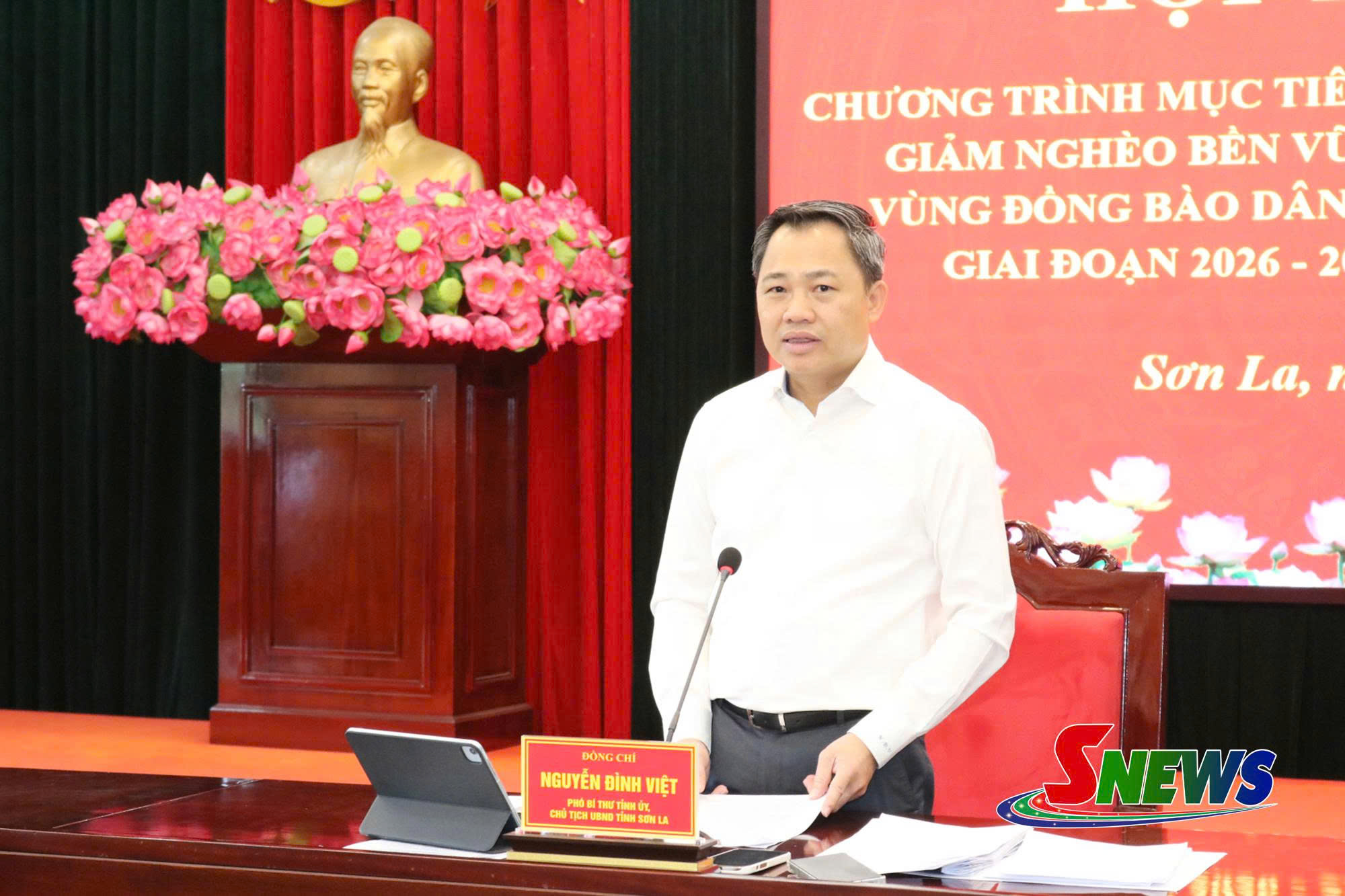
Addressing the conference, the Chairman of the Provincial People's Committee requested members of the Steering Committee and local authorities to accelerate the submission of specific documents that concretise central-level regulations and guidelines to competent authorities for issuance in line with local conditions.
He also urged timely removal of difficulties and obstacles to ensure sufficient conditions for implementation as well as the issuance of implementation documents, ensuring the principles of clear responsibilities, transparency, and easy implementation, inspection and supervision.
He further called for the immediate review and resolution of difficulties and obstacles arising during implementation, in accordance with assigned authority, responsibilities, and administrative jurisdiction.
















You have 500/500 characters left
Please enter 5 or more characters!!!